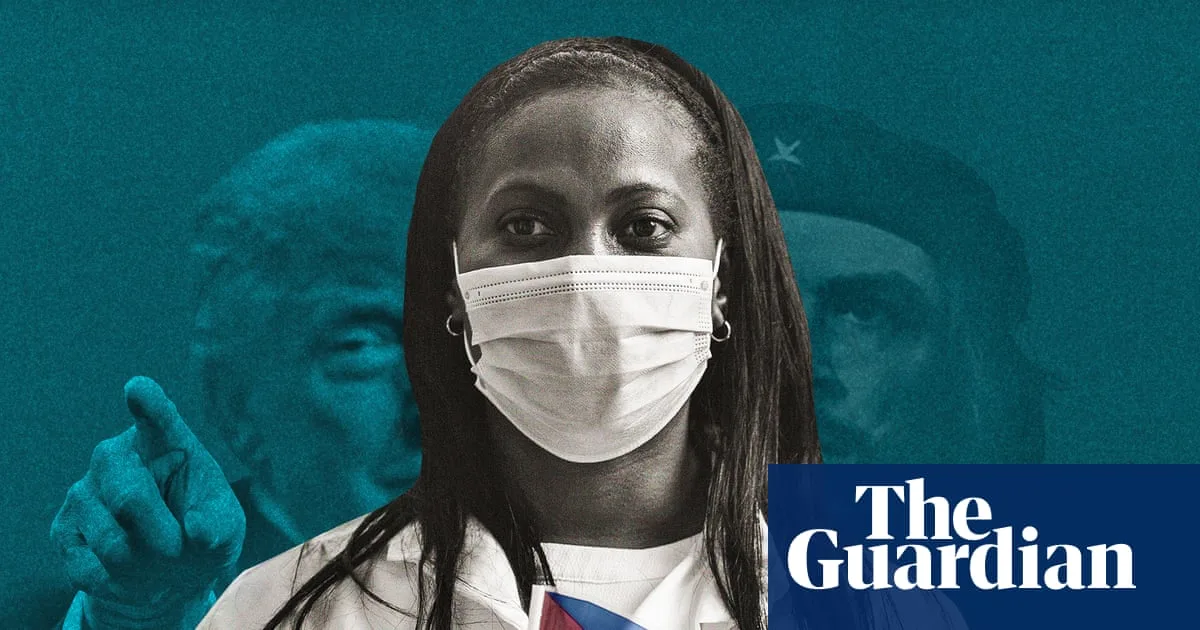
The United States is escalating pressure on Cuba by blocking the employment of Cuban doctors worldwide, a move that threatens healthcare access in Latin America and the Caribbean. For decades, Cuban medical professionals have filled gaps in understaffed health systems, often working in remote or impoverished areas where local doctors are reluctant to go.
According to Tiago Rogero, the Guardian's South America correspondent, Cuban doctors are a vital source of revenue for the island nation, alongside tourism. Since the 1959 revolution, Cuba has sent medical personnel abroad, starting with a mission to Chile after its 1960 earthquake. This evolved into structured agreements with countries across the region and beyond.
However, US pressure has led a dozen countries to cancel these programmes. The US claims the schemes amount to “forced labour” because the Cuban government retains a portion of the doctors' salaries. While some doctors have reported exploitation, experts consulted by Rogero believe the main US motive is financial: to cut off a key revenue stream for the Cuban government.

Rogero highlighted the impact of the More Doctors programme in Brazil, which deployed 18,000 Cuban doctors in 2013 to favelas and remote Amazon regions. These doctors faced racism and prejudice in a country where medicine is a prestigious, predominantly white profession. Despite the Cuban government taking about 80% of their salaries, the doctors earned significantly more than the $50 monthly wage in Cuba.
Cuba's ability to produce such a large medical workforce stems from its unique education system, which prioritises community service over personal profit. Unlike capitalist countries where medical training is an investment for individual gain, the Cuban state invests in doctors to serve the community and other nations, often without financial return during humanitarian crises.
The US policy threatens not only Cuba's economy but also the healthcare of millions in Latin America and the Caribbean, where Cuban doctors have been a lifeline for the poorest populations.