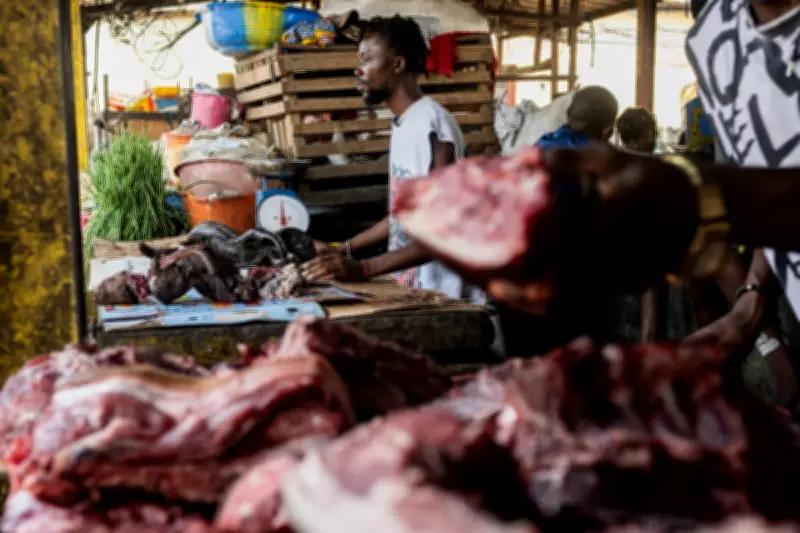
As the Ebola virus continues to ravage the Democratic Republic of Congo, experts are drawing attention to the role of wild meat consumption in the spread of zoonotic diseases. For many in Congo and across Central and West Africa, wild meat is not just a source of sustenance but a deeply ingrained cultural tradition. However, this practice brings people into close contact with wildlife, increasing the risk of pathogen spillover.
The Link Between Wild Meat and Ebola
The current outbreak, declared on May 15, has already recorded over 1,000 suspected cases and at least 220 deaths. The World Health Organization suspects the true scale may be larger, as the virus spread undetected for weeks. Ebola, first discovered in 1976 near the Ebola River in Congo, is believed to originate from fruit bats or other infected animals. Handling and consuming wild meat, particularly from primates and bats, can lead to cross-species transmission.
Dr. Tolbert Geewleh Nyenswah of the Africa Centres for Disease Control and Prevention emphasized the human-animal-environment interface. "Once there is human, animal and environment interface, we have these kinds of outbreaks on a frequent level," he said. "This is why one health approach in dealing with virus outbreaks is important."

Cultural Resistance and Public Health Challenges
Despite the risks, changing deeply rooted practices is difficult. Dr. Misaki Wayengera, a microbiologist advising Uganda's Ministry of Health, noted that many people "don't believe the linkage" or are "totally ignorant" of the health threat. The sporadic nature of Ebola outbreaks further complicates awareness efforts.
In Kinshasa's Masina Market, vendors sell antelope, rodent, and snake meat sourced from the Congo Basin. Some have stopped selling monkey meat, a known reservoir for Ebola, but demand for wild meat remains high. Guyva Mputu, a vendor selling python, and Charles Ntanga, who sells giant rodent meat for about $17 per kilogram, said they serve clients from all walks of life. "We sell wild meat. We make our lives through this business," Ntanga said.
The Broader Impact on Health and Environment
The Congo Basin, Earth's second-largest rainforest, is a critical carbon sink but faces pressure from hunting and deforestation. An estimated 4.5 million tons of wild meat are extracted annually, providing primary protein for many communities. However, this practice threatens endangered species like great apes and bonobos.
Public health campaigners urge stepped-up education on Ebola transmission. Gladys Kalema-Zikusoka, founder of Conservation Through Public Health, stressed the need to tell people that "eating meat from an unknown source, or a dead animal, is a no-no." She acknowledged the cultural significance but warned of the risks.
Current Outbreak Details
The ongoing outbreak in eastern Congo is caused by the Bundibugyo virus, a rare Ebola strain with no approved vaccines or treatments. The region is also plagued by armed conflict and mass displacement, complicating response efforts. The deadliest Ebola epidemic, in West Africa from 2014 to 2016, infected about 28,000 people and killed over 11,300.
While Congo has banned hunting endangered wildlife, no blanket prohibition exists on the wildlife trade. Illegal hunting persists, driven by demand for bushmeat, known locally as viande de brousse. This practice, combined with habitat loss, intensifies pressure on biodiversity and increases the risk of future outbreaks.
Health workers without adequate protective gear are highly vulnerable to infection, as the virus spreads through bodily fluids. Public health authorities stress the importance of surveillance, safe burials, and community engagement to contain the virus.