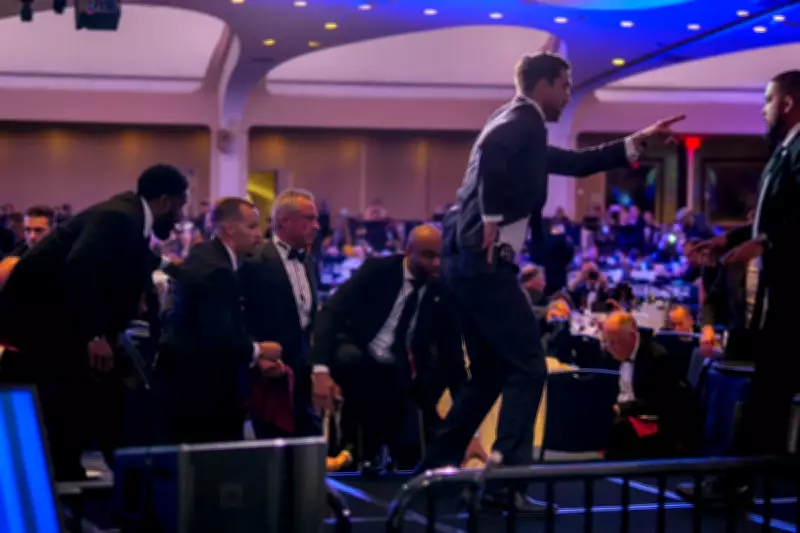
Former Secret Service agents have warned that the attempted attack on the White House Correspondents' Association dinner has exposed significant security gaps that need to be addressed to prevent future incidents. Bobby McDonald, who protected former presidents Bill Clinton and George W. Bush, described the outcome as positive but not successful, noting that the system worked but could be much better.
Security enhancements needed
With President Donald Trump insisting the event be rescheduled within 30 days, McDonald emphasised that the Secret Service must quickly develop creative ideas to bolster security. He stated that the agency would need to blow up their existing plan and have discussions about innovative approaches. In a prepared statement, Secret Service spokesperson Anthony Guglielmi acknowledged that while the protective model proved effective, enhancements should be expected at every level given the dynamic and elevated threat environment.
The incident
Cole Tomas Allen, 31, of Torrance, California, allegedly armed with a shotgun, handgun, and knives, barrelled past a checkpoint at the Washington Hilton hotel before being stopped from entering the ballroom. The hotel is the same location where then-president Ronald Reagan was wounded in a 1981 shooting. Allen reportedly sent relatives a manifesto criticising security efforts, questioning why the Secret Service was not more vigilant.

Secret Service Director Sean Curran defended the response, stating that the multi-layered protection worked since Allen was unable to barge into the ballroom. Former agent Bill Gage described the protective model as concentric and overlapping layers of security, starting with emptying the event space, posting agents at entrances, using dogs for explosives, and magnetometers for weapons screening.
Challenges of securing a busy hotel
The Washington Hilton has over 1,100 rooms, and the dinner drew about 2,300 guests, presenting significant security challenges. Gage noted that it is incredibly difficult to secure a very busy hotel on a very busy street. He likened the incident to previous low-tech assassination attempts against Trump, carried out by people with no training. He also stated that there were probably no tripwires to identify Allen beforehand, as he only sent a manifesto an hour before the attack.
Potential improvements
McDonald suggested that more visible security in the lobby or at the magnetometer might have deterred Allen. He recommended creating better time and space distance between checkpoints and setting up serpentine barriers before magnetometers. He also urged the agency to consider establishing security perimeters earlier and equipping agents with ballistic shields. McDonald highlighted that if the attacker had worn a suicide vest instead of carrying weapons, the outcome could have been far worse.
He concluded by noting that in many countries, security checks are routine before entering hotels, and the United States must accept the need for such delays to enhance safety.