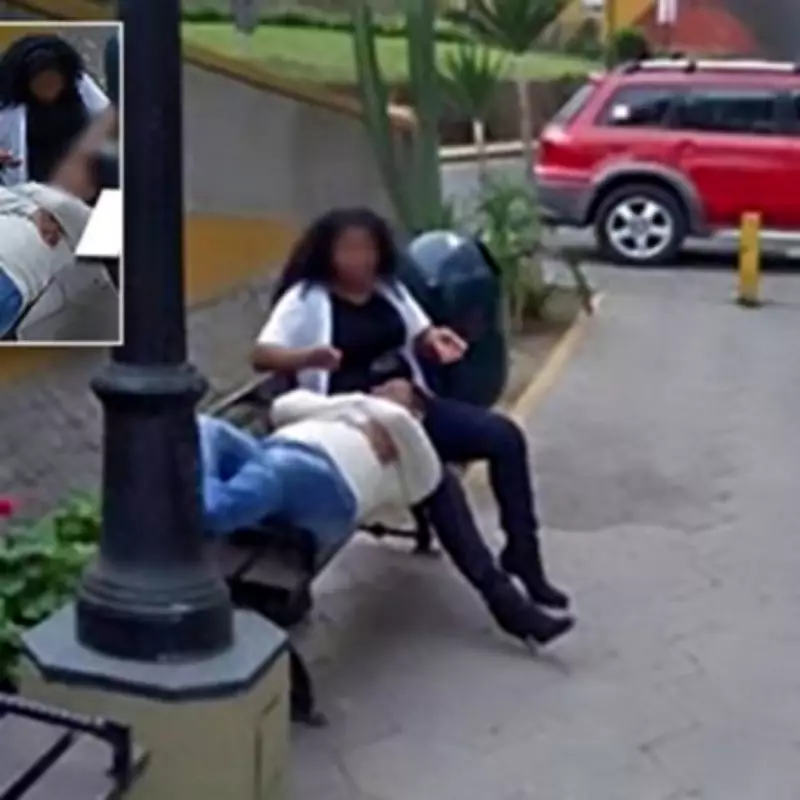
A husband in Peru has ended his marriage after discovering an intimate photograph of his wife with another man while using Google Maps. The man was planning a driving route when he noticed the image, which showed his wife sitting on a bench tenderly stroking the hair of another man, whose head rested in her lap.
Shocking Discovery on Google Maps
The photograph, captured by a Google camera vehicle in Lima, Peru's capital, dates back to 2013. The husband said the image grabbed his attention because the woman appeared to be wearing clothing identical to pieces owned by his wife. In a twist of fate, the photo was taken near the city's Puente de los Suspiros de Barranco, known as the Bridge of Sighs of the Ravine.
Confrontation and Confession
Armed with this proof, the furious husband confronted his wife about the image. The woman, whose identity remains anonymous along with her husband's, confessed to having an affair. Following this admission, the couple subsequently divorced, ending their marriage over the betrayal uncovered through digital mapping technology.

Social Media Reaction
The husband recently posted the photographs on Facebook, where they sparked considerable reaction among users. One commenter, San Pateste, remarked on the small world scenario, suggesting it might have been simpler for the wife to have openly ended the relationship. Meanwhile, another user, Guillermo Sanchez, added a cynical perspective on loyalty in relationships.
Unusual Google Maps Finds
This incident joins a lengthy catalogue of peculiar images captured for Google Maps and Google Street View services. Previous examples have included individuals dressed as pigeons, an escaped prisoner, a couple having sex by their car, and even a woman giving birth. These digital snapshots often capture unexpected moments, but rarely with such personal consequences as in this case from Peru.
The story highlights how technology can inadvertently reveal hidden truths, with Google Maps serving as an unlikely tool for uncovering infidelity. As digital mapping becomes more pervasive, such incidents may become more common, blurring the lines between public documentation and private lives.