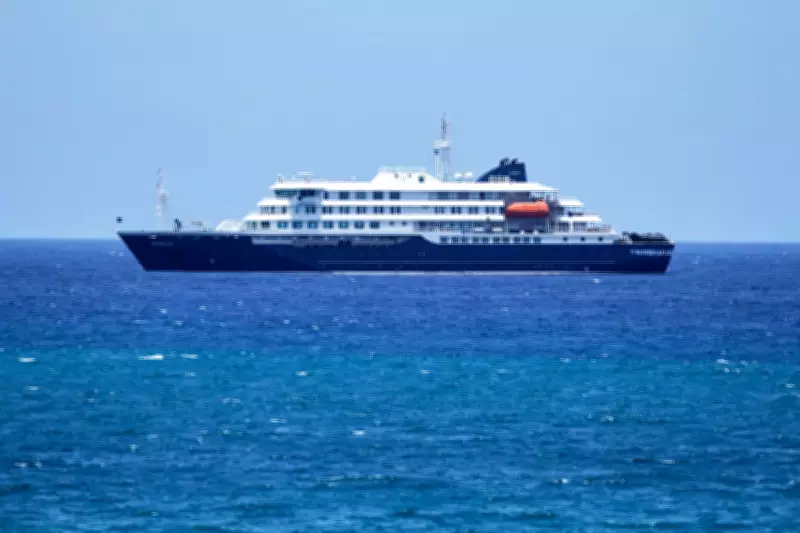
A deadly outbreak of the rare hantavirus unfolded over several weeks on a cruise ship that sailed from Argentina toward Antarctica and then across the Atlantic Ocean. Passengers and crew members fell ill as the ship stopped at or near remote islands along the way, according to information from the cruise operator, the World Health Organization, and ship tracking data.
Nearly a month passed between when an elderly Dutch man fell sick and died in the South Atlantic and laboratory tests in South Africa—more than 3,500 kilometers (2,174 miles) away—confirmed hantavirus infections. Three passengers have died, one is in intensive care in a South African hospital, and three other people still on the cruise ship have shown symptoms and are awaiting evacuations. Nearly 150 passengers and crew members from 23 countries were on the ship, which is currently waiting off the coast of West Africa.
Understanding Hantavirus
Hantavirus is spread by rodents. People can contract it through contact with infected rodents' saliva, urine, or droppings. It does not usually spread from person to person, but some health authorities suggest such transmission could be possible.

While only two hantavirus cases related to the ship have been confirmed through tests, the WHO suspects the others also are hantavirus and is treating it as an outbreak. The source is still under investigation.
Timeline of the Outbreak
The Dutch company that operates the ship, the MV Hondius, offers expedition cruises involving trips to the Antarctic and several islands in the South Atlantic. The cruises can last a month or more and cost between $6,000 and $25,000.
The MV Hondius set off from southern Argentina on April 1. On April 6, a 70-year-old Dutch man fell ill with fever, headache, and mild diarrhea. He died on board on April 11 after developing respiratory distress. The ship was between the British island territories of South Georgia and St. Helena in the middle of the South Atlantic. The cause of death could not be determined at that time.
The ship sailed on for nearly two weeks, stopping near the island of Tristan da Cunha before reaching St. Helena, where the Dutch man's body was taken off the ship on April 24. His 69-year-old wife disembarked with his body and flew to South Africa, while the man's body remained behind.
The woman, who already had symptoms, became sicker during the April 25 flight and collapsed at an airport in South Africa. She died at a hospital on April 26.
Another passenger, a British man, became sick on the ship after it left St. Helena and sailed to tiny Ascension Island. He had a high fever, shortness of breath, and signs of pneumonia. He was evacuated from Ascension Island to South Africa on April 27 and is in an intensive care unit.
The third fatality, a German woman, died on the ship on Saturday after the ship had set sail for Cape Verde. She died four days after falling ill and also had signs of pneumonia. Her body is still on the ship.
Identification of Hantavirus
Health officials in South Africa tested the British man in intensive care for hantavirus after other extensive tests were negative. They received a positive result on Saturday, 21 days after the first passenger died. On Sunday, the WHO announced it was investigating a suspected hantavirus outbreak on the ship, which had by then reached Cape Verde waters.
The British man's positive test prompted South African health authorities to test the Dutch woman's body posthumously for hantavirus. That test came back positive on Monday. The WHO said the outbreak on the ship was being managed and the global risk was low, though it added it was tracing people who were on a passenger plane between St. Helena and Johannesburg with the Dutch woman.
Current Situation and Plans
Oceanwide Expeditions said Tuesday that aircraft were flying to Cape Verde to evacuate two people needing urgent medical care and one passenger who was traveling with the German woman who died Saturday. They were to be taken to the Netherlands, but a timeline for arrival was not clear. The ship would then sail to Spain's Canary Islands, a voyage of about three days.

Spanish officials said they were monitoring the situation and had not confirmed any plans as of Tuesday evening. Passengers and crew have been isolated in cabins with maximal physical distancing, reminiscent of the Covid-19 pandemic lockdowns.
Investigation into the Source
The WHO is still investigating how a virus that is relatively rare in humans got on board the ship. It said the Dutch man and his wife had traveled in Argentina and elsewhere in South America before they boarded. The Andes virus, a specific species of hantavirus, is found in South America, primarily in Argentina and Chile.