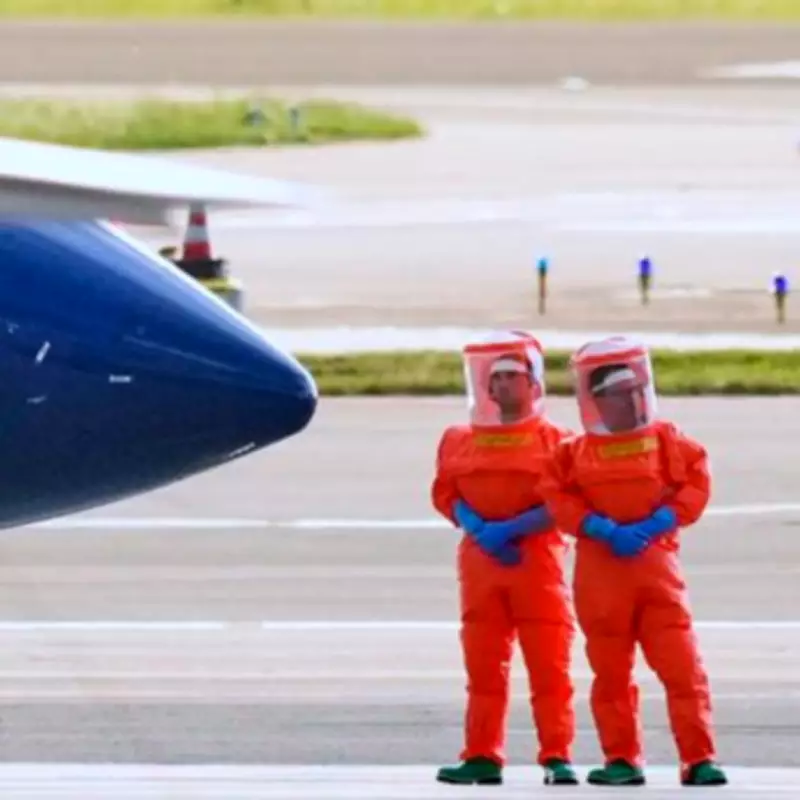
British passengers and crew members aboard the MV Hondius will undergo testing for hantavirus before they are permitted to return to the United Kingdom, following an outbreak on the vessel. The cruise ship, operated by Oceanwide Expeditions, is scheduled to dock in Tenerife this weekend. The remaining 22 Britons are expected to fly home shortly thereafter on a charter flight.
Outbreak Details
Five cases of hantavirus have been confirmed during the cruise, including one linked to the deaths of three passengers. Two British men with confirmed infections are currently receiving treatment in the Netherlands and South Africa. Another Briton is being cared for on Tristan da Cunha for a suspected case, where the ship made a stop in April.
Spanish health authorities are expected to test all passengers and crew on board when the ship arrives. Those showing symptoms will be taken to hospital, while asymptomatic individuals will be flown directly back to Britain, likely on the same day.

Post-Arrival Measures
Although no other Britons on board are currently symptomatic, they will be asked to self-isolate and undergo regular testing for 45 days after returning to the UK. This isolation will be voluntary rather than legally enforced, and medical staff will be available to assist with blood testing.
Evacuations and Treatment
Among those evacuated was Martin Anstee, a 56-year-old expedition guide and former police officer, who was flown to the Netherlands alongside a Dutch crew member and a German passenger. He remains in a stable condition and reported feeling "fine." Another British passenger, aged 69, was medically evacuated to South Africa at the end of April after testing positive for hantavirus. He remains in intensive care but is reported to be improving.
Other Affected Individuals
Two additional British nationals are already voluntarily isolating at home in the UK after possible exposure to the virus. Neither has developed symptoms. They were among 30 passengers from around 12 countries—including seven Britons—who left the ship on St Helena on 24 April, according to Oceanwide Expeditions. The company stated that the first confirmed hantavirus case was not identified until 4 May and that all former passengers have since been contacted.
Four Britons who disembarked on St Helena are still on the island. None are symptomatic, but they remain in touch with health officials, and additional medical support is expected to be sent there. A military aircraft has also arrived at Ascension Island carrying testing kits, oxygen supplies, and other medical equipment. Medical teams are expected to transport the supplies onwards to St Helena and Tristan da Cunha.
International Response
Health authorities in several countries, including Switzerland and the Netherlands, are conducting contact tracing for dozens of passengers who left the ship before the outbreak was discovered. The World Health Organization described the outbreak as a "serious incident" but emphasised that the overall risk to the wider public remains low, noting that the situation is not comparable to the Covid-19 pandemic.