Iran has threatened to impose tariffs on submarine cables in the Strait of Hormuz, a critical chokepoint for global digital connectivity. The Islamic Revolutionary Guard Corps (IRGC) demanded "protection fees" from foreign cable operators, warning that non-compliance could lead to disruption of internet traffic.
Strategic Move for Leverage
The threat follows a sustained blockade of the strait, which is vital for oil shipments. Iran's state-affiliated media warned that damage to the cables could impact trillions of dollars in global data transmission. However, some experts believe Iran is overestimating its influence to gain leverage against future attacks.
Military spokesperson Ebrahim Zolfaghari announced on X: "We will impose fees on internet cables." The demand targets major tech firms like Microsoft, Meta, Google, and Amazon. While US sanctions bar payments to Iran, the underlying threat of traffic disruption looms.

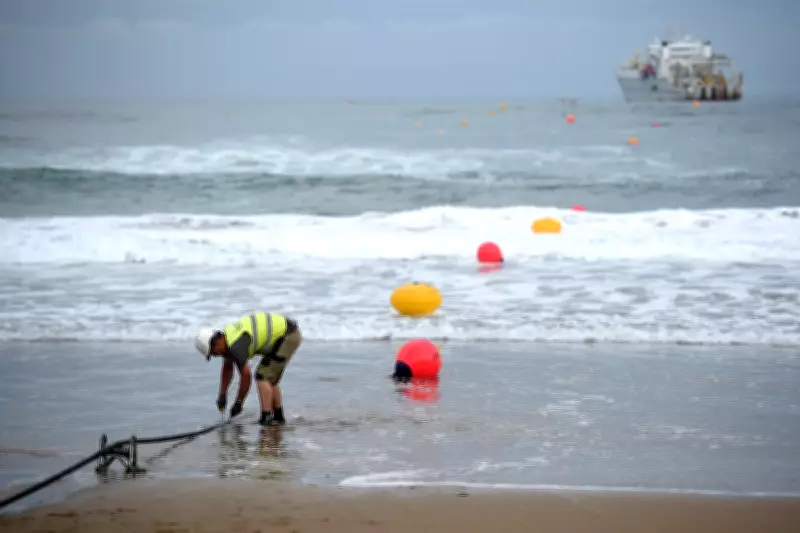
Subsea Cables: The Digital Backbone
Subsea cables carry 99% of the world's internet traffic, according to the International Telecommunication Union. Key cables through the Strait of Hormuz include Asia-Africa-Europe 1, Falcon network, and Gulf Bridge International Cable System. Two of these—Falcon and Gulf Bridge International—run through Iranian territorial waters.
Alcatel Submarine Networks has issued force majeure notices for Gulf operations, citing the Iranian threat. This means players are excused from laying or maintaining cables.
Potential Consequences
During peacetime, a cable cut takes under three weeks to repair. In conflict, damage could cause severe disruption. Intentional sabotage would not only harm infrastructure but also endanger civilian crews. Geopolitical analyst Masha Kotkin noted: "Damaged cables mean internet slowdowns, e-commerce disruptions, delayed financial transactions, and economic fallout."
According to Windward AI, Iran's objective is not to cut cables but to hold repair infrastructure hostage. Operators face a choice: pay protection fees or accept indefinite repair delays. A single transoceanic cable costs between $300 million and $1 billion, making protection fees a calculated threat.
Modern economies rely on these cables for banking, cloud services, and energy trading. For data-dependent economies like the UAE, India, and Saudi Arabia, even partial degradation carries measurable costs.
Historical Context
In September 2025, undersea cable cuts in the Red Sea disrupted internet in Asia and the Middle East, suspected as targeted campaigns by Houthi rebels. Microsoft reported increased latency in the Mideast due to fiber cuts. NetBlocks observed degraded connectivity in multiple countries, including India and Pakistan, due to failures in SMW4 and IMEWE cable systems.
Iran's threats are part of a broader strategy to demonstrate leverage, according to Dina Esfandiary of Bloomberg Economics. She told CNN: "It aims to impose such a hefty cost on the global economy that no one will dare attack Iran again."
However, John Wrottesley of the International Cable Protection Committee noted that bandwidth traversing the Strait of Hormuz accounts for less than 1% of international bandwidth globally, according to Telegeography.