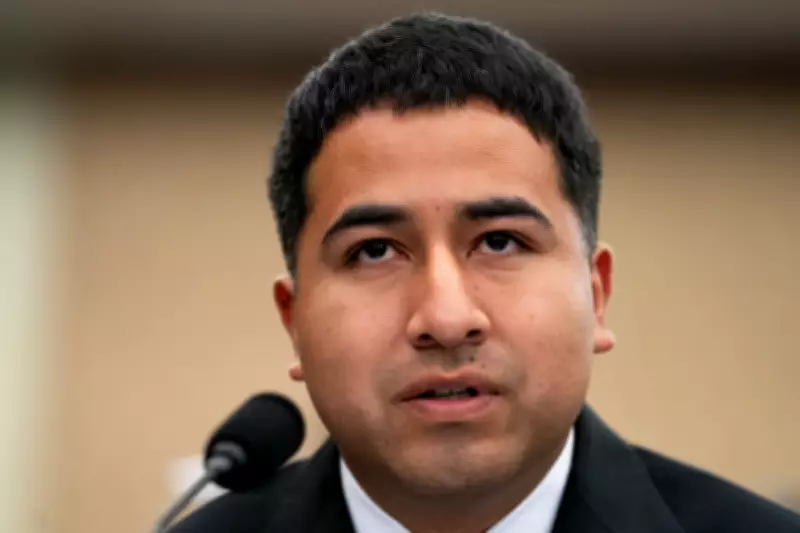
An immigration judge has officially dismissed the deportation case against a Mexican landscaper who was arrested in Southern California last year, placing the father of three United States Marines on a clear path toward obtaining legal permanent residency in the country.
Case Background and Arrest Details
The detention of Narciso Barranco occurred in June of last year, drawing significant public attention amid heightened scrutiny of immigration enforcement policies. Barranco, who originally came to the United States from Mexico during the 1990s but lacked formal legal status, was apprehended by federal agents outside an IHOP restaurant in Santa Ana, Orange County.
Witnesses captured the incident on video, showing agents struggling with Barranco and ultimately pinning him to the ground while he was clearing weeds. Following his arrest, Barranco was transported to a detention center in Los Angeles and formally placed into deportation proceedings. He was subsequently released in July on a $3,000 bond with the additional requirement of wearing an ankle monitoring device.

Judge's Ruling and Legal Rationale
In a January 28 order terminating the deportation case, Immigration Judge Kristin S. Piepmeier cited compelling evidence presented by Barranco. The 49-year-old demonstrated that he is the biological father of three U.S.-born sons who all serve in the military, specifically the United States Marine Corps. This familial connection to active military personnel made him eligible to pursue lawful immigration status through established legal channels.
Judge Piepmeier's decision represents a significant legal victory for Barranco, though the Department of Homeland Security announced on Thursday that it intends to appeal the ruling. The department's opposition sets the stage for potential further legal battles over this high-profile immigration case.
Family Military Service and Legal Strategy
Barranco's attorney, Lisa Ramirez, expressed her client's "extreme relief" following the judge's decision, particularly noting that immigration authorities have removed his ankle monitor and discontinued mandatory check-ins. Ramirez emphasized the traumatic nature of the arrest, stating, "The aggressive nature of the apprehension, it was traumatic. Mr. Barranco has had zero criminal history. They came after him because he was a brown gardener in the streets of Santa Ana."
Ramirez has now filed an application for Parole in Place on Barranco's behalf, a specialized program designed to protect parents of U.S. military personnel from deportation while assisting them in obtaining permanent residency. If approved, this petition would grant Barranco a work permit and formalize his legal status. The attorney estimates this administrative process could require six months or longer to complete.
Contrasting Accounts of the Arrest
The Department of Homeland Security maintains a different perspective on the arrest circumstances. Assistant Secretary Tricia McLaughlin reiterated previous government claims that Barranco refused to comply with commands and allegedly swung his weed trimmer at an agent during the apprehension. "The agents took appropriate action and followed their training to use the minimum amount of force necessary to resolve the situation in a manner that prioritizes the safety of the public and our officers," McLaughlin stated in an official release.
Barranco's family strongly disputes this characterization. His son Alejandro Barranco, a U.S. Marine Corps veteran who participated in the 2021 evacuation of personnel and Afghan allies from Afghanistan, told The Associated Press last June that his father never attacked anyone, possesses no criminal record, and is fundamentally kind and hardworking. Alejandro, who left the Marine Corps in 2023, argued that the force used during the arrest was unnecessary and contradicted his own military training principles.
Alejandro's two brothers remain on active duty with the Marine Corps, underscoring the family's deep military connections that ultimately influenced the judge's decision to dismiss the deportation case against their father.