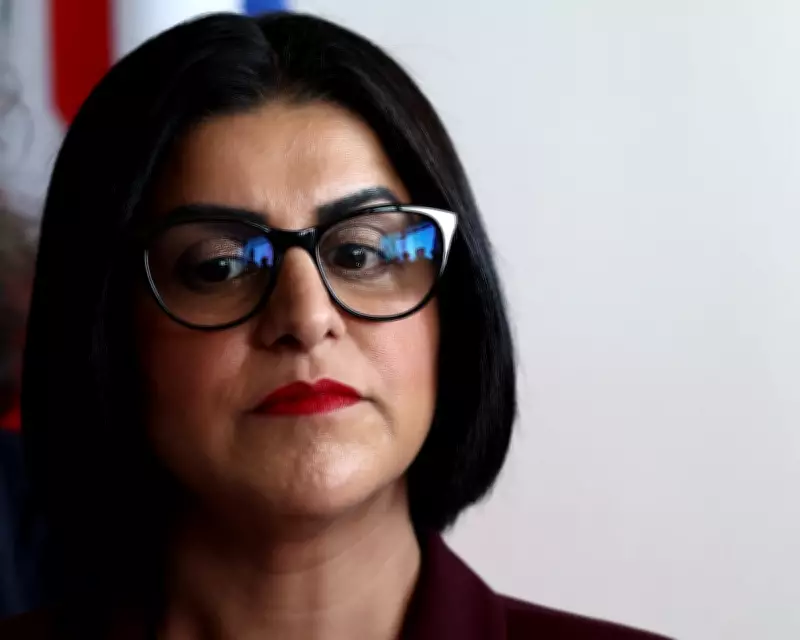
Shabana Mahmood has refused to rule out sending rejected Afghan asylum seekers back to the Taliban-controlled country, a move that would represent a significant reversal of current UK policy and shock humanitarian organisations.
Home secretary signals potential shift in policy
The home secretary stated she is “monitoring very closely” discussions between Kabul and European Union countries regarding a returns programme for refused claimants. She also indicated that “additional conversations” about Afghan returns are taking place within Whitehall.
If implemented, a returns programme would overturn the UK’s existing stance, which prevents the government from returning refused asylum seekers to Afghanistan because it does not recognise the Taliban-led government.

The United Nations recently described Afghanistan as a “graveyard for human rights” that enforces “gender apartheid” using torture and corporal punishment. Women and girls over the age of 11 are excluded from education and prohibited from most forms of paid employment.
EU talks and UK position
Mahmood’s comments came days after the Swedish government confirmed it had facilitated talks between Kabul and Brussels over a returns deal expected to take place within weeks. When asked by reporters in Dunkirk on Thursday whether she would be open to similar talks with the Taliban, Mahmood said:
“We’re monitoring very closely what is happening in terms of other countries, whether that’s European partners or others, and conversations they are having with other countries including Afghanistan. I’m not going to get into any additional discussions that are happening in government – we’ll have more to say about that in the future – but of course we monitor closely and we work with our partners in terms of the efforts that we all need to make collectively to try to get agreements. I’m not ruling it in or out. I’m not going to give a running commentary on additional conversations that are happening.”
Rising Afghan arrivals and falling grant rates
The government is attempting to reduce the number of people arriving via small boats crossing the English Channel. Afghans were the most common nationality arriving by small boat in the year ending June 2025, with 6,360 arrivals, an 18% increase from the previous year.
Between 2022 and 2024, approximately 29,600 Afghan nationals claimed asylum in the UK. However, grant rates for Afghan asylum seekers have dropped sharply, from 99% in 2023 to 38% in the first half of 2025, following the introduction of a higher standard of proof for refugee recognition in 2024.
Unless rejected Afghans leave voluntarily, they remain in the UK without legal status.
International context
Mahmood’s remarks follow two trips by European representatives to Afghanistan for exploratory talks on possible deportations of Afghan men and women from the EU to their home country. More than 20 EU countries have reportedly expressed interest in beginning returns to Kabul. An EU-Belgian mission to Kabul took place in January, and Germany has deported over 100 criminals back to Afghanistan since 2024.
Dr Madeleine Sumption, director of the Migration Observatory at the University of Oxford, noted that if a person has been refused asylum, the government has already judged that they can live safely in their country of origin and that returning them does not put them at risk. “In practice, many countries do not return even refused asylum seekers to Afghanistan, although some others have been willing to do so, such as Germany,” she said.
Human rights concerns
A UN report released last month highlighted a dramatic worsening of conditions for Afghans, particularly women and girls, in the six months to January. Journalists have been arrested, tortured and murdered; women civil servants were fired without due process; and authorities have shut beauty salons, gyms and other communal spaces. Women are also prevented from walking in public parks, travelling without a male chaperone, must cover themselves completely when leaving the house, and are not allowed to be heard speaking in public.
Prime Minister Keir Starmer has made halving violence against women and girls in the UK within a decade a central mission of his government.

Hardline measures
Mahmood has introduced tough measures to deter asylum claims from small boat arrivals. She has implemented a “one in, one out” deal to send people arriving by small boat back to France in exchange for someone granted asylum. So far, 551 have arrived and 561 have been deported, according to a Home Office source. Those granted asylum now face a 20-year, rather than five-year, waiting period to apply for permanent settlement.
Last month, Mahmood announced a ban on student visas for people from Afghanistan and three other countries after a surge in asylum claims from individuals already in the country after completing their studies.