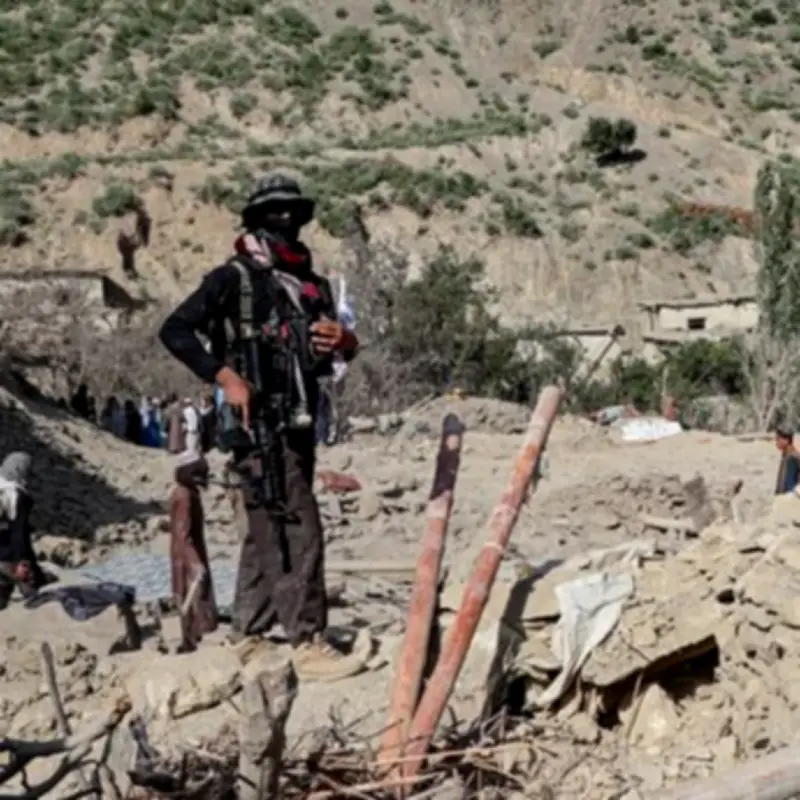
A fierce airborne assault has left 26 people dead in Afghanistan after Pakistani fighter jets targeted suspected terror hideouts in a dramatic midnight raid. The military aircraft carried out 'precise and calibrated' overnight strikes along a volatile mountain border, sparking a furious exchange with Afghan authorities.
Details of the Strikes
Pakistani Information Minister Attaullah Tarar confirmed the deadly bombardment, stating that the targets were operational bases of the banned extremist group Fitna Al Khwarij, also known as Tehreek-e-Taliban Pakistan (TTP). In a statement on X, Tarar said: 'Precise and calibrated strikes were carried out along Pakistan-Afghanistan border areas on hideouts and safe havens of masterminds and planners belonging to Fitna Al Khwarij, killing 26 khawarijs.'
According to government officials, the aerial blitz was a direct response to a series of bloody attacks on security forces, including a June 9 raid on a Federal Constabulary outpost, a devastating suicide car bombing at a military base on June 2, and an assault on a police station on May 9.

Targets Destroyed
Tarar defended the operation, saying: 'Based on credible intelligence, selective targeting of camps and hideouts was carried out with precision and accuracy.' He added that four targets were completely destroyed, including a training centre, a hideout, an ammunition cache, and a hub belonging to TTP commanders Aleem Khan Khushali and Akhtar Muhammad Jani Khel. While Pakistan desires regional stability, 'the safety and security of our citizens remains our top priority,' Tarar emphasised.
Afghan Response
Afghan officials condemned the strikes, claiming they violated airspace and killed innocent civilians. Government spokesman Zabihullah Mujahid listed Kunar, Khost, and Paktika as the affected provinces. He said: 'Last night, the Pakistani military once again violated Afghanistan's airspace and bombed civilian homes... As a result, 11 children, one woman, and one elderly man were killed, while 14 other women and children were injured.'
Impact on Peace Talks
The latest bloodshed threatens to derail fragile peace talks brokered by China. Tensions between the two countries have been high for months, with Islamabad previously declaring an 'open war' after a February clash left hundreds dead. Tarar had claimed an 'undeniable nexus' between Afghan leadership and terror cells operating across the border. The rivals share the disputed 2,611-kilometre Durand Line, which Kabul historically refuses to recognise.