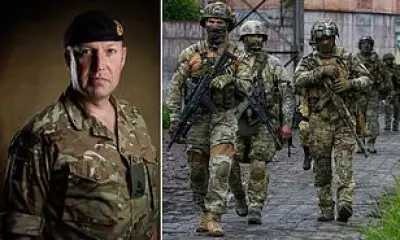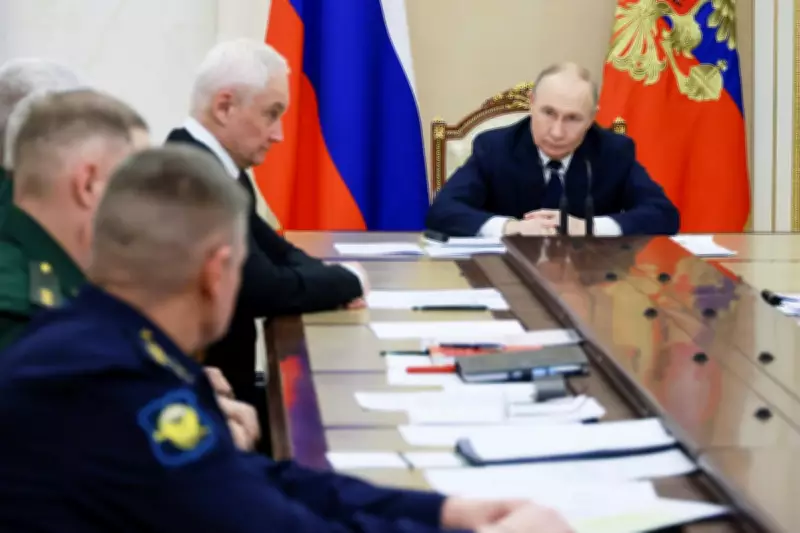
Russian intelligence agencies have escalated their efforts to steal Western technology and defense secrets as international sanctions continue to strain the country's wartime economy, according to three senior European intelligence officials who spoke to The Associated Press.
Aggressive Tactics and Methods
Moscow's agents are employing a range of tactics, including setting up fake companies, recruiting middlemen, and deploying cyber spies and hackers to gather information that could also be used to attack critical infrastructure. Four years of sanctions have hampered Russia's ability to procure machinery, technology, and research from Europe, while the prolonged war in Ukraine has strained key industries and pushed the country toward a potential financial crisis.
“They really know what they need,” said Christoffer Wedelin, deputy head of operations at the Swedish Security Service, noting that Russia is putting “serious effort” into acquiring advanced machine tools, factory equipment, research, and dual-use technology.

Targets: Defense, Space, and Dual-Use Tech
In Sweden, Russia is targeting the defense industry and high-end research on advanced weaponry like the Gripen fighter jet, as well as camera and laser technology developed for civilian purposes that could be integrated into Russian weapons systems. Juha Martelius, director of Finland’s Security and Intelligence Service, said Moscow is also seeking space technology, quantum computing, Arctic technology, and marine technology to keep pace with or gain an edge over the West in the coming decades.
Russia also requires sanctioned computer technology and software updates for machine tools, Martelius added. On Wednesday, Anne Keast-Butler, director of the UK’s signals intelligence agency, accused Russia of “relentlessly targeting” the UK and its European allies through technology theft, sabotage, and assassination plots.
Sanctions Violations and Cyber Attacks
In May, Swedish police arrested two individuals suspected of violating sanctions related to a Turkish company that shipped metalworking and machine tools to Russia. As schemes grow more complex, companies risk unwittingly becoming part of Russia's war supply chain, Wedelin warned. “All of the security and intelligence services in Russia are helping out on the state’s efforts to get this,” he said.
Russia is also deploying cyberattacks against European firms and critical infrastructure to gather information for future exploitation. Wedelin cited an attack on a Swedish power plant last year, where Russia-linked actors attempted to “destroy” the facility but failed due to detection. This marked a shift in Russia's modus operandi, as they now take greater risks and care less about attribution.
Economic Pressures Fueling Aggression
Russia's increasingly aggressive tactics may reflect mounting internal economic concerns. Kaupo Rosin, head of Estonia’s Foreign Intelligence Service, noted that about a third of Russia's GDP currently goes to the war effort, slowing growth and fueling inflation. Russia planned a budget deficit of 3.7 trillion rubles ($52.1 billion) for 2026 but had already reached 3.4 trillion rubles ($47.9 billion) by the end of February.
The Iran war that erupted on Feb. 28 temporarily boosted oil prices, and the US granted sanctions waivers for Russian oil sales while the UK watered down its sanctions to lower global fuel costs. Increased revenue may have improved Russia’s budget, but “it doesn’t save them,” Rosin said, warning of a potential financial crisis by year-end if Western pressure persists.
Morale and Outlook
Intelligence reports indicate a gloomier outlook among Russian officials over the past six months, with the narrative of “total victory” in Ukraine fading. Keast-Butler reported that nearly 500,000 Russian soldiers have been killed in Ukraine since the 2022 invasion. Stalled battlefield progress and economic woes have led many officials to privately question the war's purpose, according to Rosin.
Martelius believes President Vladimir Putin has a fairly clear picture of the economic challenges, though some reports may be sanitized. However, he cautioned against analyzing Russia as a typical Western country, emphasizing that political change is unlikely.