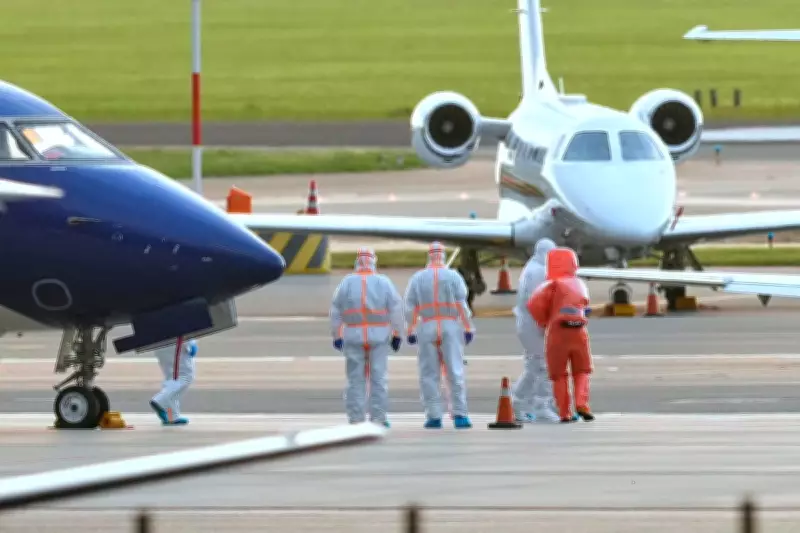
A third British national is suspected of having hantavirus linked to a cruise ship outbreak, health officials have confirmed. The UK Health Security Agency (UKHSA) reported that while two British nationals have confirmed hantavirus, there is now an additional suspected case involving a British national on Tristan da Cunha. The patient remains on the remote South Atlantic island, while the other two British nationals are hospitalized in the Netherlands and South Africa.
Outbreak Details
The remote islands of St Helena, Ascension Island, and Tristan da Cunha are located in the South Atlantic Ocean, midway between Africa and South America. A total of 29 people, including seven Britons, left the cruise ship MV Hondius when it docked in St Helena on April 24. Among them was a Dutch woman who became unwell during onward travel and died. In total, three people have died linked to the hantavirus outbreak on the cruise ship.
The UKHSA stated that none of the British citizens currently on board the ship, which is now traveling to Tenerife, are reporting symptoms, but they are being closely monitored. The ship is expected to dock in Tenerife on Sunday, according to the latest updates from the Spanish health ministry.

Repatriation and Monitoring
UK Government staff will be on the ground to support disembarking British nationals. Passengers and crew not displaying symptoms will be escorted to an airport and given free passage back to the UK. A dedicated repatriation flight is being organized, with strict infection control measures in place. Public health and infectious disease specialists from UKHSA and the NHS will be on board to monitor British nationals during the flight.
All British passengers and crew from the ship are required to isolate for 45 days upon returning to the UK, under close monitoring by UKHSA officials. Follow-up is already underway for individuals who may have been in contact with cases and have since returned to the UK or are in UK Overseas Territories.
Current Status of British Nationals
Two Britons are currently self-isolating at home in the UK after leaving the ship. They flew back via Johannesburg after disembarking in St Helena. Four Britons remain on the South Atlantic remote islands, and a seventh individual has been traced outside the UK. In total, 19 British nationals were listed as passengers on the MV Hondius, along with four British crew members.
A 69-year-old British man who was taken off the ship with symptoms is receiving intensive care in a private health facility in Sandton, Johannesburg, and is said to be improving. Another Briton, Martin Anstee, 56, was taken off the ship and flown to the Netherlands for specialist medical care; he is also improving.
Global Health Response
The World Health Organisation (WHO) reported on Thursday that morale has improved on board since the ship started its journey to Tenerife. Two doctors and infectious disease experts from the WHO and the European Centre for Disease Prevention and Control (ECDC) are conducting medical assessments of all passengers and crew. While the risk to the public is low, WHO Director-General Dr Tedros Adhanom Ghebreyesus warned that more cases could emerge due to the incubation period of the Andes virus, the variant of hantavirus linked to the outbreak, which can extend to six weeks. The WHO does not expect the outbreak to become an epidemic.
Contact tracing is underway for anyone who may have sat next to the two British passengers who returned to the UK on their flight home. The outbreak has been linked to a birdwatching expedition in Argentina that two passengers went on before boarding the ship.
The Ministry of Defence has worked with UKHSA to deliver vital diagnostic supplies, including PCR tests, to Ascension Island via a military plane. Professor Sir Peter Horby, director of the pandemic sciences institute at the University of Oxford, praised the measures taken, stating that repatriation and isolation are the right actions to protect UK citizens and the broader population. He emphasized that the risk to the general population is very low, but stringent measures are necessary because the virus can cause severe disease.