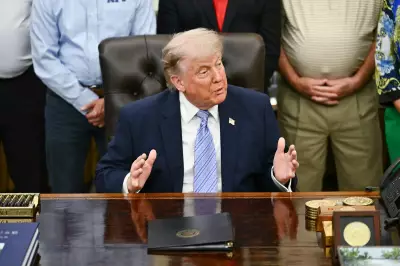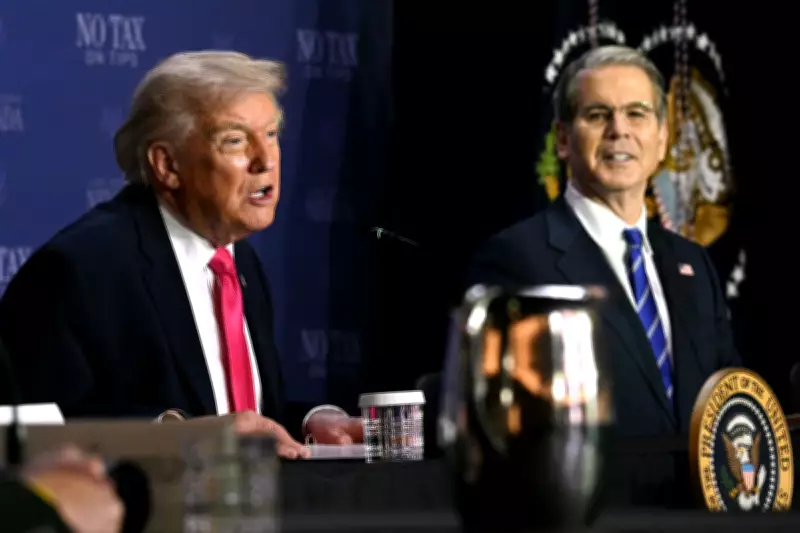
President Donald Trump has signed an executive order requiring banks to scrutinize their customers' citizenship, sparking new fears of an immigration crackdown. The directive, signed on Tuesday, mandates that bank regulators and government departments identify individuals without legal status who may be opening accounts, obtaining loans, or using credit cards.
Executive Order Details
While significant, the order proved less stringent than anticipated by financial institutions, which had braced for a requirement to mandatorily collect customers' citizenship information. The White House justified the move by citing potential credit risks, arguing that deported customers could default on loans. It stated it would not 'permit risks to our financial system posed by the extension of credit or financial services to the inadmissible and removable alien population.'
Challenges in Implementation
A significant challenge to assessing these risks is the absence of reliable public data, as banks have historically not collected information on customers' citizenship or immigration status. However, a study by the left-leaning Urban Institute offered some insight, estimating that between 5,000 and 6,000 mortgages were issued to customers using Individual Taxpayer Identification Numbers (ITINs), which are typically used by undocumented workers in lieu of a Social Security Number. The study highlighted banks' general reluctance to lend to ITIN holders, a sentiment echoed by Fannie Mae and Freddie Mac, who are similarly hesitant to insure such mortgages.

Previous Related Actions
This executive order follows a related move by the Treasury last November, which reclassified certain refundable tax credits as 'federal public benefits.' This change effectively bars some immigrant taxpayers from receiving these credits, even if they file and pay taxes and would otherwise qualify. Tax experts predict this reclassification will disproportionately affect Deferred Action for Childhood Arrivals (DACA) recipients and immigrants with Temporary Protected Status.