Novlyn Ebanks, a 73-year-old Jamaican, had been scheduled to receive free eye surgery at St Joseph's hospital in Kingston. However, after Jamaica unilaterally ended its nearly 30-year medical agreement with Cuba in March, she lost access to the procedure. The hospital's ophthalmology centre was primarily staffed by Cuban doctors, many of whom have already left the country.
'I'm really disturbed and concerned,' said Ebanks, who now faces seeking private treatment costing up to 350,000 Jamaican dollars (about £1,600).
Regional Healthcare Crisis
Across Latin America and the Caribbean, nearly a dozen countries have acquiesced to US pressure to terminate medical agreements with Cuba. The US alleges the programme constitutes 'forced labour' for doctors, who have most of their salaries withheld by the Cuban government. Cuba denies human rights violations, claiming the allegation is a pretext for Washington's efforts to economically strangle the island and force regime change.

Since Donald Trump began his second term, Jamaica, Guatemala, Guyana, Honduras, St Vincent and the Grenadines, the Bahamas, Antigua and Barbuda, and Paraguay have ended medical agreements either immediately or gradually. Mexico remains the lone holdout, with President Claudia Sheinbaum refusing to end the programme, stating that the approximately 3,000 Cuban doctors are of 'great help' in remote areas with personnel shortages.
Impact on Vulnerable Communities
Doctors, NGOs, and researchers agree that the poorest communities will suffer most from the sudden withdrawal of Cuban doctors, who typically serve remote and historically underserved areas. In Guatemala, Indigenous communities are predicted to be disproportionately affected.
'We did not get sufficient time to come up with or put in place a contingency,' said Damion Gordon, a lecturer at the University of the West Indies in Jamaica. 'It just happened suddenly, which created a sudden gap … and a crisis for those communities.'
John Kirk, professor emeritus of Latin American studies at Dalhousie University in Canada, said: 'People in rural conditions are the ones who will suffer.'
Background of the Programme
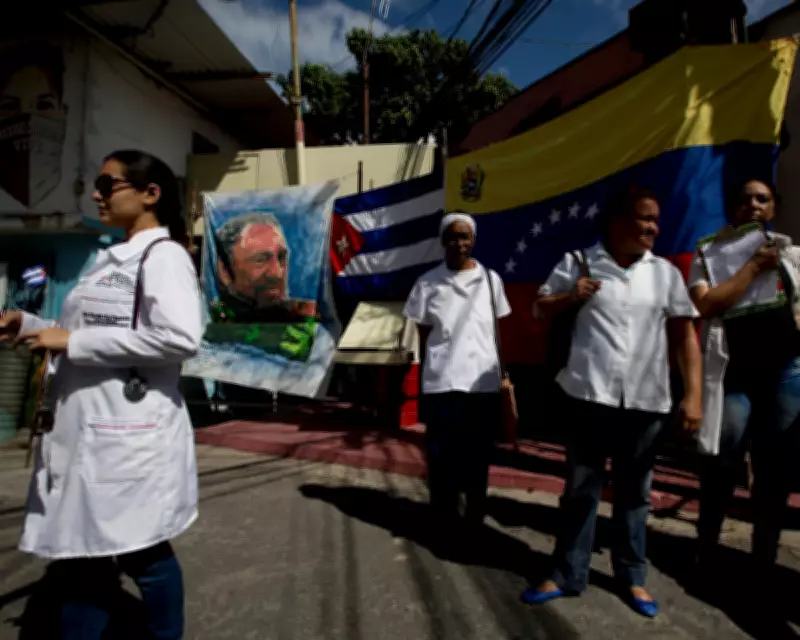
The Cuban medical programme began in 1960 when a brigade was sent to Chile after an earthquake. Since then, more than 600,000 Cuban doctors, nurses, and health technicians have been deployed to over 160 countries. Estimates suggest more than 20,000 doctors currently serve across about 50 countries, specialising in obstetrics, paediatrics, surgery, and oncology.
The largest deployment was in Venezuela, starting in 2004 with nearly 30,000 doctors at its peak. Although the mission has not officially ended, reports indicate doctors are leaving, with over 10,000 still believed to be on the ground. The Venezuelan mission, known as 'oil for doctors', became a key revenue source for Cuba, generating an estimated $5 billion annually.
Allegations and Defenses
The US claims the programme amounts to '21st-century slavery' due to Cuba retaining about 80% of doctors' salaries. Reports by the UN and the Inter-American Commission on Human Rights have gathered testimonies from former participants alleging coercion. However, Professor Kirk said he interviewed 270 Cuban doctors, nurses, and technicians, and none reported being forced to work.
Yanili Magdariaga Menéndez, a 41-year-old Cuban doctor who spent five years in Venezuela in the early 2010s, said: 'It's not slave labour. I joined the programme because I realised that, in Cuba, I couldn't give my family what I wanted to.' She earned about $40 monthly in Cuba but received around $1,000 abroad after government deductions. Although she did not consider the share 'entirely fair', she understood that Cuba depends on it to fund free education and healthcare.
Reactions and Future Steps
Helen Yaffe, a senior lecturer at the University of Glasgow, called the US allegation 'a pretext' and 'absolute rubbish', noting that Washington is not replacing medics or proposing to train domestic substitutes. A US State Department spokesperson said: 'We condemn forced labour and human trafficking involved in the Cuban regime's labour export programme … We urge other countries to treat Cuban doctors fairly as individuals and not as commodities to be traded by the regime.'

In Guatemala, NGOs like the Emergency Project will have to fill the gap left by about 400 Cuban doctors being gradually withdrawn. Darren Cuthbert, executive director of the NGO, said: 'To abandon a programme like that is to strip healthcare access from some of the most disenfranchised and underserved populations.'
Jamaica's health minister, Christopher Tufton, admitted the departure created 'gaps' challenging to fill due to specialisation. The country is doubling shifts for local doctors and launching an ad campaign to encourage Jamaican doctors abroad to return. 'I think we're better off moving in that direction, where we can create less dependence [on foreign doctors],' he said.
Novlyn Ebanks, still unsure how she will pay for surgery, misses the Cuban doctors, whom she described as 'very patient, humble and understanding'. 'These are the people that we really need to have around us to take care of us,' she said.