Cuban farmers are struggling to feed the nation as a United States energy blockade causes severe shortages of water, electricity, and fuel. Eduardo Obiols Sobredo, a 58-year-old farmer, expressed his despair: "I feel like crying. It's so sad to see crops grown with so much effort go to waste, especially when you know there are so many who need them."
Fuel Shortages Paralyze Agriculture
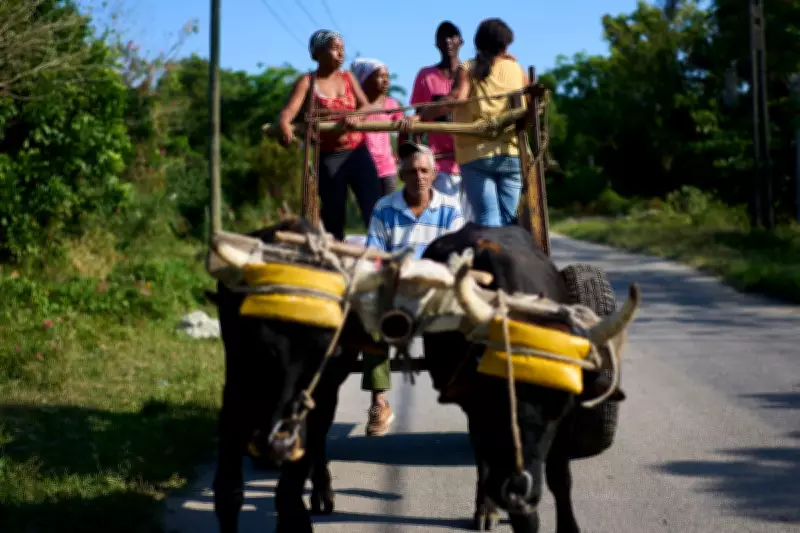
Farming equipment across Cuba has fallen silent due to a lack of fuel. Many farmers are reverting to animal and manual labor, but resources are limited. The quality and quantity of fruits and vegetables are declining, and prices are soaring beyond the reach of many in the country of nearly 10 million people.
While global energy supplies are strained by the Iran war, Cuba uniquely blames targeted actions by the Trump administration. The island went three months without a fuel shipment after the US attacked Venezuela, a key supplier, and threatened tariffs on any country selling oil to Cuba. Existing US sanctions already prevented Cuba from importing certain goods.

Farmers Forced to Adapt
In the town of Las Minas, 65 farmers share only 18 oxen. Obiols Sobredo rents animals when available but relies on manual labor for smaller tasks. He grows tomatoes, sorghum, cassava, and other crops, and raises goats whose milk is served at schools. Clearing his land once took 15 minutes with equipment; now it takes at least three days. He has not received his monthly gasoline supply from the government since January.
"It has forced us to take other kinds of actions in order to survive," he said. The lack of petroleum also disrupts delivery trucks, forcing farmers to use precious gas to transport milk for freezing. Power outages prevent him from grinding food for his goats, which produce less milk due to poor nutrition. A solar irrigation system financed by a nonprofit cannot be set up without gasoline, and rain has not fallen in nearly two months.
Impact on Markets and Consumers
Suppliers increasingly use horse-drawn carts, which bruise produce during long trips. At a state market in Havana, 68-year-old shopper Juan Lázaro pointed to small, greenish tomatoes: "They're lacking fertilizer, you can tell they're lacking water." A retired mechanic forced to work in a convenience store, he said the current crisis is worse than the "Special Period" of the 1990s: "We've been hitting rock bottom for a while." Another shopper, 64-year-old Griselle Guillot, now hesitates to buy rice, needing to budget for onions as well.
Produce vendor Anthony Batista Guerra, 47, said customers already know the situation: "They know things are bad right now." At closing time, a vendor discarded a tomato that shoppers deemed unfit to buy.
Retirees and Laid-Off Workers Turn to Farming
Argelio González Juvier, an 82-year-old retired interior ministry official, now works on a farm to supplement his income. "The earth provides everything. That's what we should focus on," he said, calling the US blockade a crime. "Cuba doesn't deserve what they're doing to us. The Americans think they're the owners of the world."
Jordanis Ríos, 36, a former truck driver, lost his job due to the fuel shortage. He now clears farmland with a machete for $4 a day. "My job is there. Just waiting for the country to improve," he said. He declined to comment on recent US-Cuba talks, the first since 2016, saying: "My goal is to survive here and see what happens."
Top Cuban officials are visiting farmers to urge increased production for self-sufficiency, but the blockade's effects remain severe.