The Western world has long been sliding into an era of anti-white injustice, and the death of 18-year-old Henry Nowak reveals how deeply this prejudice runs. Henry, a Polish-British boy from Essex, was a few months into his first year studying accountancy at the University of Southampton.
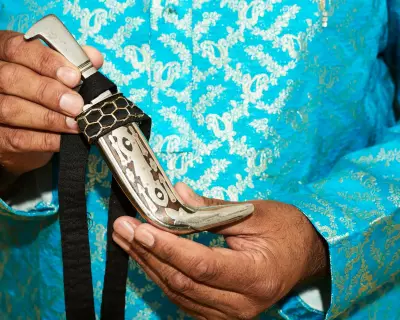
On the night of December 3, 2025, after a night out with his football teammates, he was walking home through the Portswood area of Southampton. There, he encountered Vickrum Digwa, a 23-year-old Sikh man carrying a knife. After a confrontation, Digwa stabbed Henry five times, with the fatal wound piercing his heart. Henry ran and collapsed on the street. When police arrived, Digwa and his family lied, claiming Henry had racially abused and assaulted him.
Police bodycam footage shows Henry telling officers he had been stabbed. One officer replied, "I don't think you have, mate," while Henry was handcuffed and rolled face down into the dirt. He died shortly afterward. A video recovered from Henry's own phone, later found in Digwa's pocket, revealed no racial abuse occurred. The prosecution argued Digwa fabricated the allegation to justify the killing, and the jury agreed.

On May 28, 2026, Digwa was convicted of murder. On June 1, he was sentenced to a minimum of 21 years in prison. However, this justice was partial, as it did not answer why British police believed an attacker's unverified racism accusation over a bleeding boy begging for help, who tragically cried "I can't breathe."
The Legacy of George Floyd and White Guilt
After George Floyd's murder in 2020, America and the United Kingdom convulsed. In the US, statues fell, riots erupted, and officials knelt in solidarity with a movement claiming Floyd was killed by a systemically racist system. In the UK, monuments to British statesmen were torn down, and streets filled with demonstrators demanding justice for a man who died abroad. British MPs and police took a knee, despite the events having little to do with them.
This response stems from "white guilt," a concept my father, writer Shelby Steele, has long argued is not just a feeling but an accusation that whites must atone for past racial sins like slavery and colonialism. This drives whites to dissociate from assumed sinfulness by seeking allyship with people of color, trapping society in a script where whites are eternal oppressors and people of color eternal victims.
The Cost of White Guilt Tribalism
The cost of this hierarchy is borne by real people like Henry. For nearly two decades, police and officials allegedly ignored systematic rape of young white working-class women by gangs of Southeast Asian heritage. Whistleblowers were smeared as Islamophobes. Independent inquiries found officials downplayed abuse to avoid appearing racist. Similarly, during Pro-Palestine protests in London, police moved heavily against Jewish counter-demonstrators, telling one man wearing a kippa, "You are quite openly Jewish... I'm worried about the reaction to your presence," and threatening arrest for causing a breach of peace.
Law enforcement in the UK appears racially calibrated, with rules bent to favor those sharing the skin color of historical victims. Whites are treated as a permanent defendant class bearing collective guilt with no redemption. When police instinctively side with a brown accuser over a white victim, equal justice is hollowed out. This is the moral logic of white guilt tribalism, where accusations of racism carry sacred weight, and questioning them is worse than doubting a dying boy.
American Framework in British Institutions
White guilt was born in America, but the UK imported it through immigration from former colonies and absorbed critical race ideas like white privilege and allyship via elites and institutions. In some ways, the UK enforces this framework more aggressively than America. The US has a deeper tradition of individual rights and colorblind justice, while Britain's rights culture grew slowly from monarchy and class. Henry Nowak's death is a Western tragedy, showing what happens when an American-born moral deformation finds fertile ground in another country's institutions. It warns the West of the consequences of abandoning the principle that justice is for individuals, not tribes.