Peruvian State Held Accountable for Mother's Death in Forced Sterilisation Scandal
In a landmark decision, the highest human rights court in Latin America has condemned Peru for the death of Celia Ramos, who died in 1997 after undergoing a coerced sterilisation procedure. The ruling by the Inter-American Court of Human Rights marks the first legal judgment on Peru's forced sterilisation programme, which operated from 1996 to 2000 and targeted poor, rural, and Indigenous women.
Court Finds State Internationally Responsible for Violations
The court determined that the Peruvian state is internationally responsible for violating Ramos's rights to life, health, personal integrity, family, access to information, and equality before the law. Ramos, a 34-year-old mother of three, was pressured by health personnel to undergo a tubal ligation in a makeshift facility lacking necessary equipment and medications. She suffered a severe allergic reaction during the operation and died 19 days later.
The ruling also highlighted the state's lack of due diligence and unjustified delay in investigating the incident, as well as the profound impact on Ramos's daughters, husband, and mother. This failure violated their rights to personal integrity and family, underscoring the broader consequences of the campaign.

Mass Sterilisation Campaign Under Fujimori's Rule
The mass sterilisation of hundreds of thousands of women in the 1990s is considered Peru's most flagrant human rights violation under former president Alberto Fujimori. According to the court, the campaign resulted in over 314,000 sterilisations of women and 24,000 of men, many performed under coercion and without valid consent, primarily affecting Indigenous women and those living in poverty.
Notably, neither Fujimori nor his health ministers were ever prosecuted for this brutal initiative. The court noted that Peru's National Reproductive Health and Family Planning Programme had set numerical targets for women of child-bearing age, further institutionalising the abuse.
Victims and Advocates React to the Ruling
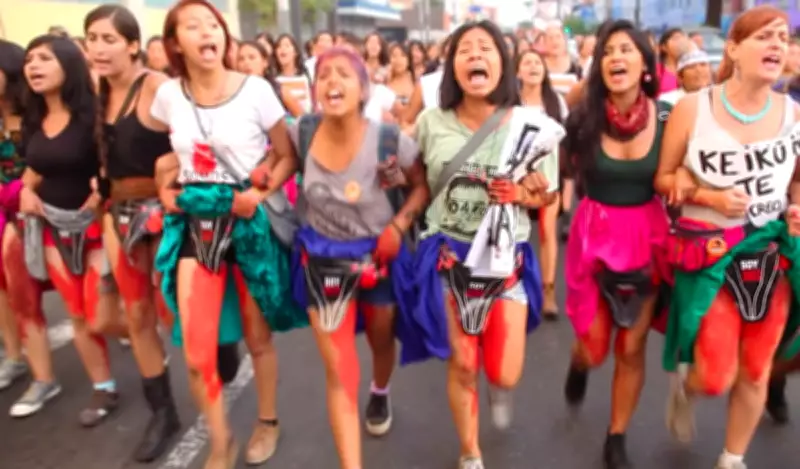
At a press conference in Lima, Catalina Martínez Coral, associate director at the Center for Reproductive Rights, hailed the decision as a victory for human rights. "Yesterday, history was made not only for women in Peru but for the region and the world," she stated. "The court recognises, reiterates and reinforces that sexual and reproductive rights are human rights."
Marisela Monzón Ramos, the eldest daughter of Celia Ramos, expressed mixed emotions. "We represent all of those thousands of women that suffered so much over so many years," she said. "For us, with this sentence, we are reliving what we have carried for so many years. It is both difficult and comforting." She added that justice does not erase the injustice of her mother's death.
María Ysabel Cedano, a lawyer for the women's rights organisation Demus, emphasised that Ramos's story reflects the plight of thousands of victims. The case was first presented to the Inter-American Commission on Human Rights in 2010, leading to a 2021 report that declared state responsibility and recommended reparations and preventive measures.
Broader Implications and Ongoing Struggles
This ruling sets a precedent for addressing historical human rights abuses in Peru and beyond, highlighting the need for accountability and reparations for affected communities. It underscores the enduring trauma faced by survivors and their families, many of whom continue to seek justice decades later.
As Peru grapples with this dark chapter, the decision serves as a reminder of the importance of protecting reproductive rights and upholding human dignity for all, particularly marginalised groups.