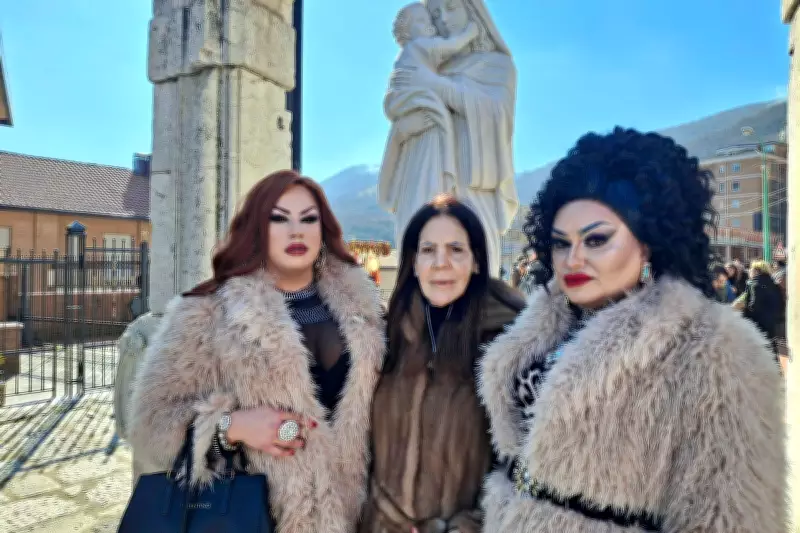
Neapolitan Queer Pilgrimage Blends Catholic Ritual with Ancient Folklore
The Church of the Annunziata in Mercogliano, near Naples, recently hosted a remarkable gathering where Catholic devotion met vibrant queer expression. Pews were filled with attendees adorned in lacquered nails, towering wigs, and dramatic eyelashes, as the femminielli community convened for their annual pilgrimage known as La Juta.
A Celebration of Identity and Faith
This event honours the biblical Mary while affirming the ancient femminielli identity—a traditional Neapolitan third gender with deep historical roots. The parish priest, Reverend Vitaliano Della Sala, emphasized in his February 2 homily that the Juta represents "a celebration of the encounter between the human and the divine." He stressed its heightened importance in today's world, where violence, prejudice, and war threaten rights globally.
Held annually on Candlemas, which commemorates Jesus' presentation at the temple, the pilgrimage traditionally involves hundreds of femminielli hiking to the Sanctuary of Montevergine. This year, however, a landslide forced relocation to the Church of the Annunziata. During Mass, faithful bring candles for blessing, blending Catholic ritual with cultural heritage.

Historical Roots and Modern Challenges
The femminiello identity originates from a Neapolitan term combining female essence with male diminutive, representing a third gender role with ceremonial and sacred historical functions. According to medieval lore, in 1256, two young men accused of same-sex relationships were miraculously saved by the Madonna of Montevergine, who melted their icy chains. This established the Madonna, also called Mamma Schiavona, as a protector of the oppressed.
Despite this ancient tradition, the Juta has faced interruptions. In 2002, femminielli were barred from the Sanctuary of Montevergine, highlighting ongoing tensions. This year's event also carried sombre notes, as Reverend Della Sala remembered Paolo Minturno, a 14-year-old who died by suicide after enduring bullying with feminized derogatory terms.
"We live it deeply—we cried in church, we held each other because we talk about transphobia, we talk about sisters who have died," said Jupy, a femminiello participant.
Inclusion and Resistance
In a significant milestone, this year marked the first time transgender women were invited to perform church readings. Gold Queen, a transgender entertainer, remarked outside the church, "They want people to believe the church is a place of darkness for us. But there are people inside the church who open their arms, open the doors and help tear down the walls of inequality."
Lust Queen, a trans woman who read the Psalm at Mass, described the event as "an act of faith, an act of resistance." She added, "We are here for all oppressed peoples."
Cultural Significance and Anthropological Insights
Anthropologist Marzia Mauriello from the University of Naples L'Orientale, who studies gender variance in southern Italy, explained that femminielli have experienced a complex history in Naples, mixing acceptance with distrust and loneliness. She described the term as "a floating signifier, like 'queer,' which changes depending on who is speaking."
Their social inclusion has been facilitated by a "high level of performativity," Mauriello noted, aligning with Naples' theatrical traditions. Songs, gestures, and dances have allowed femminielli to navigate public spaces, contributing to their integration. Historically viewed as existing between male and female, they were often seen as having privileged connections to the supernatural.
Reviving Traditions and Expanding Identity
Several unique Neapolitan rituals centre on femminielli:

- The Wedding of the Femminielli features mock nuptials with participants in wedding gowns.
- A childbirth ritual involves theatrically giving birth to a doll, symbolizing fertility.
- Femminielli also lead Catholic rosary prayers, embedding their identity within formal religious practice.
The Trans Association of Naples, active since 2007, has worked to revive these fading traditions. Vice President Loredana Rossi observed, "After a few years, little by little, people started coming back, and today you see a multitude." She highlighted how femminielli culture flourished post-World War II, when they took on domestic roles as men were away.
Rossi personally identifies with the femminiello heritage, stating, "I don't define myself as a trans woman—I feel like a femminiello."
Pre-Christian Connections and Contemporary Celebrations
Anthropologists note parallels between femminielli and ancient Mediterranean fertility cults from Phoenician, Anatolian, and Greek cultures. Some participants seek to reclaim these pre-Christian layers. After Mass, Jupy and friends celebrated with pagan rituals involving candles and archaic hymns, calling it "a queer cultural heritage that predates the importation of American LGBTQ categories."
The Juta concluded with a lively, performative version of traditional Neapolitan bingo, blending calls to the Virgin Mary with pop lyrics. This fusion reflects the Catholic, Neapolitan, and popular cultures intrinsic to the femminielli community.
For Rossi, the priest's words reinforced a sense of belonging: "He spoke of a God who is love, who embraces everyone without looking at color, ethnicity, status or religion—a human God. I felt I was in the Lord's house, and that it was our home too."