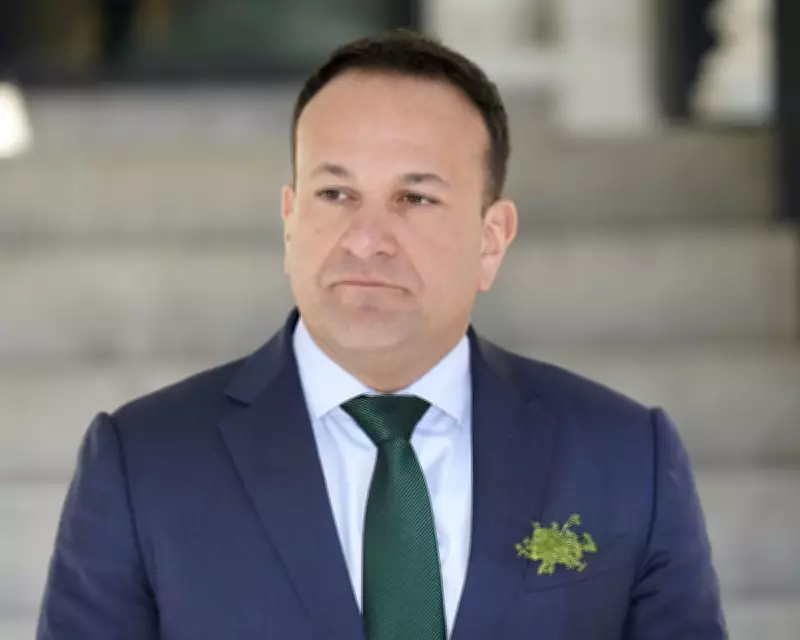
Leo Varadkar, Ireland's former taoiseach, has issued a stark warning that LGBTQ+ rights in Europe are facing a "chill wind" from both east and west, as Vladimir Putin's Russia exports its conservative agenda and the United States retreats under Donald Trump's influence. Varadkar, who made history as Ireland's first openly gay prime minister in 2017, expressed deep concern over the current trajectory, stating that Europe must "step up" to prevent further erosion of recent progress in human rights and freedoms.
A Flickering Light in a Darkening World
In a candid assessment, Varadkar remarked, "I'm afraid of where things are going. Europe is still the light when it comes to human rights and democracy and freedom of expression, given what else is going on in the world – but it's a flickering light." He highlighted that his role as a senior fellow at Harvard University's Carr-Ryan Center for Human Rights has provided him with a frontline perspective on global efforts to reshape LGBTQ+ rights, revealing alarming trends.
Russian Influence and US Withdrawal
Varadkar pointed to Russia's deliberate strategy to promote a particularly conservative form of Christianity across Europe, saying, "It's clear that Russia has decided that this is one of the issues that they're taking an interest in. Putin has embraced ... a conservative agenda, and they're spreading that message into Europe." Historically, this push was countered by the United States, especially in central and eastern Europe. However, with anti-diversity rhetoric surging in the US, including over 600 bills targeting LGBTQ+ rights, Varadkar noted that American corporations are pulling back from sponsoring events like Pride, and diplomats are avoiding once-regular engagements.

"So in many ways they had a kind of liberal influence from America pushing one way and very conservative forces from Russia pushing the other way. And now the Americans are off the pitch," he explained. "There's a chill wind coming in from the west as well as from the east – and that's where Europe is now caught."
The Need for European Vigilance
Emphasising the urgency of the situation, Varadkar called for increased vigilance from the EU and European nations. "In the same way we have to be in charge of our own defence, we have to defend what are our European values and our charter of fundamental freedoms," he asserted. He reflected on Ireland's landmark 2015 same-sex marriage vote, part of a period of "enormous progress" that has since slowed or reversed in some regions.
Progress Is Not Inevitable
Varadkar admitted that a decade ago, many were "a little bit naive" in believing progress was inevitable. "We just thought that the tide of history was going one way, and every year we would see more countries liberalising their laws or at least ending criminalisation," he said. "But I think we were maybe a bit naive to think that progress was inevitable, because it isn't. And it can be reversible as well." He cited examples like the US's "don't say gay" laws in Florida and regressive measures in Bulgaria, Hungary, and Slovakia as evidence of this backlash.
A Broader Threat to Human Rights
While his work focuses on LGBTQ+ rights, Varadkar stressed that this issue is part of a much larger picture. "Often when the rights of one group are targeted, the rights of others are targeted later," he warned. He referenced the massive protests in Budapest against Hungary's attempts to ban Pride, noting that participants understood the broader implications: "There was a real understanding that if you ban marches and freedom of expression by gay people, it could be students next, it could be trade unionists after that. So if one group is having their freedom attacked then it's in everyone's interest that they be defended."
A Personal Responsibility
For Varadkar, his advocacy is deeply personal. "I was very lucky to be born in the country I was, at the time I was," he reflected. "Not just to be able to be myself but also to be a leader of my country. I feel that then generates a certain responsibility to other people around the world who maybe have had similar experiences but didn't with the birth lottery or the time lottery the way I did." His unexpected step down in 2024 has allowed him to focus on these critical human rights issues, urging Europe to act before the flickering light dims further.