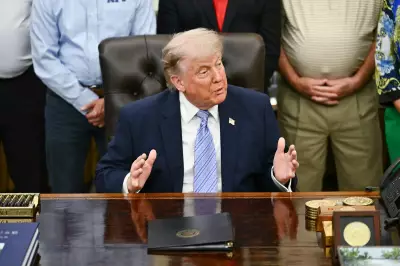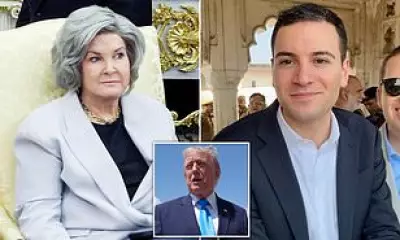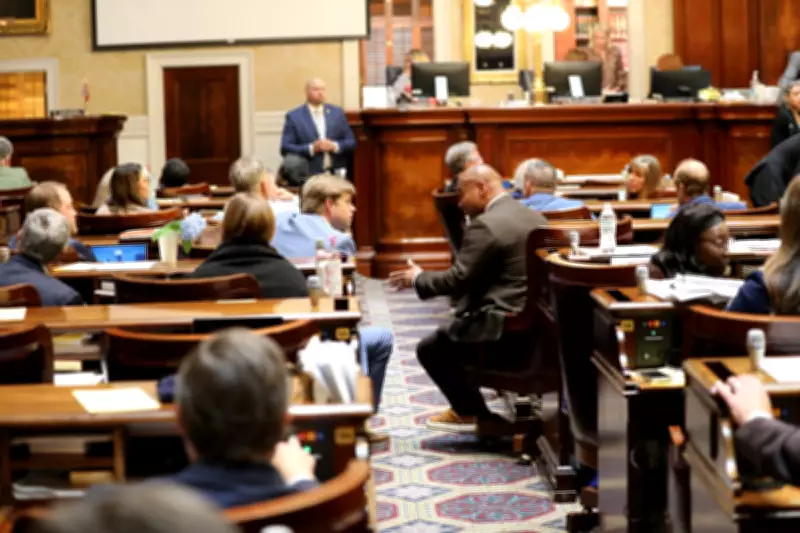
Republican lawmakers in South Carolina have once again defied former President Donald Trump, rejecting a rushed effort to redraw the state's congressional districts ahead of the November midterm elections. In a 26-18 vote, state senators turned down a mid-decade redistricting plan during a special legislative session, ending hopes in Washington to split Representative Jim Clyburn's district and gain additional gerrymandered seats for Republicans.
Background of the Redistricting Proposal
The rejected proposal would have canceled the ongoing congressional election, which began early voting on Tuesday, and rescheduled it with new district lines. These lines would have significantly reduced the number of reliably Democratic voters in Clyburn's district. The push came as Republicans seek to redraw voting districts to their advantage, aiming to preserve their slim majority in the US House of Representatives. This effort was spurred by a recent US Supreme Court ruling that weakened minority protections under the federal Voting Rights Act.
Senate Vote and Opposition
The South Carolina state senate comprises 34 Republicans and 12 Democrats. Fourteen Republicans joined Democrats in blocking the redistricting bill, just days after a supermajority in the state House of Representatives approved it. State Senator Tom Davis, a Republican from Beaufort and Jasper counties, criticized the process: "Nineteen days ago, a map was generated by a consultant from Washington DC, without any input from South Carolinians. We were told: pass this map." Davis noted that the consultant spoke with legislators via Zoom for only seven minutes and 40 seconds before leaving without taking questions. "Seven minutes and 40 seconds is our legislative record. I don't know how anybody with a straight face in this chamber can vote for a map with that absence of diligence," he added.

Timing Concerns
Some senators argued it was too late to make changes. "South Carolina citizens are going to the polls today. And neither my conscience nor common sense is going to let me stop an election that is already under way," said Republican State Senator Richard Cash. Meanwhile, Clyburn, whose district Republicans sought to reshape, was among the first to cast an early ballot in Orangeburg. He defiantly insisted he would run for re-election regardless of the district's configuration. "I'm OK if it's Trump plus 20," Clyburn said, referring to a potential Republican advantage. "I would be running where I live."
Voter Turnout and Reaction
More than 26,000 votes were cast in South Carolina by noon on the first day of early voting for the June 9 primary, following Democratic calls for a strong turnout against the proposed map. In comparison, about 125,000 early votes were cast during the entire two-week period in 2022. State Representative Russell Ott, a Democrat from Columbia's southern suburbs, stated: "We're not going to be dictated to. We're not going to be forced to do something by Washington DC. And I think that's what South Carolina is all about. That's kind of in our DNA." Ott expected backlash against Republican members who defied Trump: "They were put in an untenable position by Trump. I think that if I'm a Republican, that's probably who I'm pretty upset at right now. This was not something that had to happen."
Trump's Involvement and Senate Leader's Stance
The Republican-led House had already passed a plan to reconfigure Clyburn's district, void current primary results, and hold new primaries in August. Trump lobbied for the plan, making at least two phone calls to State Senate Majority Leader Shane Massey and phoning into a private meeting of Republican senators earlier this month. He also pressured via social media. However, Massey resisted: "South Carolina has always punched above their weight. Doing this will diminish that influence." He acknowledged personal consequences: "There are likely consequences for me, personally, taking the position that I am right now. I'm comfortable with that. I may not like it, but I'm comfortable with it."