Civil rights attorney Damario Solomon-Simmons first learned about the Tulsa Race Massacre during his junior year of college, when an African American studies professor lectured about the 1921 attack that destroyed the prosperous Black community of Greenwood. "I actually told a teacher, 'I'm from Tulsa. That's not true,'" Solomon-Simmons recalled. "And of course, I was wrong."
That moment sparked a lifelong commitment to seeking reparations for the massacre's survivors and descendants. Nearly 105 years later, no compensation has been provided, and no perpetrators have been held accountable. Solomon-Simmons details this fight in his new book, "Redeem a Nation: The Century-Long Battle to Restore the Soul of America," which serves as a blueprint for justice in historical atrocities against Black Americans. The book is set for release on Tuesday.
The Greenwood Massacre and Its Aftermath
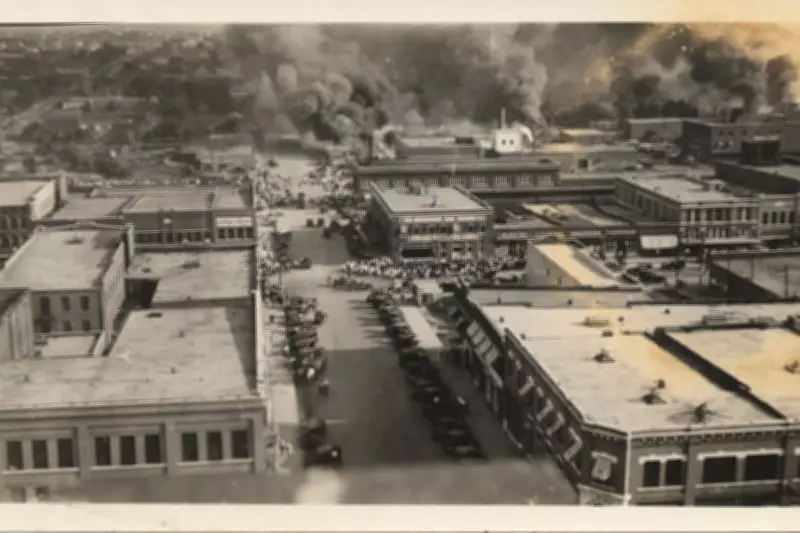
The Tulsa Race Massacre saw white mobs destroy over 35 city blocks of Greenwood, known as Black Wall Street, destroying an estimated 191 businesses and displacing roughly 11,000 Black residents. The official death toll was 36, but historians estimate between 75 and 300 people died. Greenwood was a thriving self-contained community with Black-owned businesses, including grocery stores, cafés, a movie theater, and more.

"If you can ignore Greenwood, which was the beacon of Black prosperity and Black progress in the history of this country, then you can ignore Black people in general," Solomon-Simmons told The Associated Press. He believes the national focus on this case stems from its symbolic importance to all Black Americans.
Reparations as Soul-Redeeming Work
Solomon-Simmons's book arrives just months before the United States marks 250 years since its founding in 1776, 89 years before chattel slavery was abolished. He questions how Americans can celebrate the nation's achievements without addressing reparations, which historians link to modern racial wealth disparities. "We cannot talk about what America has been and will be, without making sure that these issues are discussed and we get reparatory justice for both" slavery and the Tulsa massacre, he said.
In the book, Solomon-Simmons argues that America's soul cannot be restored because it never had one. "America has never had a soul. … There was no moral center to recover," he writes. He suggests that the nation must simultaneously rebuild itself and repair Black America. "The struggle for justice in Greenwood is not about returning to a mythical past. It is about proving whether America can build a soul at all through truth, through justice, through repair."
Debates Over Reparations
Reparations for slavery and historical racial injustices have been debated since Reconstruction. Jennifer L. Morgan, a history professor at New York University, notes that debates are complicated by questions of who pays and receives reparations. "I don't think that we're talking about individuals who owe anybody else reparations. I think we're talking about states, about institutions, about the nation," she said. Opponents argue there are no living culprits or direct victims of enslavement. Solomon-Simmons counters that the perpetrators of the massacre are still in Tulsa, referring to the city and chamber of commerce, which plaintiffs allege obstructed Greenwood's recovery.
One survivor, 111-year-old Lessie Benningfield Randle, is still alive and part of the reparations lawsuit. "If we cannot get her reparations while she's alive, for the massacre, it's gonna make it that much harder for us to get reparations for enslavement, Jim Crow, redlining and all those things that we are owed," Solomon-Simmons said.
The Ongoing Legal Battle
Solomon-Simmons's commitment deepened in law school when he worked with the Reparations Coordinating Committee, mentored by the late Harvard Professor Charles Ogletree Jr. and the late Johnnie Cochran. In 2020, he led a lawsuit on behalf of 11 plaintiffs, including the last three living survivors, against the City of Tulsa and seven defendants. In 2024, the Oklahoma Supreme Court dismissed the lawsuit, and the Justice Department concluded that no criminal prosecution is possible. However, the fight continues for cash payments to Randle and other descendants, as well as the return of stolen land.

In 2025, Tulsa's first Black mayor, Monroe Nichols, endorsed Project Greenwood, which proposes compensating Randle, funding scholarships for descendants, and designating June 1 as Tulsa Race Massacre Observance Day. Solomon-Simmons also runs the nonprofit Justice for Greenwood, founded before the 2021 centennial.
"One thing I've learned from this work, and as a lawyer in general, is that people want justice," he said. "People want reparations, but people (also) want acknowledgment. They want to be seen. They want people to understand that something happened to them and their family, and they want an apology."