The UK must rethink how development is financed and delivered, embracing genuine global partnerships to prevent vulnerable communities from being left behind, writes Richard Hawkes, CEO of Oxfam GB.
A Humanitarian Emergency Unfolding
As I sit in a packed conference room in London, the words of my colleague based in Juba, South Sudan, echo in my mind: 'We are faced with a humanitarian emergency unfolding in plain sight, and it will only worsen as the rainy season sets in. Our cities are burning, our villages are being erased, survival has replaced living, and we feel invisible to the world.' Outside, London hums under a familiar grey sky, with mild weather — a stark contrast to the relentless, suffocating heat and impending rains she describes in a country on the frontlines of the climate crisis.
Foreign Secretary Yvette Cooper has convened the Global Partnerships conference this week to tackle 'shared challenges,' following last year's announcement that the UK would cut an estimated £6 billion from the overseas budget by 2027 to fund increased defence spending.

The Impact of Aid Cuts
The UK government has framed these cuts as 'reforms,' but they are already devastating the people they were meant to support. Access to clean water and sanitation is under threat, climate shocks are hitting harder and more frequently, and progress on gender equality is being rolled back. Reducing aid is a political choice — one that risks turning our backs on communities already suffering from consequences they did little to cause.
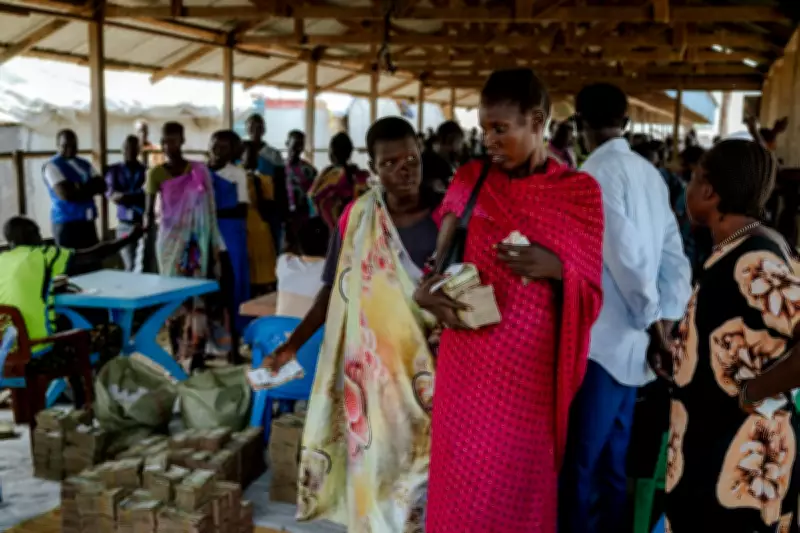
In March, when the Foreign, Commonwealth and Development Office (FCDO) revealed its priorities for the overseas aid budget, Cooper confirmed a reduction in 'direct grant funding' to several African countries. While Oxfam welcomes the protection of allocations to Sudan, cuts elsewhere will hit countries like neighbouring South Sudan, which hosts nearly half a million Sudanese refugees and is one of the world's most fragile and climate-affected states.
At a time when local organisations need flexible, direct support to respond to rapidly changing crises, aid cuts risk weakening locally led responses and concentrating decision-making in distant systems rather than with communities themselves.
Calls for Real Partnership
My mind goes back to the conversation with my colleague in Juba. 'Armed actors arrived in the middle of the night, taking everything they could: vehicles, equipment, assets.' She described how quickly reality shifts on the ground — one moment there is clean running water, the next it is gone. Communities must be able to assess how money is invested and do so quickly.
Across the Global South, colleagues and communities echo the same message. At a time when many countries face compounded effects of conflict, climate change, and economic systems shaped by colonial legacies, reducing direct support only deepens existing inequalities.
If the government is serious about reforming aid, it means leaving paternalism behind in favour of real partnership — listening to Global South calls to move power and resources to local communities, and recognising that decisions cannot be channelled through large, distant systems. It requires flexible, agile funding that can respond in real time, whether to flooding in Mozambique or cholera outbreaks rising globally.
Reforming Investment Approaches
With less aid, how the remaining budget is used matters more than ever. The government says it is shifting towards 'partnerships for investment' delivered through British International Investment (BII). BII has received substantial aid funding despite evidence it invests in private health and education companies linked to serious human rights abuses. Only 14 per cent of BII's investments are in the world's least developed countries, risking deeper poverty and inequality. If the government is serious about moving from aid to investment, it must choose genuinely locally led partners.

There is also a wider question about the global financial system. High levels of debt and an unfair international tax system continue to drain resources from many Global South countries — money that could be invested in public services, crisis response, and long-term resilience. Meanwhile, Oxfam research shows billionaire wealth is rising at extraordinary speed: last year saw a record number of billionaires, with collective wealth of $18.3 trillion, while nearly half the world's population lives in poverty. There is enough money to tackle poverty and climate breakdown, but political choices protect concentrated wealth while aid budgets are cut. A genuine partnership approach should extend here too, with the UK backing Global Majority-led efforts on debt relief, fairer tax systems, and reforms that keep more resources in-country.
Radical Reform Needed
We need to rethink how development is financed and delivered. That means radically reforming the global development system — tackling inefficiencies, embracing innovation, and ensuring every pound goes further for the people it is meant to support. It means using new approaches, from impact investing (where money generates both social benefit and financial return) to outcomes-based finance (where funding is tied to achieving agreed results). It also means radically reforming how international NGOs work, shifting power and resources closer to communities and rethinking the role of Global North-based organisations.
We have a rare opportunity to change course. The FCDO's Global Partnerships conference should be a moment to reset and build a development model that is more responsive, equitable, and effective — moving beyond incremental change towards the radical reform the sector has long needed, putting power and funding where they belong.
Richard Hawkes is the CEO of Oxfam GB. This article has been produced as part of The Independent's Rethinking Global Aid project.