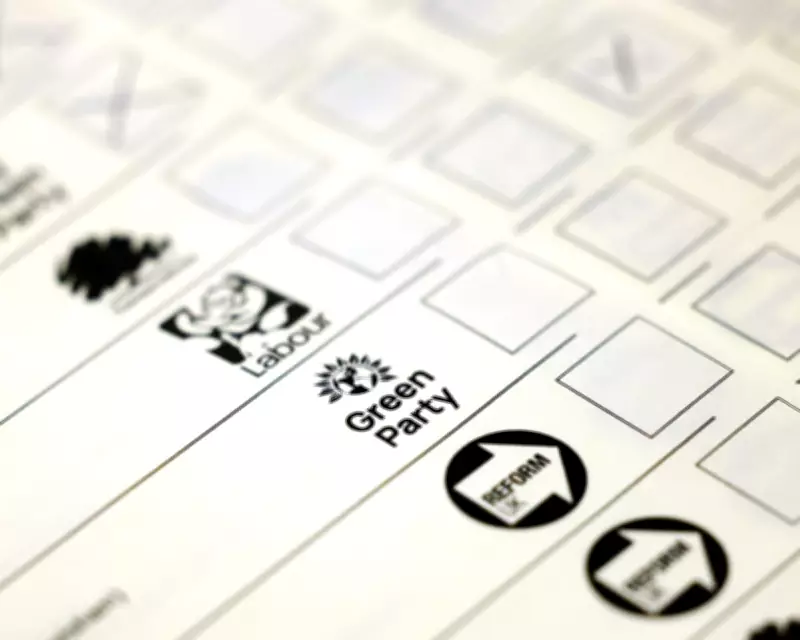
A Guardian analysis of last week's local elections in England has uncovered a significant alphabet effect, showing that candidates with surnames near the beginning of the alphabet are far more likely to top their party's vote. The data, compiled by Democracy Club, reveals that in wards where a party fielded three candidates, those listed first on the ballot paper finished ahead of their party colleagues in 65% of cases.
Reform UK Most Affected
The figures indicate that Reform UK experienced the strongest correlation between ballot position and performance. Approximately 74% of alphabetically advantaged Reform candidates topped their party's vote, compared with fewer than 8% of those listed last. The Green party showed the second-strongest effect, followed by Labour.
Candidate Experiences
Juliet Zhong, who stood for Reform UK in Kensington and Chelsea, noted the disparity: "In the Queen's Gate ward, where I stood alongside two fellow candidates, all our leaflets displayed our three names together. However, the results showed Noble 120, Walker 115, and Zhong 102. That is about 15% to 18% less. It makes no sense."

She suggested that candidates should be grouped by party rather than alphabetically: "It would surely be more logical for voters to see candidates classified by their party rather than playing a game of 'find the surname'. This would ensure a level playing field."
Mixed Views on the Effect
Some successful candidates downplayed the alphabet advantage. Nick Abear, a Green party candidate elected in East Surrey, said: "I hadn't really considered it because I think most people know who they are going to vote for in advance. The thought of someone turning up and thinking 'I'll just stick my X on the top line' seems unlikely."
Andy Adams, a Liberal Democrat who won a council seat in Winchester, acknowledged the effect but noted it is not always decisive: "I have heard of this alleged effect before. I stood 11 times for Winchester city council and once for parliament before I was finally successful. In a very close election, a long list could give rise to the effect. I would probably support randomising ballot papers in principle."
Broader Patterns
The analysis across all wards shows that candidates with surnames beginning with A to D slightly outperformed their party's average vote share, while those with surnames starting with W, Y, and Z underperformed. The system varies by council, with most urban areas electing three councillors per ward. Last week, 864 wards had at least one party standing three candidates.
The findings suggest that if your surname is Zebedee Zurcher, you might want to consider a career outside of politics.