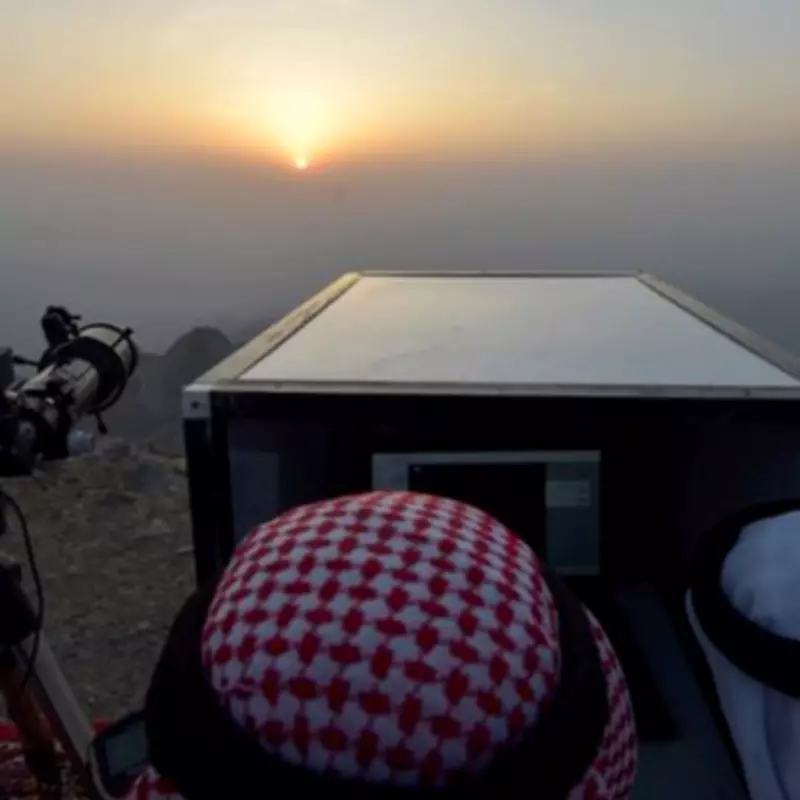
Muslims around the globe are eagerly awaiting the official sighting of the Dhul Hijjah crescent moon, which will determine the start of Eid al-Adha 2026. Saudi Arabia's Supreme Court has called on observers across the kingdom to look for the moon on Sunday evening, with astronomers predicting favorable conditions for visibility after sunset. If sighted, Dhul Hijjah is expected to begin on May 18, placing Eid al-Adha on May 27 and the Day of Arafah on May 26. Several countries, including Qatar and Turkey, have already announced these dates based on astronomical calculations.
Global Moon Sighting Updates
Qatari authorities have announced expected dates for Dhul Hijjah and Eid al-Adha using astronomical calculations, stating that May 18 is likely to mark the first day of Dhul Hijjah 1447 AH, with Eid al-Adha beginning on May 27. Meanwhile, astronomers in the UAE claim to have captured the first image of the Dhul Hijjah crescent from the Khatm Astronomical Observatory in Abu Dhabi during daylight hours, suggesting favorable conditions for the official sighting later.
Visibility Across Regions
The UAE's Astronomy Centre has indicated that the crescent moon could be visible to the naked eye across parts of Central and Western Asia, North Africa, and large areas of the Americas. Telescope sightings may be possible in East Asia, southern Africa, and southern South America. However, cloud cover and poor visibility in some regions could hinder observations, with astronomy groups warning that local weather conditions will play a crucial role.

Country-Specific Announcements
Tunisia became the first country to officially confirm the start of Dhul Hijjah, placing Eid al-Adha around May 25. Afghanistan's Supreme Court announced that the crescent was not sighted, so Monday, May 18, will mark the first day of Dhul Hijjah in the country, with Eid al-Adha beginning on Wednesday. Turkey confirmed May 18 as the start of Dhul Hijjah based on a pre-calculated calendar, relying on astronomical calculations rather than a physical sighting.
Understanding Moon Sighting and Eid Traditions
Moon sightings are traditionally confirmed by trusted witnesses who report seeing the crescent after sunset. Religious councils review these testimonies before issuing official declarations, sometimes working alongside astronomers. If the crescent is not seen, Islamic authorities may complete another day of the lunar month before Eid begins. Eid al-Adha commemorates Prophet Ibrahim's willingness to sacrifice his son and involves charity, special prayers, and the Qurbani sacrifice, with meat shared among family, friends, and those in need.
Eid Dates and Celebrations
Eid al-Adha can vary across the world due to reliance on local moon sightings or announcements from Saudi Arabia. In the UK, some Muslims follow Saudi sightings, while others rely on local observations. Weather conditions may make the crescent difficult to spot with the naked eye in parts of Britain on May 17, but telescopes could improve visibility. Mosques and Islamic organisations are expected to issue guidance closer to the date. The Mayor of London's annual 'Eid on the Square' festival will be held on May 30 at Trafalgar Square, celebrating London's diverse Muslim communities with art, culture, and food.