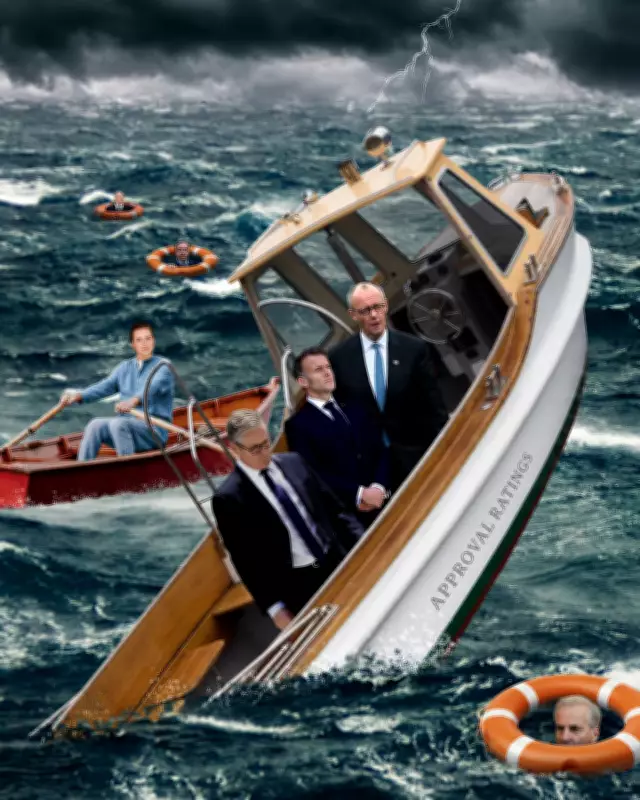
The three largest economies in Europe are currently led by figures whom their citizens regard with something close to contempt, according to recent polling. Keir Starmer of the United Kingdom, Emmanuel Macron of France, and Friedrich Merz of Germany all face approval ratings below 30%, with disapproval rates exceeding 65% in some cases.
Starmer's struggles
In the UK, only 11% of Britons believe Starmer has been a good or great prime minister, while nearly 60% view his performance as poor or terrible, according to YouGov. His approval rating stands at 27%, with 65% disapproving. Despite being in power for less than two years, a significant number of his colleagues are reportedly seeking to remove him from Downing Street.
Macron and Merz fare worse
France's Emmanuel Macron, who is approaching the end of his second term, has an approval rating of just 18%, with 75% disapproving. Germany's Friedrich Merz, who became chancellor only recently, fares even worse: 19% approve, while 76% disapprove. Merz's unpopularity predates his chancellorship, but his error-prone statements and unfulfilled promises have worsened his numbers.

Broader European trend
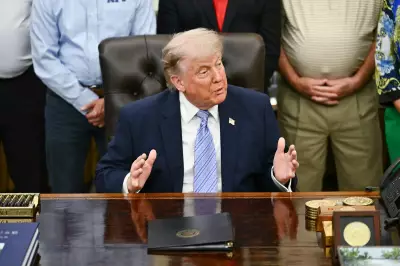
This malaise extends beyond the big three. Austrian Chancellor Christian Stocker is seen as ineffective, Norway's Jonas Gahr Støre faces scandals, and Belgium's Bart de Wever is implementing unpopular austerity measures. All have worse ratings than Donald Trump, whose approval stands at 38% despite his own controversies. Spain's Pedro Sánchez and Italy's Giorgia Meloni fare only slightly better.
Peter Matuschek, head of the Forsa polling institute, suggests that Europe may be suffering from a poor generation of politicians. However, he notes that crises can offer opportunities for leaders to grow, as seen during the early Covid-19 pandemic when approval ratings surged.
Structural challenges
Fabian Zuleeg of the European Policy Centre argues that structural factors are at play. Europe's share of global economic output has fallen from 33% to 23% since 2005, and growth forecasts for 2025 are weak: France and the UK at 0.9%, Germany at 0.6%, compared to the US at 2.4%. Leaders must deliver bad news about the end of cheap Russian energy, competition from China, and necessary but unpopular reforms.
Exceptions exist, such as Denmark's Mette Frederiksen, who has maintained popularity through a tough stance on immigration and effective energy policy, with 80% of electricity from renewables. Her economy is expected to grow 2-3% this year.
Ultimately, today's leaders operate in an environment shaped by their predecessors' successes and failures, and may be constrained in their ability to turn the tide of public opinion.