In a landmark decision that marks the end of an era in American political polling, Gallup has announced it will discontinue its monthly presidential approval surveys after more than 80 years of continuous operation. The announcement comes as President Donald Trump's approval ratings persist at near-historic lows, adding a poignant backdrop to this significant shift in polling practices.
A Strategic Shift in Research Focus
A spokesperson for Gallup confirmed to The Independent on Wednesday that starting in 2026, the organization will no longer publish favorability and approval ratings for individual political figures. When questioned about the rationale behind this decision and whether there had been any contact with the White House, the spokesperson emphasized that this move was "solely based on Gallup's research goals and priorities."
The spokesperson elaborated further, stating, "This is part of a broader, ongoing effort to align all of Gallup's public work with its mission. We look forward to continuing to offer independent research that adheres to the highest standards of social science." This statement underscores Gallup's commitment to maintaining its reputation for rigorous, unbiased data collection despite the cessation of this long-standing tradition.

Historical Context and Legacy
Gallup, headquartered in Washington, D.C., has been one of the nation's most prominent and frequently cited polling organizations since its inception. The company published its first public opinion survey in 1935 during the depths of the Great Depression, and it has been tracking presidential approval ratings consistently since at least 1945. This decision therefore represents a profound departure from nearly a century of political measurement and analysis.
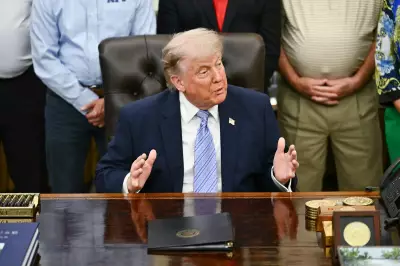
The timing of this announcement is particularly noteworthy given President Trump's current standing in the polls. His most recent monthly approval rating, recorded in December, remained stagnant at 36 percent, unchanged from November. According to reports from The Hill, Trump's approval peaked at 47 percent in February 2025, but has since declined significantly.
Trump's Polling History and Reactions
President Trump's lowest-ever approval rating of 34 percent was registered in January 2021, coinciding with the tumultuous events of the Capitol riot. Despite this, the record for the most dismal approval rating in Gallup's history belongs to President Harry Truman, who garnered a mere 22 percent approval in February 1952 amid economic challenges and the Korean War.
Conversely, the highest approval rating ever recorded by Gallup was achieved by President George W. Bush, who reached an unprecedented 90 percent in September 2001 following the devastating September 11 terrorist attacks. These historical benchmarks highlight the volatile nature of presidential popularity and the critical role Gallup has played in documenting these fluctuations.
President Trump has maintained a contentious relationship with polling organizations throughout his tenure, frequently criticizing and dismissing polls that indicate declining support. Last month, the 79-year-old Republican president took to Truth Social to express his frustrations, writing, "Fake and Fraudulent Polling should be, virtually, a criminal offense. As an example, all of the Anti Trump Media that covered me during the 2020 Election showed Polls that were knowingly wrong."
He added emphatically, "Something has to be done about Fraudulent Polling." This sentiment was previously reflected in legal actions, such as when Trump sued Iowa pollster Ann Selzer and The Des Moines Register in December 2024 over a poll showing former Vice President Kamala Harris leading in Iowa ahead of Election Day, though he later dropped the federal lawsuit in June.
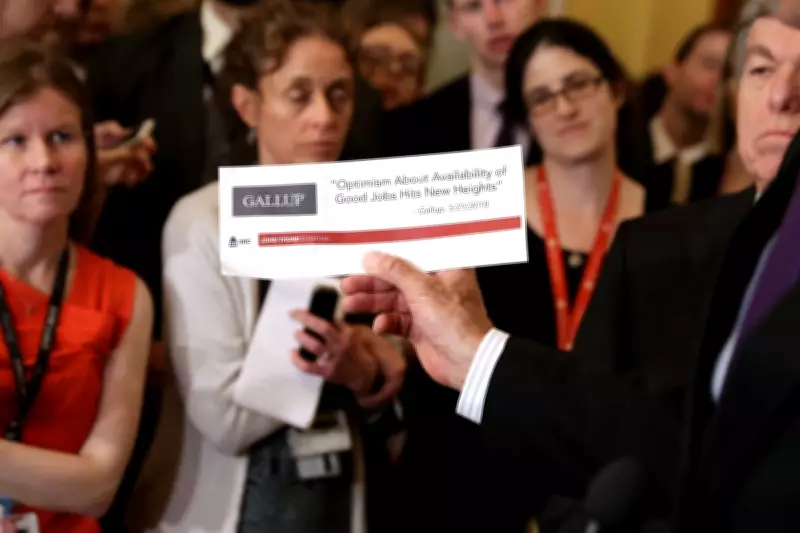
However, Trump's relationship with polls has not been uniformly adversarial. In October 2023, he publicly promoted an article detailing a Gallup survey that revealed former President Joe Biden's approval rating had plummeted to the lowest point of his presidency, demonstrating a selective endorsement of polling data when it aligns with his political interests.

Implications for Political Discourse
The cessation of Gallup's monthly presidential polls raises important questions about the future of political polling and public opinion measurement in the United States. As one of the most trusted and historically significant polling institutions, Gallup's decision to step away from this routine could influence how presidential performance is perceived and discussed in the media and among the electorate.
This move may also prompt other polling organizations to reconsider their methodologies and priorities in an increasingly polarized political landscape. The loss of Gallup's consistent monthly data will undoubtedly create a gap in the longitudinal analysis of presidential approval, potentially affecting academic research, journalistic reporting, and public understanding of political trends.
As Gallup pivots towards new research goals, the legacy of its eight decades of presidential polling will endure as a vital archive of American political sentiment. The organization's commitment to independent, high-standard social science research remains intact, even as it adapts to evolving priorities in a rapidly changing world.