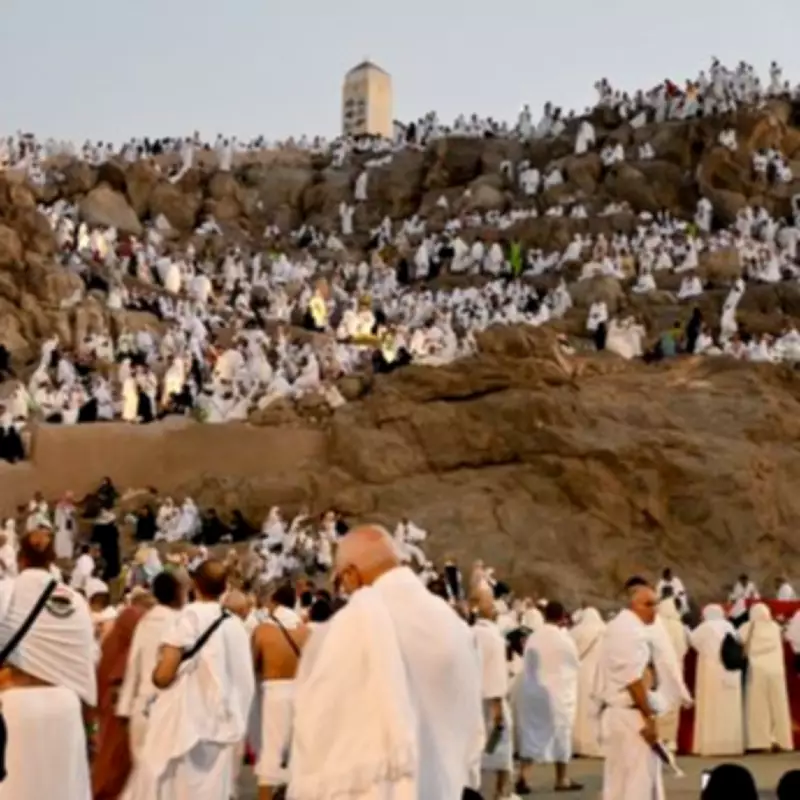
More than 1.5 million Muslims in Mecca for the annual Hajj pilgrimage are marking the Day of Arafah on Tuesday, the most sacred day in the Islamic calendar. Worshippers have gathered at the plain of Arafat, where they will spend from noon until sunset in deep prayer, repentance, and remembrance of Allah.
Pilgrims Express Hope for Peace
Many pilgrims have voiced hopes that the ongoing war between the US and Israel and Iran will end soon. Mohammed Chahada, an Egyptian in his 50s, told AFP: "The war in Iran has affected the entire world. Nobody wants wars or harm to countries and peoples." Despite the uncertainty, pilgrims expressed joy at being able to perform the pilgrimage. Jreish Mohammed, a 68-year-old from Morocco, said: "I have wanted to perform the pilgrimage my entire life, for 40 or 50 years. And this year, my dream came true."
Extreme Heat and Safety Measures
Saudi Arabia's National Center for Meteorology has forecast daytime temperatures in Mecca between 42°C and 47°C during Hajj. Pilgrims have been using umbrellas, handheld fans, and water sprays to cope with the heat. Volunteers are distributing water bottles to help prevent dehydration.

Iranian Pilgrims Attend Despite Tensions
Iran's allocation for Hajj this year was cut to 30,000 pilgrims, nearly two-thirds fewer than usual, amid tensions over the war. Travel plans initially shifted to overland convoys through Iraq before a ceasefire restored air access, enabling Iranian pilgrims to fly into Medina from April 25. In 2016, no Iranian pilgrims attended due to a diplomatic rift between Tehran and Riyadh.
Historical Context of Hajj
The Hajj pilgrimage dates back 4,000 years to the Prophet Ibrahim (Abraham) and his son Ismail. The first official Islamic Hajj was led by the Prophet Muhammad in 632 CE. Over centuries, the pilgrimage evolved from camel caravans to modern high-tech operations, including the use of the Nusuk app, smart ID bracelets, and AI crowd-monitoring. Despite technological advances, the core rituals remain unchanged.
Key Rituals of Hajj
- Ihram: Pilgrims enter a state of spiritual purity, wearing simple white garments symbolising equality before God.
- Tawaf: Circling the Kaaba seven times counter-clockwise.
- Sa'i: Walking between the hills of Safa and Marwah, honouring Hajar's search for water.
- Day of Arafat: The spiritual peak, spent in prayer and reflection at Mount Arafat.
- Stoning of the Devil: Throwing pebbles at three pillars in Mina, symbolising rejection of evil.
- Eid al-Adha: The festival of sacrifice, commemorating Prophet Ibrahim's willingness to sacrifice his son.
- Final Tawaf: A farewell circling of the Kaaba before concluding the pilgrimage.
Political and Diplomatic Dimensions
Former US President Donald Trump has called on Saudi Arabia and other Gulf states to join the Abraham Accords, normalising relations with Israel. In a social media post, he said: "It should start with the immediate signing by Saudi Arabia and Qatar, and everybody else should follow suit." He also suggested that Iran could be included if it signs a deal with the US.
The Hajj this year takes place against a backdrop of a fragile ceasefire in the US-Iran war, with diplomatic efforts focusing on wider Middle East tensions and Iran's nuclear programme. Indonesian authorities have issued instructions to avoid extra travel costs for pilgrims, while high fuel prices have increased travel costs for pilgrims in India.