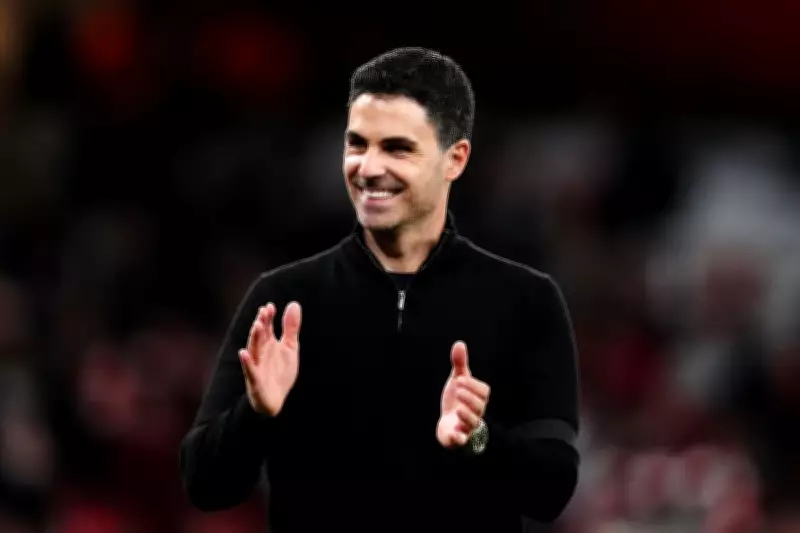
As Mikel Arteta finally savours the moment of Arsenal's Premier League triumph, he cannot stop repeating a phrase that has haunted him throughout the season. 'Twenty-two years,' he would tell anyone listening. 'Twenty-two years. It is far too long for a club like Arsenal.' Now, after decades of angst and frustration, Arteta and his squad can finally declare the wait is over. On Sunday, he will lift the Premier League trophy, the club's first since 2004 and their 14th in total.
The Basque manager was acutely aware of the psychological weight of that long drought. He sensed it throughout the campaign—the sudden danger when everything seemed about to slip away, as so many had predicted. If there has been one great virtue of Arsenal's season, it is how Arteta managed that pressure, ensuring the team remained in control even when things looked fragile.
There were at least four major moments of emotional crisis when Arteta felt compelled to intervene. His strategy was always to shift the players' perspective, reminding them that being in this situation was preferable to the alternative. It is a testament to their resilience, which had often been doubted.

The Crucial Player Intervention
Yet there was a pivotal moment when a player had to help Arteta see things differently. The days following the 2-1 home defeat to Bournemouth were arguably the worst of the campaign, especially with the looming trip to Manchester City—a nemesis that had to be overcome. The problem was not just psychological but physical. Arsenal's players looked and felt exhausted, partly due to the schedule but also because of Arteta's demanding training methods. His response to setbacks was to work even harder on the training ground, an admirable ethic but counterproductive for finely tuned athletes. The effects were evident in the injury crises every April.
Eberechi Eze, one of the newer and more laid-back players, approached his boss. In so many words, he told Arteta: 'We can do this, but we need some space.' The manager listened. Days off were increased, training intensity was lightened, and in the week before clinching the title, Arteta gave the squad three days off followed by a barbecue. He also insisted on cutting out all external noise by turning off sports channels and news, replacing them with music from the 1990s and early 2000s—coincidentally, the era when Arsenal last won leagues.
These details may seem mundane, but they are the unseen elements that made the difference between reclaiming the title and falling short. This is especially true for a team that operates so deep within the margins.
Overperformance Through Strategy
There is a broader debate about Arsenal's aesthetics and style, but the story ultimately revolves around control—a manager seeking to maximise every resource at his disposal. This may not always have been apparent in expansive attack, but it ensured Arsenal became the most rounded team in the league and deserved champions. It also highlights a theme that is not always popular in discussions about Arsenal: this is a story of overperformance, of beating a much wealthier opponent through careful planning and strategy. Manchester City's wage bill from the last accounts was still £80 million more than Arsenal's—equivalent to five Bukayo Sakas. That depth has an effect, so Arteta had to cut his cloth differently.
He collaborated with the football leadership of Tim Lewis and Andrea Berta to devise ways to gain advantages, both in play and squad profile. This led to a focus on set-pieces and physical robustness. Arteta could see the direction the game was evolving and furthered it. Oleksandr Zinchenko was moved on because he lacked the required size. The new approach was also evident in the summer transfer business.
Arteta delved into deep introspection after previous second-place finishes, using those lows to think about improvements. The most obvious lesson from 2024-25 was squad depth and the impact of injuries. Aware of the demanding calendar, Arteta realised he needed backup in every position. There was brief consideration of signing Alexander Isak, but the cost was too high for a forward with doubts about sustaining performance in two-game weeks. That decision was vindicated.

It also gave Arteta an advantage he had long desired: the ability to go into a game with the opposition having no idea what configuration of players he would use. He would play games around injuries, often instructing club media not to mention or photograph returning players.
Methodical Approach to Success
For all the devices, this title victory was about thinking as deeply as possible, seeking to control every element of a game. That even extended to training at the Emirates Stadium so the team could use the stands to perfect their pressing lines. Arteta is described as a 'probabilities guy' who knew that if Arsenal created around 2.0 expected goals per game while keeping opponents to 0.5 and keeping clean sheets, while scoring from set-pieces, they would secure enough points to win the title.
This fed into a campaign that often felt methodical, even laborious. There were only brief moments when Arsenal recaptured the spark of 2022-23. Defenders of Arteta would say he did what was necessary. However, amid so much process, there were still key moments when the team had to deliver. One was the late 2-1 comeback away to Newcastle United at the end of September, which many players felt was crucial in setting a marker. Gabriel scoring the winner from a set-piece set a tone that would recur.
Another was the 4-1 victory over Aston Villa at Christmas, which Arteta felt produced their best spell of football all season. Players even sang 'set-piece again, ole ole' in the dressing room. The 4-0 win away at Leeds United settled nerves after a 3-2 home defeat to Manchester United, and the 4-1 win at Tottenham Hotspur had the same effect after a shock 2-2 draw at Wolves.
Managing the Noise and Fatigue
Throughout the season, some players were too concerned with external noise. Opposition players noticed the tension, while insiders saw that Arsenal were visibly more relaxed in the Champions League. Arteta's staff insisted this was partly due to how competitive the Premier League had become. Every game was a battle, compounded by Arsenal's war-weariness. They probably should have gone clear multiple points through late winter and spring.
By mid-April, after the effects of Max Dowman's breakthrough goal against Everton had worn off, they were really feeling it. Exhaustion set in, injuries mounted, and Martin Zubimendi, signed for control, looked tired. So Arteta took Eze's message on board. It came at a crucial moment, just before the City game. The worst had happened in losing 2-1, but it hadn't happened in the worst way. There was even a sense that City had celebrated too much. Arsenal felt emboldened. Declan Rice's line, 'This is not over,' was not just a line.
They believed again. The Champions League run helped, as did Arteta's willingness to go with momentum. He saw that Myles Lewis-Skelly was working hard and felt he could use that energy. There was a release. Suddenly, players were back. They still weren't exactly motoring, but they were getting through. Key players returned. By the win over Burnley, Arteta had almost a full squad.
They went through the full range of characteristics: another set-piece goal, a 1-0 win, a VAR controversy—but crucially, not a 'bottling.' That accusation could instead be levelled at City, given the momentum-shifting 3-3 draw at Everton. Arteta had restored in Arsenal a resilience and self-respect. They are a serious team again. And they are champions again.