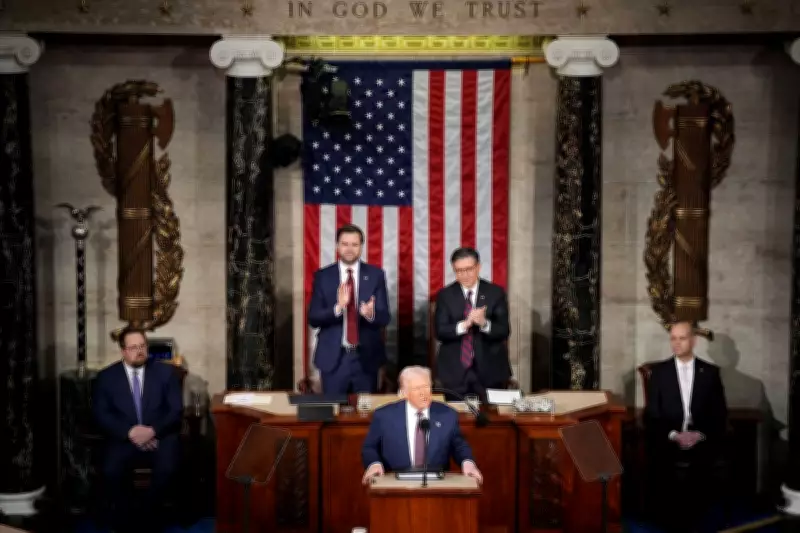
As President Donald Trump prepares to deliver his second State of the Union address since returning to office in January 2025, he confronts a severe polling crisis that threatens his political standing and his party's control of Congress. Recent surveys reveal a dramatic decline in public approval, with Americans expressing growing dissatisfaction with his performance and policy direction.
Polling Numbers Paint a Bleak Picture
A series of surveys released in recent days shows Trump's approval ratings at concerning lows. A CNN and SSRS poll released on Monday found that only 36 percent of Americans approve of his performance, marking a significant 12-point drop from the same period last year. Perhaps more alarming, 61 percent of respondents believe his policies are steering the country in the wrong direction.
Key Demographic Support Evaporates
The polling data reveals particular weakness among crucial voter groups that were instrumental to Trump's 2024 electoral victory. Independent voters now give him just 26 percent approval, down from 41 percent last year and the lowest recorded during his political career. Latino support has collapsed even more dramatically, plummeting from 41 percent approval to a mere 22 percent.

This erosion of Latino support coincides with Trump's intensified immigration enforcement efforts, including highly publicized raids across American cities to detain migrants. The demographic shifts represent a significant vulnerability for a president who relied on these groups for his electoral success.
Policy Disapproval Across Multiple Fronts
An ABC News, Washington Post, and IPSOS survey released over the weekend provides additional reasons for concern. Supermajorities of Americans disapprove of Trump's handling of inflation (65 percent), tariffs (64 percent), and foreign relations (62 percent). Even on issues traditionally considered his strengths, clear majorities express dissatisfaction with his performance on immigration (58 percent disapproval) and the economy (57 percent disapproval).
Overall, the ABC/Post survey found 60 percent of Americans disapprove of Trump's performance, matching the highest disapproval rating of his political career, previously recorded as he left office in 2021 after losing the 2020 election to Joe Biden.
Historical Context and Political Implications
Most traditional politicians facing such polling challenges would consider adjusting policies or messaging, particularly with congressional control at stake in upcoming elections. Historical precedent exists for such course corrections, as when President Bill Clinton used his 1995 State of the Union address to pivot after midterm election losses, declaring "the era of big government" over and setting the stage for economic improvements.
Trump could theoretically use his upcoming address to reassure Americans about economic concerns or modify unpopular policies, especially following recent Supreme Court setbacks on his tariff initiatives. However, those familiar with Trump's political approach suggest such adjustments are unlikely.
Trump's Response to Negative Polling
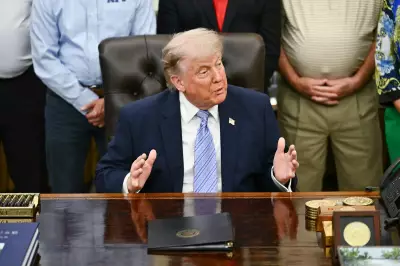
Rather than acknowledging concerning trends, Trump has dismissed unfavorable polling as fraudulent. During a White House event on Monday honoring families affected by unauthorized immigration, he claimed polls showing him at 40 percent approval were "fake," insisting his actual support is "much higher than that."
"The thing I can't understand is why the press isn't more supportive. They're so dishonest. The stories, the polls," Trump added, reflecting his longstanding skepticism toward media and polling organizations.
Political Mandate in Question
Trump and his aides have repeatedly pointed to his 2024 victory as a "landslide" providing an overwhelming mandate. However, polling suggests Americans increasingly doubt his effectiveness on the very issues that propelled his re-election, particularly inflation and cost-of-living concerns that plagued the Biden administration.
Speaking in the East Room on Monday, Trump maintained his characteristic optimism, telling attendees, "We have the greatest economy we've ever had. We have the most activity we've ever had. I'm making a speech tomorrow night, and you'll be hearing me say that."

As Trump prepares for his primetime address, the fundamental question remains whether he will use the platform to address widespread public concerns or double down on his current course despite mounting evidence of voter dissatisfaction. With congressional control potentially hanging in the balance, his approach could have significant implications for both his presidency and the Republican Party's future.