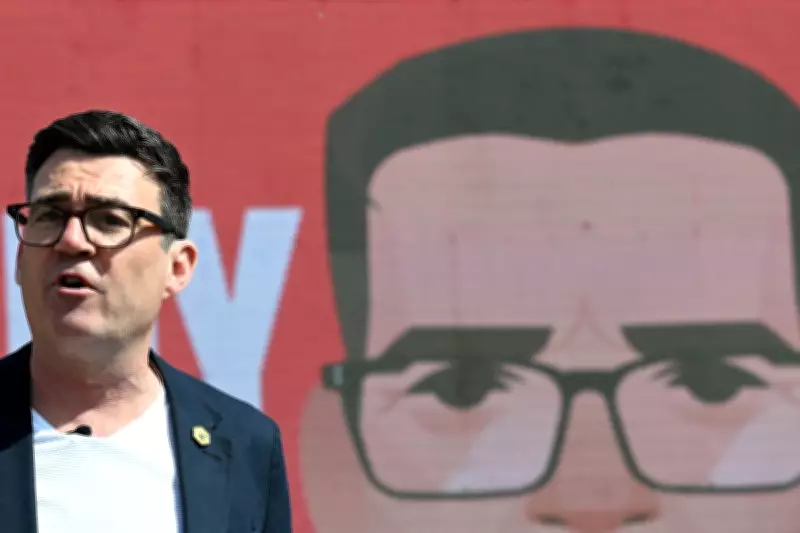
Andy Burnham's campaign for prime minister has been marked by a series of abrupt policy reversals, calling into question his preparedness for the highest office. The mayor of Greater Manchester, who has long harbored ambitions to return to Westminster, appears to have stumbled out of the gate with a flurry of flip-flops that have left observers questioning his judgment and consistency.
A Pattern of Reversals
Burnham now states he is "not advocating" rejoining the European Union, a stark contrast to his position eight months ago when he expressed hope for rejoining within his lifetime and emphasized the need for honesty with the public. He has also fully endorsed Rachel Reeves's fiscal rules, abandoning his previous push to exempt defense spending. On immigration, he now agrees with the government's overall approach, despite earlier describing longer waits for settlement rights as "un-British." His stance on women-only spaces has shifted to align with the view that they should be reserved for biological women. The idea of a 50p top rate of income tax has been shelved, and he now prioritizes "public control" over outright public ownership of energy and water companies. Regarding North Sea drilling, he has yet to form a definitive opinion.
Questions of Consistency and Popularity
While policy U-turns can sometimes reflect democratic responsiveness, the sheer volume of Burnham's reversals invites two critical questions. First, why does he remain so popular despite his positions seemingly crumbling upon contact with reality? Second, given his long-standing ambition for the top job, why was he so ill-prepared for this opportunity when it finally arose?

Part of the answer lies in the unique constituency he is contesting. Makerfield, the only available seat, requires a more delicate balancing act than other potential constituencies. If he had fought Gorton and Denton, he could have maintained a pro-EU stance to unite Green and Labour voters against Reform. Instead, he must navigate between the preferences of Makerfield voters and those of Labour Party members, many of whom reside in London and the home counties and will influence the selection of the next prime minister.
The Challenge Ahead
This situation complicates the usual leadership maneuver, where candidates appeal to party members first and then pivot to the center for the general election. Burnham is being forced to execute part of the second stage before the first, and party members may be taking notice. This adds to concerns that the "Burnham for PM" bandwagon may be moving too fast.
Beyond the immediate by-election risk, there is the question of whether Burnham can maintain support among Labour members. Keir Starmer, aware that he is unlikely to lead Labour into the next election, is not ready to step aside. If Burnham wins the by-election, a meeting between the two will ensue, but by then Burnham may have further alienated party activists with additional U-turns. Activists, focused on defending the Greater Manchester mayoralty from Reform, may resent Burnham for vacating the role so casually.
If Starmer refuses to set a timetable for his departure, Burnham would be forced to launch a formal leadership challenge. Given the backlash Wes Streeting faced for perceived maneuvering, Burnham could suffer similar reputational damage. Loyalty and unity are highly valued by party members across the political spectrum.
Burnham's small team faces an almost impossible triple task: fighting a by-election, a leadership election, and preparing for government. Yet it is surprising that Burnham himself appears not to have anticipated the basic political positioning challenges that now confront him. He has relied on his popularity as mayor, amplified by his man-of-the-people image, to carry him to the threshold of Downing Street. But crossing that threshold—and succeeding once inside—will require far more than that.