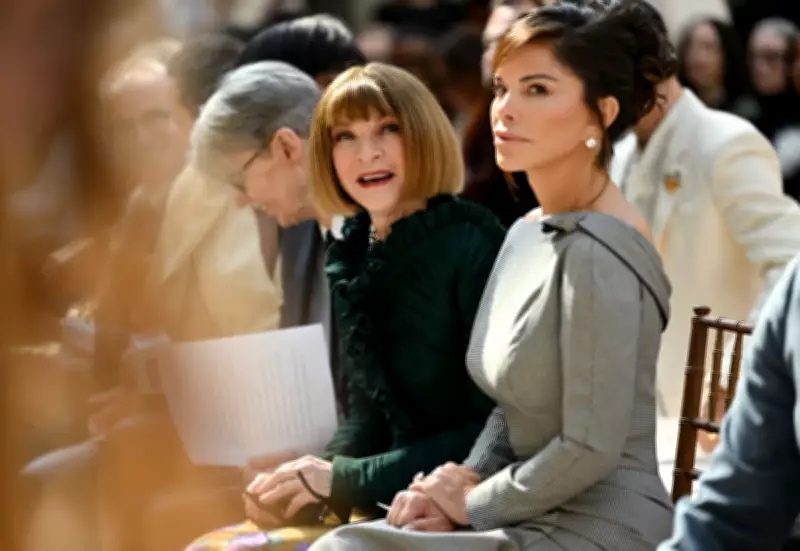
Anna Wintour and Lauren Sánchez Bezos attended the press conference for the 2026 Met Gala at the Metropolitan Museum of Art on 4 May 2026 in New York City. The event, typically a stately affair, this year carried an air of feudal deference, with Wintour introducing Sánchez Bezos as a "force for joy" and praising the couple's philanthropic commitment. Outside, however, protests against the Bezoses' involvement had been raging for days, highlighting a stark disconnect between public sentiment and the gala's inner circle.
The Bezos Effect on the Met Gala
The Met Gala has become a magnet for anti-excess protests, but the 2026 edition was particularly controversial due to the $10 million patronage of Jeff Bezos and Lauren Sánchez Bezos. Bezos previously bankrolled the gala in 2012, but this year's event occurred amid soaring inequality and growing public disapproval of his wealth and political alignments. The protest group Everyone Hates Elon projected interviews with disgruntled Amazon workers onto Bezos's Manhattan penthouse and distributed 300 containers of fake urine inside the museum to symbolize drivers' reports of having to urinate in bottles due to relentless work schedules.
Fashion Insiders Push Back
Some fashion industry figures voiced opposition. Former US Vogue editor Gabriella Karefa-Johnson co-hosted a rival "Ball Without Billionaires" featuring Amazon workers on the catwalk and declined work with a dream client to boycott the gala. She wrote on Substack: "Fashion has always had a talent for laundering. In these moments, it wraps the most sinister individuals in silk... But I have my limits."

Adding to the criticism, the film The Devil Wears Prada 2, released days before the gala, featured a plot about a tech baron attempting to buy a fashion magazine for his girlfriend, echoing unsubstantiated rumors that Bezos wants to acquire Vogue for Sánchez Bezos. The movie's villain, a Silicon Valley oligarch, is portrayed as a tyrant, reflecting broader cultural backlash against tech billionaires in fashion.
The Met Gala's Role and Funding
The Met Gala is a unique annual event that funds the Costume Institute, housing one of the world's largest collections of historical clothing. This year, the gala raised $42 million, with tickets priced at $100,000—up from $35,000 in 2022—coinciding with an increasingly tech-oriented guest list that included Sergey Brin, Mark Zuckerberg, and OpenAI staff. The event's reliance on tech billionaires raises questions about their motives, as many have aligned with political figures who defund the arts.
Tech Barons Seek Cultural Cachet
For the Bezoses, the Met Gala is part of a broader campaign to gain fashion kudos, facilitated by US Vogue, which ran a glowing profile of Sánchez Bezos in 2023 and a digital wedding cover in 2025. The couple has sat front row at Paris fashion shows and announced tens of millions in grants for sustainable fabrics. Wintour, who stepped down as US Vogue editor in 2025 but continues to oversee the gala, has a history of embracing culturally and commercially potent figures, even when critics question their merit.
Industry Discomfort and Silence
Fashion insiders expressed discomfort with the Bezos sponsorship, viewing it as representative of Condé Nast's direction after closing progressive outlets like Teen Vogue. Many were disappointed that celebrities such as Anne Hathaway, Rihanna, and Beyoncé attended despite the outcry. However, few spoke out publicly. One creative described the event as "horrific" and "naff," but refrained from criticizing friends who worked on the red carpet. An emerging designer whose work was featured in the spring exhibition felt tokenized, noting that "the Jeff Bezoses of this world don't care what broke people have to say," yet could not turn down the exposure.
Luxury Brands Struggle
The situation is exacerbated by struggles in the luxury sector. Burberry announced plans to cut 1,700 jobs, and Kering closed 133 stores. The designer lamented that long-serving industry professionals are losing work while "people like the Bezoses are the only ones funding this stuff."

Will Tech Billionaires Stay?
Fashion journalist Amy Odell believes tech billionaires are unlikely to leave. Amazon has long sought closer ties with luxury fashion, despite past rebuffs from LVMH. Odell speculates that the Bezoses are drawn to fashion for glamour and attention, noting that "tech people you can name are becoming the Kardashians." She suggests fashion will continue to embrace them, as they bring publicity and represent a key client base: Sánchez Bezos is a "VIC" (very important client), part of the 2% of luxury buyers who account for 40% of sales.
Future of the Met Gala
Costume Institute lead curator Andrew Bolton told the New York Times that by 2028 or 2030, the institute will have saved enough in a "quasi endowment" to no longer need annual gala support. He noted that the gala's growing scale may become unsustainable. However, Condé Nast CEO Roger Lynch described this year's controversy as "good," suggesting that the industry may not heed public outcry. Odell remarked, "They count on the internet's memory being short. Perhaps they just don't care."
If fashion's elite continue to ignore criticism, the Met Gala and luxury industry may drift further into an oligarch-dominated sphere, where tech barons take center stage. Creatives who drive fashion forward may then choose to revolt rather than applaud.