Delhi Court Clears Former Chief Minister in High-Profile Corruption Case
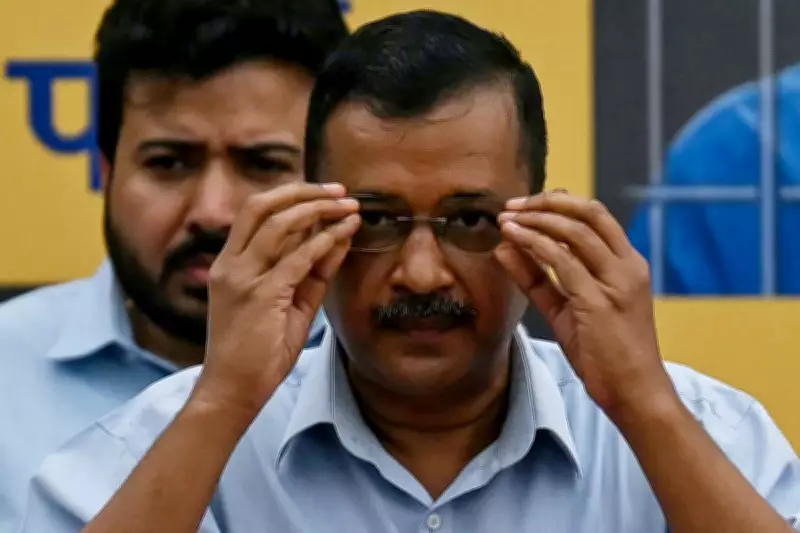
Arvind Kejriwal, the former chief minister of Delhi, broke down in tears on Friday after a court discharged him and his deputy from a corruption case linked to a now-scrapped liquor sales policy. The court described the case as "premeditated and choreographed," citing a lack of evidence and criticising federal investigative agencies.
Court Delivers Scathing Ruling Against Prosecution
Special judge Jitendra Singh of the Rouse Avenue Court cleared Mr Kejriwal, his former deputy Manish Sisodia, and 21 other individuals. The judge ruled that there was "no overarching conspiracy or criminal intent" in the excise policy, which was introduced in 2021 to reform liquor trade and boost revenue. He heavily criticised the Central Bureau of Investigation for "trying to construct a narrative of conspiracy on the basis of mere conjecture."
The judge stated, "The prosecution case doesn't stand scrutiny. The record reflects continuity and consultation. There is no abrupt interruption to constitute criminal intent. The overarching conspiracy theory fails here." He added that the policy "travelled through established constitutional channels" and its structure "doesn't constitute an offence."

Kejriwal's Emotional Response and Political Allegations
Speaking outside the court, Mr Kejriwal, a prominent rival of Prime Minister Narendra Modi, became emotional. "All my life, I've only been honest," he said. "Today it has been proven. I am not corrupt. The court has said that Kejriwal and Manish Sisodia are honest." He blamed Mr Modi and his Bharatiya Janata Party for orchestrating what he called "the biggest political conspiracy" in independent India's history to target his Aam Aadmi Party.
The Aam Aadmi Party, founded in 2012 on an anti-corruption platform, celebrated the ruling as a victory against alleged political vendetta. Mr Kejriwal's wife, Sunita Kejriwal, who led the party during his imprisonment, welcomed him home amid supporter celebrations.
Judge Orders Disciplinary Action and Case Background
In a significant move, the judge ordered departmental action against the CBI officer handling the case to ensure accountability and protect investigative credibility. He emphasised that investigations must be based on "clear and consistent evidence, not on vague or shifting positions." Since no material evidence was found against the accused, the court recommended disciplinary proceedings for wrongly naming them.
The CBI announced it would appeal the decision in the Delhi High Court, claiming key aspects of its investigation were ignored. The case stemmed from allegations that the 2021-22 Delhi Excise Policy was manipulated to favour certain liquor traders in return for kickbacks to AAP members. Delhi's lieutenant governor, Vinai Kumar Saxena, appointed by the federal government, had ordered the CBI investigation.
Legal Saga and Personal Toll
Mr Kejriwal was arrested by the Enforcement Directorate on 21 March 2024. He secured bail from the Supreme Court to campaign in state elections but was later arrested by the CBI, spending 156 days in jail before being granted bail on 13 September 2024. He subsequently resigned as chief minister. Mr Sisodia spent 17 months in jail, and another party member, Sanjay Singh, was also jailed in the case.
The policy was withdrawn months after implementation amid allegations of undue favours to private entities. The judge concluded his order by invoking Martin Luther King Jr., stating, "Injustice anywhere is a threat to justice everywhere." This ruling marks a pivotal moment in a long-running legal and political battle that has captivated Delhi and beyond.