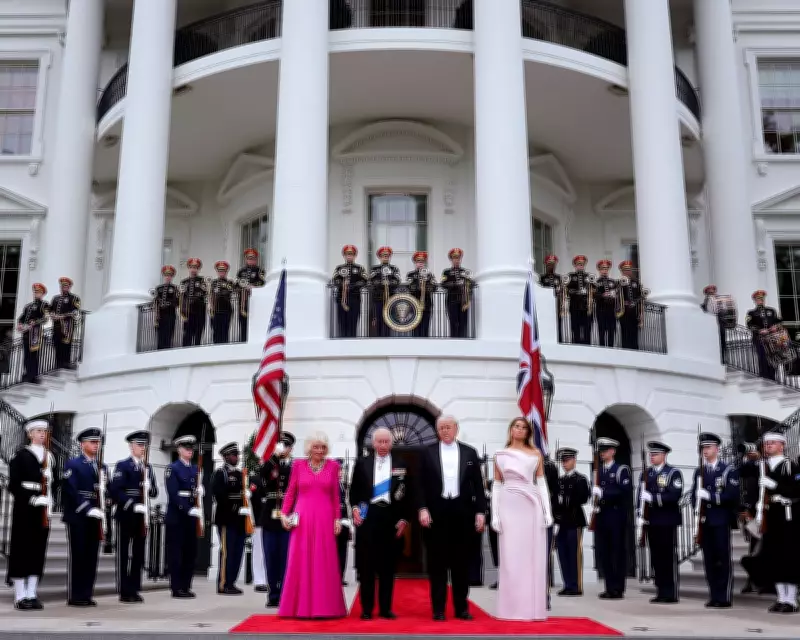
King Charles and Queen Camilla's state visit to the White House on 28 April 2026 will be remembered as a historic moment, but not for the reasons the royal family might have hoped. According to Guardian columnist Nesrine Malik, the visit marked the death throes of an old era, with both the United States and the United Kingdom grappling with irreconcilable crises that threaten to unravel democracy itself.
A Snapshot of an Era in Decline
Malik describes the event as a future artefact, something that will appear in history books between chapters on the war on Iran and the global energy crisis. The guest list itself told a story: seven Fox News guests, seven Trump family members, Jeff Bezos, Tim Cook, and golf champion Rory McIlroy—a collection of billionaire-funded corporate media, big tech, private equity, and stars eager to bask in proximity to power. This, Malik writes, was a snapshot of the forces underpinning the Trump administration, indifferent to its colossal violations.
Normalcy Amid Crisis
One of the most jarring aspects of the visit, Malik observes, is how much carried on as normal despite the surrounding turmoil. American power retains such gravitational pull that even as Trump engages in unhinged behaviour or threatens entire civilisations, the protocols of state respect and friendliness persist. The New York Times dedicated nearly its entire front section to the king's jokes, decorum, menu, and itinerary, offering a brief illusion of bipartisanship and stability.

Malik notes that the king's well-played "subtle rebuttals" served as a reminder that the special relationship still holds some value. A wealthy old monarchy can still confer credibility on a nation long departed from its rule—one now locked in battles between the president and judiciary, launching wars over the legislature's head, steeped in indignity and suspicion of insider trading.
Mutual Rehabilitation
The visit was an exercise in mutual rehabilitation for two countries journeying into the unknown, clinging to past glories. Both the presidency and the monarchy are at a nadir, with support for the monarchy at historic lows and Trump's approval rating sinking. The context is unavoidable: a class of people tarred by associations with Jeffrey Epstein, a scandal that continues to lap at the presidency and has already claimed a prince and the UK ambassador to the US.
Clinging to Remnants
In UK papers, Charles was declared to have delivered a "masterclass in diplomacy," defended Nato in a "historic address," and re-forged the special relationship. Even Le Monde announced that Charles had given Trump a "lesson in democracy." But Malik argues that this is a refusal to reckon with reality: neither Europe nor the UK has any influence on Trump; the rule of law has been shredded by the US president and by a genocide in Gaza that these lofty superiors sanctioned or let pass. Charles was not a sage representative of an old viable civilisation, but an emissary of those still unable to recognise how their own failings and unchallenged US hegemony have called time on their rules-based order.
What Comes Next?
Malik predicts the trajectory is towards more trouble: an extended war on Iran, global energy shocks, the unravelling of Nato, or the breakdown of American democracy itself. The royal visit feels like a beat in a narrative, a cliffhanger that future observers will see as a moment when it was clear that something was ending and no one at the time knew it. She does not blame those rejuvenated by the fleeting illusion that sanity and stability were still within reach. "Go for it," she writes. "Hold on to it, remember it. Because the chapter is coming to an end."