President Donald Trump's efforts to sanction some of the nation's most prestigious law firms “strike at the heart of the rule of law” and must remain blocked by the courts, an attorney for law firms told a panel of appellate judges on Thursday.
A three-judge panel from the US Court of Appeals for the District of Columbia Circuit also heard arguments from a government attorney who urged them to reverse lower-court decisions in favour of four law firms. The panel did not specify how or when it would rule after Thursday's two-hour hearing.
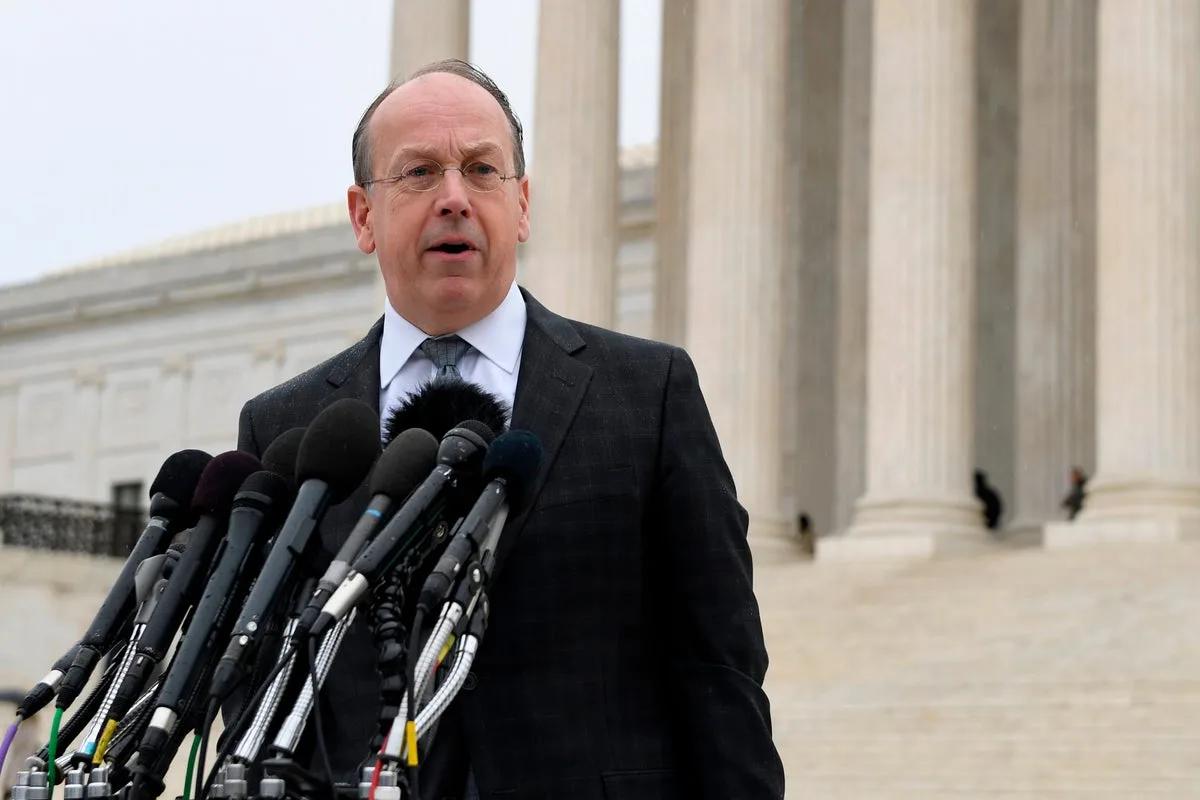
Paul Clement, who represented the law firms, said Trump impermissibly punished the firms because of their relationships with clients and attorneys who “raised the president’s ire”. “The executive orders here strike at the heart of the First Amendment and the ability of lawyers to zealously represent their clients,” he said. “Lawyers cannot zealously represent their clients while walking on eggshells for fear of reprisals.”

Deputy Associate Attorney General Abhishek Kambli accused district court judges of rushing to judgment and overstepping their authority because they “clearly didn't like the content” of Trump's executive orders. “President Trump is not beneath the law,” Kambli said. “He is entitled to the benefit of the Supreme Court and this court's precedent on his authority to decide matters such as security clearance determinations and investigating anti-discrimination.”
District court judges in Washington, DC, consistently ruled that the White House cannot enforce Trump's executive orders against the firms of Perkins Coie, Jenner & Block, Susman Godfrey and WilmerHale. Trump sanctioned firms with attorneys who had done work that Trump opposed or had been associated with prosecutors who investigated the Republican president.
Trump ordered the suspension of security clearances for attorneys at the targeted firms, the termination of federal contracts and the barring of employees from federal buildings. Other major firms sought to avert orders by preemptively reaching settlements that required them to collectively dedicate hundreds of millions of dollars in free legal services in support of causes supported by the Trump administration.