Attorneys for Cole Tomas Allen, the man accused of attempting to assassinate President Donald Trump at the White House Correspondents' dinner, have raised doubts about the Department of Justice's account of the shooting. During a brief court appearance on Thursday, Allen did not enter a plea, and his legal team argued that the government's narrative is built on speculation rather than solid evidence.
Court Appearance and Detention
Appearing before U.S. Magistrate Moxila Upadhyaya, Allen agreed to remain in custody for now. Prosecutors allege that Allen meticulously planned his attack for weeks, tracking Trump's movements online before breaching security at the Washington Hilton on Saturday night. Carrying a long gun, he ran through a magnetometer, disrupting one of the most high-profile annual events in Washington, D.C.
Injuries and Ballistics Questions
Allen was injured during the incident but not shot. A Secret Service officer was shot in the chest but survived thanks to a bullet-resistant vest. The DOJ has stated that Allen fired his shotgun at least once, and a Secret Service agent fired five shots. However, prosecutors have not publicly confirmed that Allen's bullet struck the agent's vest. In a letter to prosecutors, Allen's lawyers highlighted that statements from acting Attorney General Todd Blanche suggest recovered ballistics evidence may not align with the government's theory.

The Justice Department countered, asserting that evidence shows Allen fired his shotgun in the direction of the Secret Service agent. Investigators recovered at least one fragment consistent with a buckshot pellet at the crime scene. Prosecutors wrote, "The government is aware of no physical evidence, digital video evidence, or witness statements that are inconsistent with the theory that your client fired his shotgun in the direction of the officer or that the officer was indeed shot once in the chest while wearing a ballistic vest."
Evidence and Motive
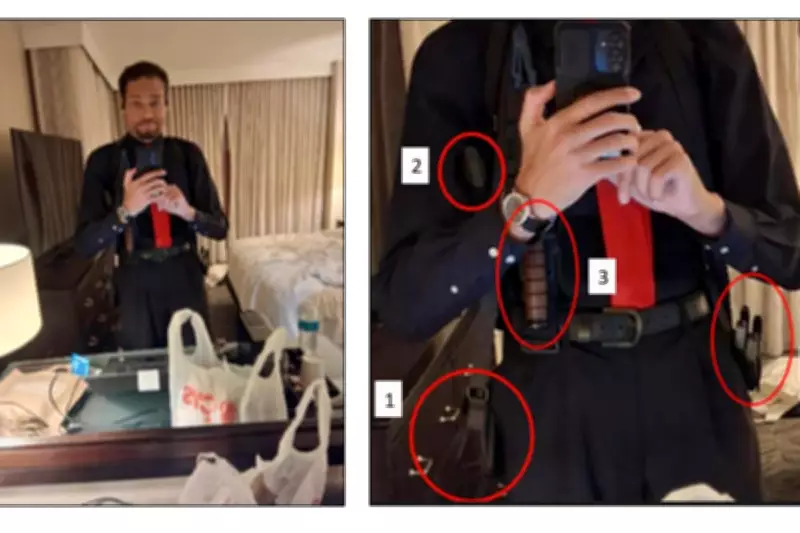
Court papers reveal that Allen took a selfie in his hotel room minutes before the incident, equipped with an ammunition bag, a shoulder gun holster, and a sheathed knife. In writings sent to family members shortly before the shooting, Allen referred to himself as a "Friendly Federal Assassin" and obliquely referenced grievances over Trump administration actions. The Associated Press reviewed these writings, but Allen's lawyers note that Trump is never mentioned by name.
Defense attorneys argue for Allen's release, stating that the government's case is "based upon inferences drawn about Mr. Allen's intent that raise more questions than answers." They contend that the charge of attempted assassination is built entirely on speculation.
Charges and Background
Allen, 31, from Torrance, California, is charged with attempted assassination of the president and two firearms counts, including discharging a weapon during a crime of violence. He faces up to life in prison if convicted on the assassination charge alone. Described as a highly educated tutor and amateur video game developer, Allen's background contrasts sharply with the severity of the allegations.