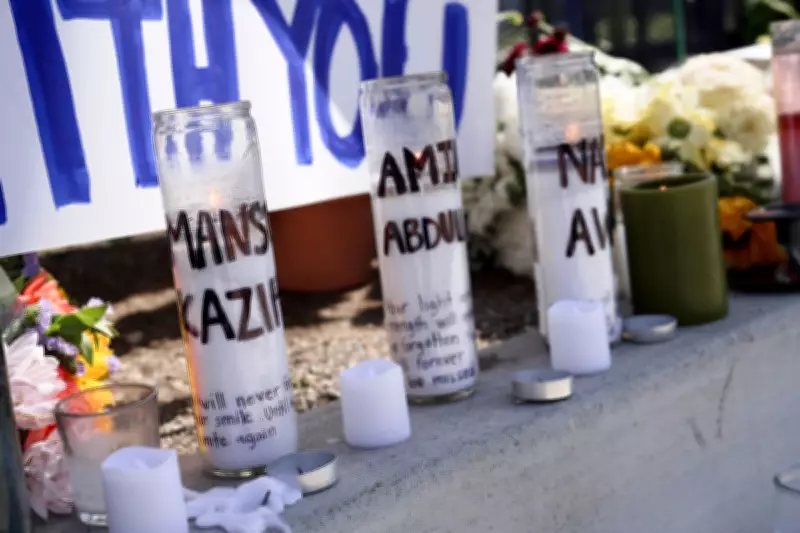
Court records have disclosed new details about one of the two teenagers responsible for a deadly shooting at a San Diego mosque earlier this week. The teenager, identified as Caleb Vazquez, had been reported to law enforcement last year due to concerning behavior and an apparent admiration for Nazi ideology. This led to the confiscation of 26 firearms from his father under California's red flag law.
Welfare Check and Gun Seizure
During a welfare check at the Vazquez home, officers noted that Caleb Vazquez was “involved in suspicious behavior idolizing nazis and mass shooters.” On January 29, 2025, a court order was obtained to remove the weapons under a 2014 California statute that permits the seizure of firearms from individuals deemed dangerous. The father, Marco Vazquez, had voluntarily surrendered the guns days earlier, according to an affidavit.
Details of the Shooting
Authorities have stated that Vazquez, 18, met 17-year-old Cain Clark online, where both were radicalized. The specifics of their acquaintance and the origin of the weapons used in the attack remain undisclosed. Clark’s mother alerted police on Monday that weapons were missing from her home, initiating a search that ended when the teens carried out the shooting at the Islamic Center of San Diego before taking their own lives.

Mental Health and Family Efforts
Court filings reveal that Vazquez had a history of mental health struggles, including an involuntary psychiatric hospitalization. His parents took steps to secure knives and surrender firearms upon learning of serious allegations against their son. The family released a statement indicating that Caleb was on the autism spectrum and had developed resentment toward certain aspects of his identity, though specifics were not provided.
“Coming from a diverse family that not only includes immigrants but Muslims as well, we always taught the importance of acceptance, compassion, and love for one another,” the statement read. “We believe this, combined with exposure to hateful rhetoric, extremist content, and propaganda spread across parts of the internet, social media, and other online platforms, contributed to his descent into radicalized ideologies and violent beliefs.”
Radicalization and Online Influences
Writings by Vazquez and Clark expressed white supremacist views, with Vazquez mentioning “some mental health issues” and feelings of rejection by women. Both idolized previous mass shooters and expressed hatred toward Jewish people, Muslims, Black people, and other groups. Experts note that de-radicalization efforts are becoming more challenging due to the internet’s role in blurring ideologies and creating niche, meme-based languages that are difficult for parents to detect.
Samira Benz of the Violence Prevention Network commented, “Even if a parent is looking at the phone of their child, they don’t necessarily see something bad is going on.”
Investigation and Community Response
Police began searching for the teens after Clark’s mother reported him as suicidal and armed. The search was ongoing when the shooting commenced at the county’s largest mosque. The Vazquez family emphasized their efforts to steer Caleb toward help, including therapy and rehabilitation centers. The case highlights the complexities of preventing radicalization and the importance of early intervention.