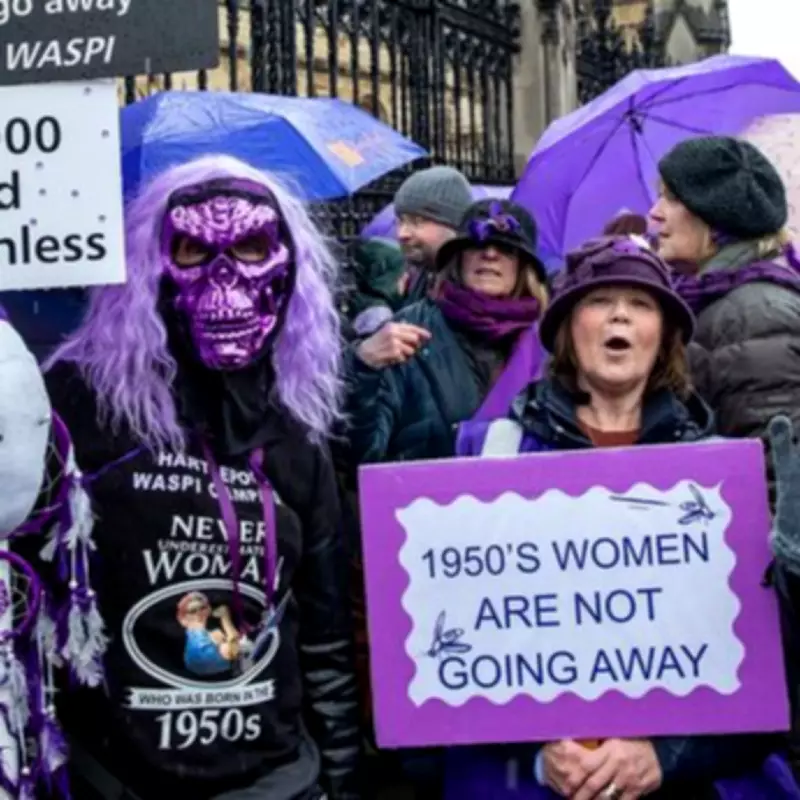
The Women Against State Pension Inequality (WASPI) campaign has confirmed it will proceed with a fresh High Court challenge against the government, following ministers' refusal to revisit compensation for millions of women born in the 1950s.
Campaign's Warning to Labour
The group has cautioned that the fight for payouts is far from over. New analysis for the campaign indicates that WASPI women outnumber the majorities of sitting MPs in 302 constituencies, including 142 Labour-held seats. Neither the Conservative Party nor Reform UK has pledged to overturn the decision not to award compensation.
Angela Madden, chair of the WASPI campaign, stated: "The government has had every opportunity to do the right thing for WASPI women. Instead, they have made a political choice that risks alienating voters in hundreds of marginal seats across the country. Labour MPs have seen the electoral data. They know WASPI women have the numbers to unseat them. Yet ministers continue to ignore the independent Ombudsman, their own backbenchers, and millions of voters."

She added: "We will not be ignored, and we will not give up this fight."
Background on the Compensation Dispute
In 2024, the Parliamentary and Health Service Ombudsman (PHSO) found that the Department for Work and Pensions (DWP) was guilty of maladministration for failing to properly communicate changes to the state pension age. This left women unable to plan for their retirement, the watchdog said, recommending compensation of between £1,000 and £2,950. Such payouts would cost up to £10 billion, a bill the government has deemed unacceptable.
In January, affected women were informed for a second time that they would not receive compensation. The WASPI campaign is now preparing a fresh High Court challenge, currently in its early stages.
State Pension Age Changes
Between April 2010 and November 2018, the state pension age for women gradually increased from 60 to 65. It rose again to 66 in October 2020 and is scheduled to reach 67 by 2028.
A DWP spokesperson stated in March: "The Secretary of State set out the government's position in his oral statement to Parliament, including acceptance of maladministration and apology to the women affected. Our focus now is on delivering an action plan to implement lessons learned in how DWP communicates state pension matters going forward."