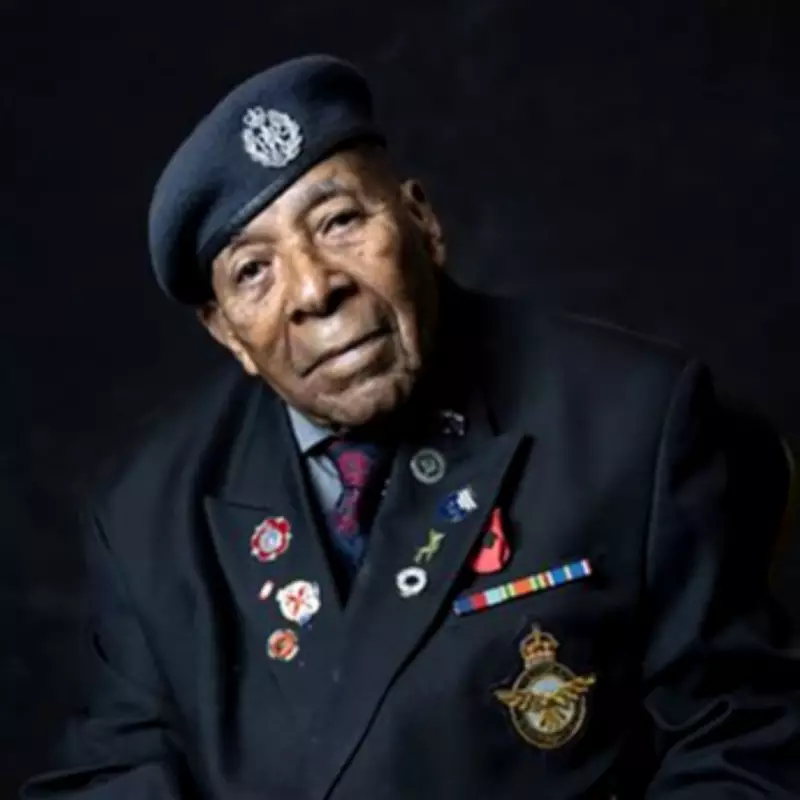
Gilbert Clarke, a World War Two veteran and a prominent member of the Windrush generation, has passed away at the age of 100. Born in Jamaica, he moved to Britain in 1944 to join the Royal Air Force (RAF) as a Leading Aircraftman (LAC), contributing to the Allied war effort against Nazi Germany.
A Life of Service and Remembrance
Clarke enlisted at just 17 years old, inspired by stories of West Indian soldiers from the First World War. He trained and worked on radar and radio systems, supporting military aircraft during the liberation of Europe. He vividly recalled witnessing hundreds of planes in the sky on D-Day, memories he later shared to educate younger generations about sacrifice and duty.
In 2023, the Daily Mirror accompanied Clarke as he paid his respects to Caribbean colleagues at a cemetery in Belgium. He emphasized the immense contribution of young men from the Caribbean who traveled across the world to support the Allies.

Tributes from Community Leaders
Paul Chambers, chair of the British West India Regiment Heritage Trust (BWIRHT), described Clarke as a national treasure who represented the very best of the community. He noted Clarke's unwavering commitment to remembrance and his annual participation in the CumByYah pilgrimage. Chambers stated: “Gilbert will remain forever part of our story.”
Sue Liburd, British army veteran and High Sheriff of Lincolnshire, highlighted the significance of Clarke's passing, marking the loss of a living generation that carried the weight of war and sacrifice. She emphasized the need to continue telling the stories of Caribbean veterans, as first-hand testimony fades.
Personal Life and Legacy
Gilbert Clarke was a caring father of eight, grandfather of 11, great-grandfather of 10, and great-great-grandfather of three. He lived in Plaistow, East London, and worked as a TV and radio serviceman after the war. His wife predeceased him.
Reflecting on his decision to join the war, Clarke once said: “I volunteered like so many millions of others from Britain, the Commonwealth and elsewhere out of a sense of duty, to fight for king and country, and play my part in ensuring we left the world a better place for everyone.” He added that the threat of Hitler potentially colonizing the Caribbean and South America motivated him and others to act.
His legacy endures through the lives he touched and the historical visibility he restored for Caribbean veterans across the United Kingdom. The BWIRHT mourns his passing but celebrates a remarkable life of service, resilience, and dignity.