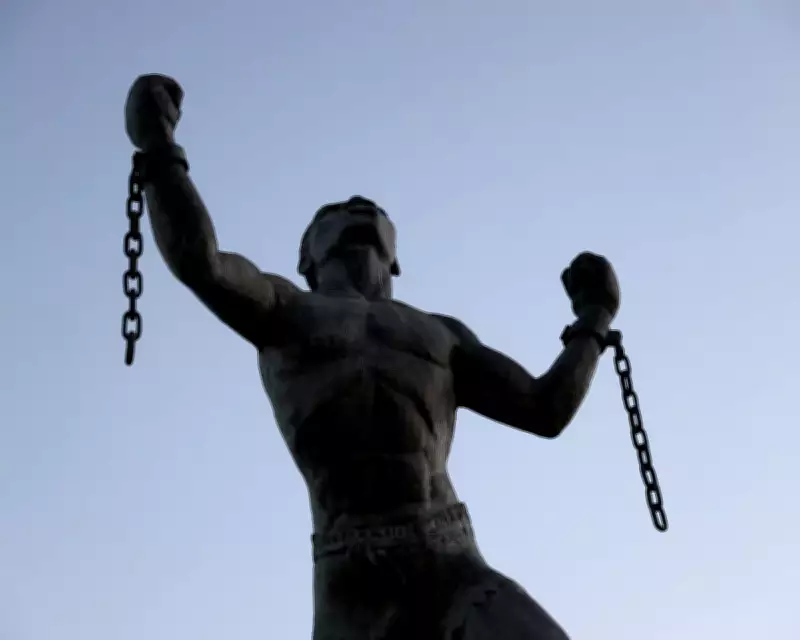
A new report by international experts has concluded that Britain stole 25 million years of life and labour through slavery in Barbados, causing damages estimated at up to $2 trillion (£1.5 trillion). The research, led by economist Coleman Bazelon, focuses on the value of unpaid labour and the shortened lifespans of enslaved people in Barbados, Britain's oldest slave plantation colony.
Report Methodology and Findings
Bazelon, who previously co-authored the 2023 Brattle analysis on transatlantic slavery, conducted this work through the non-profit Public Interest Experts. The report estimates that between $500 billion and $700 billion represents the value of uncompensated labour. An additional $1.1 trillion to $1.3 trillion accounts for the shortened lifespans of enslaved people. Combined, the total harm ranges from $1.6 trillion to $2 trillion.
The research details that approximately 379,000 enslaved Africans arrived in Barbados, while 78,000 died during the Middle Passage. Another 335,000 people were born into slavery on the island.

Context and Purpose
Bazelon emphasised that the figure is not an invoice but a factual foundation for dialogue. "This research is not creating an invoice for anybody to pay. It is an accounting of the harm that was done … a recognition of the harm that was done that is the starting point for reconciliation," he said.
Barbados was the first major British colony to force enslaved people onto plantations from the early 1600s. It is also a founding member of Caricom, which advocates for reparations.
Political Reactions
Barbados's minister for pan-African affairs and heritage, Trevor Prescod, stated: "You can't erase history … My job is to give an Afrocentric redress to the imbalances that occurred during the period of slavery." The report is expected to go to the cabinet for ratification.
Professor Alan Lester from the University of Sussex noted: "It's not surprising that – when you add up the value of lives appropriated to make money in Barbados – you get such an enormous figure. The inequalities entrenched by slavery have only been exacerbated since, as compensation was paid to slave owners rather than the enslaved."
Historical Background
When Britain abolished slavery on 1 August 1834, £20 million was paid in compensation to enslavers, while the enslaved received nothing. The 2023 Brattle analysis estimated total harms from transatlantic slavery across 31 territories at $100–131 trillion, with $77–108 trillion during enslavement and $23 trillion in continuing harms.
Last month, 123 nations at the UN General Assembly voted that chattel slavery was the gravest crime against humanity. The US, Israel, and Argentina voted against, while the UK and 52 others abstained. UK Prime Minister Keir Starmer has ruled out direct monetary payments for reparations.
Voices from Heirs of Slavery
David Lascelles, co-founder of Heirs of Slavery, a group of descendants of British enslavers, said: "My distant ancestor Henry Lascelles made his fortune in Barbados in the 18th century. Now, 300 years later, it's high time we all recognise there is a debt to pay, a debt that is of course about money, but not just about money."
Alex Renton, another co-founder, added: "Addressing the legacies of this most terrible event in Britain's modern history is the right thing for the nation to do, morally and practically."