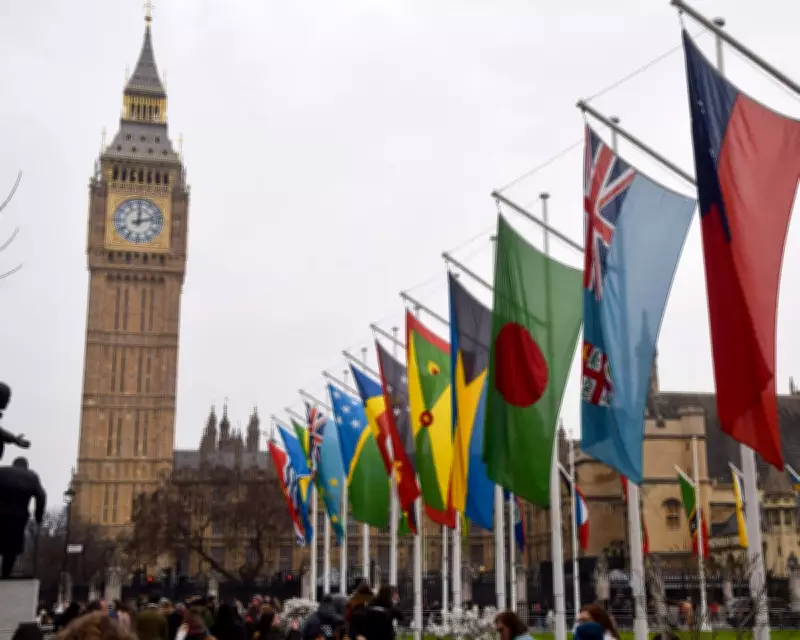
Inside the UK's Heated Debate on Voting Rights for Commonwealth Citizens
In the wake of the Green party's victory in the Gorton and Denton byelection, Nigel Farage sparked controversy by claiming his Reform party would have triumphed if the vote had been limited to British-born voters. The Greens dismissed this as dangerous, racist nonsense, but the argument has thrust a little-understood aspect of the UK's electoral system into the spotlight: who is actually permitted to vote.
Currently, some non-UK citizens, including certain Commonwealth nationals, can cast ballots in general elections, while millions of long-term residents are excluded. This complex framework varies across different parts of the UK, creating a patchwork of rules that few fully comprehend.
The Sharpening Rhetoric on Migration and Democracy
Lara Parizotto, executive director of the Migrant Democracy Project, notes that the debate has hardened significantly in recent years. Our work is at the intersection of democracy and immigration, she explains, and both things have become very tough over the last few years. Initially, campaigners focused on expanding voting rights to all residents, regardless of immigration status, but now they find themselves defending the status quo against calls to restrict existing rights.

Parizotto points to a Guardian analysis showing increasingly extreme language about immigration in parliament, and recent arguments in publications like the Critic, where writers have labeled Commonwealth voting rights as a hangover from the empire. This shift reflects a broader politicisation of the issue, often blurring lines between nationality, religion, and identity.
How Commonwealth Voting Actually Works
The rules are intricate and easily misunderstood. Not all Commonwealth citizens can vote; only qualifying Commonwealth citizens with lawful immigration status, such as work visas, student visas, or refugee status, are eligible. This principle dates back over a century, when people across the British empire were considered British subjects with voting rights.
Today, Parizotto estimates around 1.2 million Commonwealth citizens in the UK are eligible to vote, but many are unaware of this right. Electoral Commission data suggests roughly two-thirds of eligible Commonwealth citizens are registered, highlighting a gap in awareness and engagement.
A System Few People Understand
The complexity extends beyond Commonwealth citizens. Different rules apply for EU citizens who arrived before Brexit, recent arrivals from countries with bilateral agreements, and variations across devolved nations. For instance, Scotland and Wales have expanded their franchises, while England and Northern Ireland have not.
It's really difficult to make it simple, Parizotto says. You can have an Italian person who arrived in 2017 who can vote in local elections, but their niece who arrived last year cannot vote at all. Meanwhile, a Polish person arriving today can vote locally because Poland has an agreement with the UK. Even politicians often lack full understanding, complicating canvassing efforts.
The Bigger Democratic Gap
Parizotto argues that the focus on Commonwealth voting rights overshadows a larger issue: over four million residents in the UK have no vote in general elections, despite living, working, and paying taxes here. When we talk about issues affecting immigrants but also everyone, there are millions of people who are not able to participate in shaping the elections around them, she emphasises.
She believes politicians should concentrate on winning voters over with compelling policies rather than narrowing the electorate. We need a democracy that actually allows everyone to vote, she concludes, and, currently, that's very far from the case.
Context and Implications
The debate intensified after the Gorton and Denton byelection, where migrant voting rights became a political flashpoint. Parizotto suspects that Commonwealth is sometimes used as a code word in discussions about identity, noting that Farage's comments specifically mentioned Pakistan, hinting at underlying tensions.

As the UK navigates post-Brexit realities and evolving immigration policies, the conversation around voting rights is likely to remain heated. Campaigners like Parizotto continue to advocate for a more inclusive democracy, warning that the current system risks disenfranchising millions and deepening societal divides.