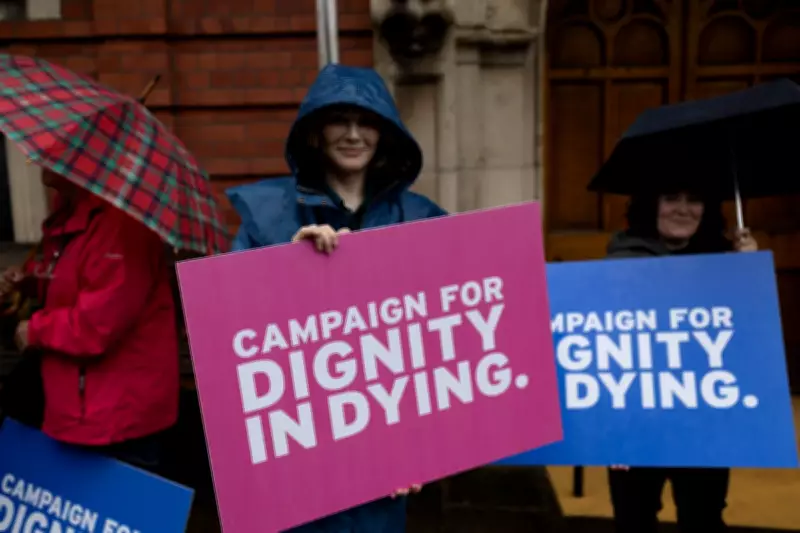
Assisted Dying Delays in British Isles as Whitehall Process Drags On
The UK Government's review process for the Isle of Man's Assisted Dying Bill has lasted almost four times longer than the average timeframe, according to a Press Association analysis. This delay is causing considerable uncertainty for patients and lawmakers advocating for end-of-life choice reforms across the British Isles.
Isle of Man's Landmark Legislation Stalled
The Isle of Man's Tynwald became the first parliament in the British Isles to agree a comprehensive framework for assisted dying last year. However, after 337 days, the UK Ministry of Justice has yet to process the legislation for royal assent. A freedom of information request revealed that since 2020, the Ministry has taken an average of just 88 days to process Isle of Man legislation.
Dr. Alex Allinson, the GP and independent member of the House of Keys who steered the legislation through Tynwald, expressed frustration at the lack of a set deadline. "I think there is the impetus really to complete the full passage of this Bill so we can start with some of the implementation of it," he told PA. "Which will take a considerable amount of time because there were various amendments and clauses brought into the Bill."

Jersey and Other Jurisdictions Follow Suit
Meanwhile, Jersey's parliament, the States Assembly, is also progressing with assisted dying legislation. Members voted in May 2024 in favour of drawing up laws for an assisted dying service in the crown dependency, with a final vote expected imminently. This movement reflects a broader trend across British jurisdictions reconsidering end-of-life options.
In Westminster, MPs backed the Terminally Ill Adults (End of Life) Bill by 314 votes to 291 last June, with Welsh lawmakers in the Senedd recently giving their legislative consent. The bill now faces further scrutiny in the House of Lords. Simultaneously, debates are actively taking place in the Scottish Parliament, indicating widespread political engagement with this sensitive issue.
Implementation Challenges Ahead
Should royal assent be granted for the Isle of Man bill, significant work remains. The implementation period for an assisted dying service could extend up to two years after approval. Dr. Allinson highlighted the extensive preparations needed: "It will take quite a lot of time to do the right consultation with our medical, nursing and pharmaceutical professions to get the code of practice, the various legislation that needs to be put in."
The bill, passed on March 25 last year, would make assisted dying available to terminally ill adults who are "reasonably expected to die" within 12 months and have lived on the Isle of Man for at least five years. This residency requirement underscores the legislation's localized nature.
Government Response and Advocacy Concerns
A UK Government spokesperson defended the processing time, stating: "The length of time taken to pass Crown Dependency legislation depends on the complexities and sensitivities of a bill, as well as any legal and constitutional issues." They emphasized that this approach ensures legislation is "properly considered, in line with our good governance responsibilities."
However, advocates have raised serious concerns about the human cost of delays. Nathan Stilwell, who chairs the Assisted Dying Coalition, previously argued that Whitehall "should not delay the democratic will" of the Tynwald. "Every month they stall, more dying people are forced to endure needless suffering or travel abroad to die," he added, highlighting the urgent ethical dimensions of the bureaucratic process.
The Isle of Man Government noted that the bill is currently progressing through the royal assent process but declined to comment on timelines, describing them as "a matter for the UK Ministry of Justice." They confirmed that even after royal assent, the act will not commence until all required secondary legislation and codes of practice have been developed, consulted upon, and approved by Tynwald.

This complex interplay between constitutional processes, medical ethics, and patient welfare continues to unfold across multiple British jurisdictions, with the Isle of Man's experience serving as a crucial test case for assisted dying implementation in the region.