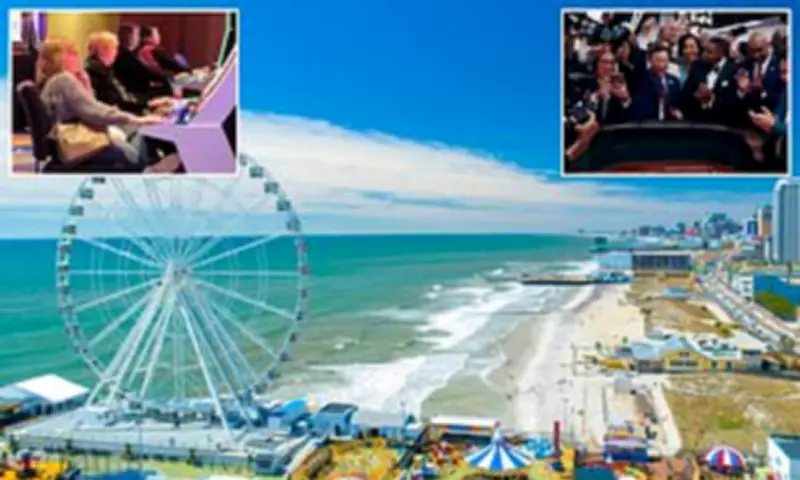
Atlantic City, the East Coast capital of gambling, is facing an existential threat with the construction of three casinos in nearby New York City, sparking fears that the once-buzzing beach town will struggle to survive.
The Rise and Fall of 'America's Playground'
Around the turn of the 20th century, Atlantic City was thriving and dubbed 'America's Playground.' However, after decades of decline, the city legalized gambling in 1977 in a bid to revitalize itself. For a while, the strategy worked. Atlantic City, also referred to as the 'Vegas of the East Coast,' began to bounce back in the 1990s, but the monopoly that fueled its growth was slowly stripped away as neighboring states also legalized gambling and began building casinos of their own.
Then came online gambling, and now, with Resorts World NYC, just a two-hour drive away, opening live gaming tables last month, and Bally's Bronx and Hard Rock Metropolitan Park expected to open by the end of the decade, some are sounding the death knell for America's Playground.

Local Reactions
Michael Suleiman, chairman of the Atlantic County Democratic Committee, told the Daily Mail: 'This should be a wake up call that we finally need to get our act together about Atlantic City. I mean, we had a monopoly on casino gaming for decades and decades, and we kind of screwed it up.'
New Jersey State Senators and other local officials have said that not only will New Yorkers now shun Atlantic City for the casinos in their backyard, but so will northern New Jersey residents living just across the Hudson River. 'We’ve got a gun to our heads,' State Senator Vin Gopal told Politico. 'Those gambling dollars that we see in North and Central Jersey are going to go across state lines the second these casinos open.'
Economic Impact
Last year, New Jersey collectively earned more than $215 million in taxes from the nine casinos along Atlantic City's boardwalk. New York State's official estimate for how much tax revenue it will earn once all three casinos in New York City are open is an average of $700 million per year. For New Jersey politicians, that eye-popping revenue stream represents a siphoning of crucial business away from America's Playground and into the richest city in the US.
Proposed Solutions
In an effort to curb the impact of NYC's shiny new casinos, State Senators Gopal and Paul Sarlo have co-sponsored a bill that would allow table games and slots to be added to northern New Jersey's Monmouth Park and Meadowlands Racetracks, which already allow horse racing and sports betting. The goal of the bill, called Senate Concurrent Resolution 66, is to keep gaming tax revenue within the state by giving gamblers in northern Jersey options that are closer to home than New York City.
But the proposal has been facing opposition from within the state. Southern New Jersey and Atlantic City stakeholders are concerned that it will create yet more competition for Atlantic City and harm the seaside town even more than the New York City casinos could. 'In-person gaming revenue could drop by 20–30 percent, potentially triggering the closure of at least two casinos and resulting in significant job losses,' if Atlantic City is faced with the combined competition of New York and northern Jersey casinos, according to the Greater Atlantic City Chamber of Commerce.
Differing Views
Suleiman believes that the threat New York City casinos pose to Atlantic City and New Jersey tax revenue is legitimate but overstated. 'Are New York casinos going to hurt Atlantic City’s bottom line? Sure, there's no question that the more competition you have, it's going to hurt,' Suleiman said. 'But is it something we can't survive? No, I think we certainly can survive it.'
But if two more casinos are built in northern Jersey, that level of competition would create 'all out devastation,' Barbara DeMarco, chairwoman of the Greater Atlantic City Chamber of Commerce told the Daily Mail. 'It's very scary.'

Suleiman explained that New York City's casinos are 30 to 60 minutes away from Meadowlands Racetrack 'on a good day,' and they are a little more than an hour away from Monmouth park, 'which ironically is the same distance... to Atlantic City.' Both DeMarco and Suleiman questioned the idea that northern New Jersey residents would rather sit in traffic and pay expensive tolls to visit New York City casinos rather than get on a highway and zoom down to Atlantic City.
Historical Context
Suleiman said that Gopal is a 'great senator' and a 'good friend,' but the politician's 'gun to our heads' statement is 'a little hyperbole' and that there is no data to back it up. A nonprofit Suleiman founded called South Jersey Forward, which advocates for policy to advance southern New Jersey's interests, is leading the charge against Senate Concurrent Resolution 66. 'We've been down this road before. Atlantic City was an exclusive arbiter of gaming for decades after Las Vegas and until Pennsylvania got casinos in 2006,' Suleiman told the Daily Mail.
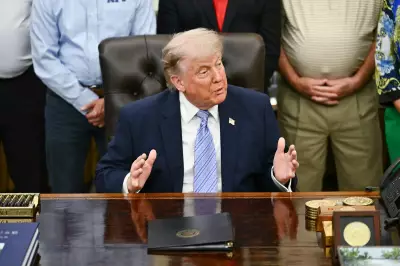
DeMarco explained that after Pennsylvania opened casinos, half of Atlantic City's gaming revenue disappeared, and Atlantic County had the highest unemployment rate and the highest level of foreclosures in the country. At the height of its popularity, President Donald Trump owned three casinos in the city - Trump Plaza, Trump Taj Mahal, and Trump Castle/Marina. The city is also known for hosting the Miss America contest.
Opposition to North Jersey Casinos
Critics of opening northern New Jersey casinos also include the South Jersey legislative delegation, the Southern New Jersey Development Council, the Chamber of Commerce Southern New Jersey, Atlantic City Mayor Marty Small, and the city council. The coalition believes that allowing casinos in the Monmouth Park and Meadowlands Racetracks is a shortsighted way to keep tax dollars within the state without taking into account the impact it would have on Atlantic City and the surrounding region.
'I just don't agree with the notion that we need to economically destroy one part of the state to help another part of the state,' Suleiman told the Daily Mail. 'We should make sure the whole state is successful.'
DeMarco became choked up as she discussed the 'devastation' that combined competition from northern New Jersey and New York City casinos would have on Atlantic City. She described watching vibrant blue collar industries disappear while she was a little girl growing up in the southern part of the state and how they were totally replaced by the casino industry. 'What's hard is thinking about all those families whose lives will change as they did 15 years ago,' she said, referencing the havoc faced by Atlantic City after Pennsylvania opened casinos. 'There's just not another industry to pick up those jobs.'
DeMarco also emphasized that the consequences would ripple into the entire region. 'The spill off is not just Atlantic City,' she said. 'It's stretching as far south as Cape May. It's stretching as far west as Camden. Stretching as far north... as Burlington and Ocean. The stretch of the casino industry is all of South Jersey.'
Future Prospects
The fears of southern New Jersey stakeholders are somewhat quelled by the fact that the state's residents unequivocally rejected opening casinos outside of Atlantic City in a 2016 referendum that 77 percent of voters shot down. It is unlikely that Northern Jersey casinos will be made legal in the next couple of years, as the state legislature has until August 3 to get the proposal onto the November ballot. The proposal, which is a constitutional amendment, would need to pass both houses of the legislature by a three-fifths vote, or a simple majority in two consecutive years, before being approved by voters in another statewide referendum.
In the meantime, Suleiman said that Atlantic City needs to diversify its economy, improve conditions for residents, and tackle crime if it wants to retain its position as a popular destination for tourists. DeMarco echoed those points and emphasized the need for infrastructure investment. 'The solution is, invest in what you have right now, get it up to where it can compete with something shiny and new, and perhaps then, consider this (north Jersey casinos),' she said.
'We should keep Atlantic City's gaming economy strong as it can be, and obviously preventing North Jersey casinos is a good first step of that,' Suleiman told the Daily Mail. 'But also, how do we make Atlantic City a destination for people to live here, to work here, to retire here? I think we've got to go beyond just saying and it's a gaming destination. I think it's got to be a vibrant city that happens to have casinos,' he added.