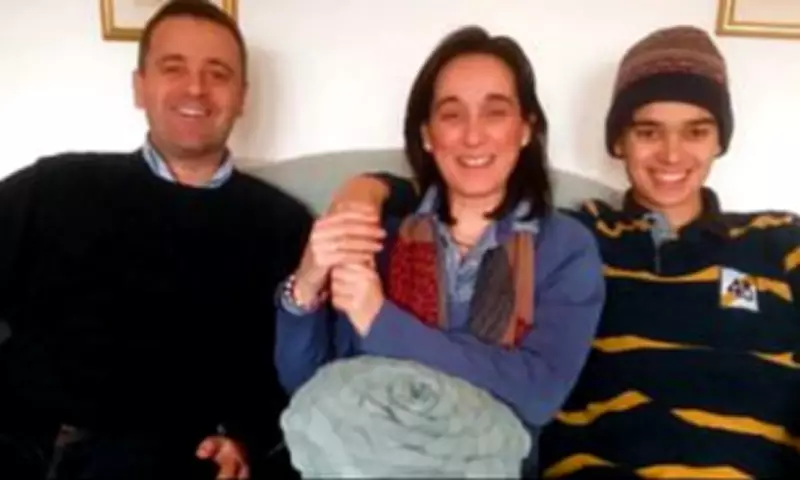
The Roman Catholic Diocese of Salford has formally opened the "cause for the canonisation" of Pedro Ballester, a 21-year-old student from Manchester who died eight years ago, potentially making him the first Gen Z saint. The announcement paves the way for a comprehensive examination of his life and writings to be presented to the Pope.
Pedro Ballester's Life and Legacy
Pedro Ballester passed away on 13 January 2018 after an aggressive cancer halted his studies to become a chemical engineer. More than 500 people attended his funeral at the Holy Name Church on Oxford Road, celebrated by the future Cardinal Arthur Roche, who flew in from the Vatican. Fr Joseph Evans, the priest who administered his last rites, expressed his delight at the announcement: "Wow. I'm delighted having witnessed at first hand Pedro's heroic struggle in the last six months of his life. I feel he can be a great model of joy in adversity particularly for young people."
Formal Process
The diocese has invited Catholics to submit any information that might "help to build a full picture of Pedro's life, virtues and reputation for holiness," including personal testimonies, memories, and writings such as letters or diaries. Over 60 friends, family members, and acquaintances were interviewed by church authorities prior to this announcement, including his father, a surgeon working in Huddersfield. This new process will formally seek to ascertain whether Pedro achieved a life of "heroic virtue," living a life of faith, hope, and love surpassing ordinary human capabilities, before sending a dossier to the Vatican.

Opus Dei and Pilgrimage
Pedro was a member of the Catholic organisation Opus Dei and committed himself in his teens to be a lay member who would never marry but would devote himself to God in his ordinary working life. His grave has become a shrine attracting pilgrims from around the world to the Catholic section of Southern Cemetery in Manchester, near other famous Catholics such as legendary Manchester United manager Sir Matt Busby and music mogul Tony Wilson. Opus Dei was founded in 1928 by a 26-year-old Spanish priest, Josemaría Escrivá, whose vision was to extend Sunday religiosity into everyday life. Prominent members have included former Celtic and Scotland footballer Tommy Burns and ex-Labour cabinet minister Ruth Kelly.
Comparison to Carlo Acutis
In his first canonisation ceremony, Pope Leo announced sainthood for British teen Carlo Acutis in September last year. Carlo, born in London but raised in Milan, became internationally famous among young Catholics for being a relatable, modern-day role model who used technology to spread the faith. The 15-year-old learned to write internet code to spread his belief in the Catholic Church. He fell ill in October 2006 and died ten days later of acute leukaemia at a hospital in northern Italy. His body was later transferred to an Assisi cemetery at his request due to his devotion to the medieval saint St Francis. Carlo was declared "blessed" in 2020 after the Vatican recognised a miraculous healing through his intercession—a child in Brazil who recovered in a "scientifically inexplicable" manner. The church then paved his way to sainthood by attributing to him a second miracle: the complete healing of a Costa Rican student in Italy from major head trauma in a bicycle accident after her mother prayed at Acutis' tomb.