A political slogan where the key word has seven syllables will always be a hard sell. 'Intergenerational' is such a word. It may only take a few moments to figure out that it means between generations, but generations are not homogeneous.
'Intergenerational equity' conjures equality. It is an aspiration for fairness that is widely shared and deeply rooted in the Australian psyche. But a slogan that captures that desire for a fair go and shows what it means in real life would probably have better cut-through. What we need is 'It's the economy, stupid' – but on steroids.
Surveys reveal widespread fear about the future
For years, surveys have been showing that young and old alike fear that the future will not be as good as the past. Both lived experience and research data show that inequality in Australia has been growing over the past two decades. That inequality shows up in many ways, of which the ability of young people to buy homes is just one important marker.

The young are also increasingly unlikely to be able to afford university education, which has been the traditional pathway to greater economic security. Even those with a post-school education are more likely to be working as casuals or in multiple jobs, deferring having children because of economic precarity, and beset with anxiety about climate change, AI, and the moral injury that comes from watching as oligarchs and autocrats push the world to the brink of collapse.
Critics and contradictions
Yet among the loudest critics of the government's budgetary attempt to redress the balance is a small group of young people who took the risk to establish businesses (with or without the support of family and friends) that they hope to sell to make their fortune. Chances are that some of them have parents who are in the 28% of baby boomers classified as wealthy, parents who paid their university fees and helped their progeny buy their first house.
Meanwhile a quarter of those over 50 live in poverty and the fastest growing group of homeless people are older women. As Cota, which represents older Australians, argues: 'the real divide in Australia is not between generations, but within generations – between those doing well and those being left behind.'
Generational labels and political challenges
Before generational targeting became a billion-dollar industry, Arthur Koestler wrote that knowing one's year of birth could act as a 'secular horoscope' – a clue to a lifetime of values and experiences forged by wars, economic disasters and shared cultural experiences. That was clear when Madison Avenue categorised generations to better target advertising: the snappy terms endured: baby boomers and their parents and grandparents, the silent and greatest generations. Generations shaped by wars, depression and recovery. Then the alphabet soup of names scribbled on a white board – X, Y, Z – before the descriptor millennial captured something of the time, technology and globalisation that shaped the lives of those who came of age in the 21st century.
These people and their younger brothers and sisters, Zoomers, are poised to become the electoral majority, so they really matter in the winner-take-all world of politics. Politics has become more managerial, shaped by strategic plans, KPIs, data, outputs and outcomes. The links that kept it grounded in the lives of people, through community groups, unions, churches and even political parties with mass membership, have weakened.
The need for a new narrative
Every interest group shouts to be heard, demands that its special interests be addressed without regard to the whole. The traditional media amplify these interests, while the online cacophony finds new ways to fill the void with attention-grabbing memes that may not be true, and leaves reforming politicians gasping for air, trying to explain. Managerial politics is good at process (meeting KPIs even if the problem isn't solved) but not so skilled at creating myths that bind.

That is the cri de coeur that is coming from those considering voting for One Nation. They feel ignored, misunderstood and neglected – without a new narrative that makes sense of the challenges and opportunities they, and their children, face in everyday life. Underlying it is an economic system that has advantaged the few. A system that has handed the provision of life-sustaining services for the young, disabled and old to a profit-driven market that has grown fat on public money. And hollowed out notions of the public good have left people feeling lonely and isolated.
Tax reform and the path forward
The promise by the opposition to reverse the capital gains tax proposals, and add another layer of punitive cost saving, avoids the underlying system-wide problem of the inequity of the current tax system. The pathway to participation and economic security is education, opportunity and inclusion.
At the beginning of the year the government's most frequent talking point was social cohesion, a feelgood aspirational sentiment that got lost for wont of an inclusive, expansive description and operational framework. Intergenerational equity risks going the same way. The sentiment is good, the aspirations laudable, but explanations and processes are falling short.
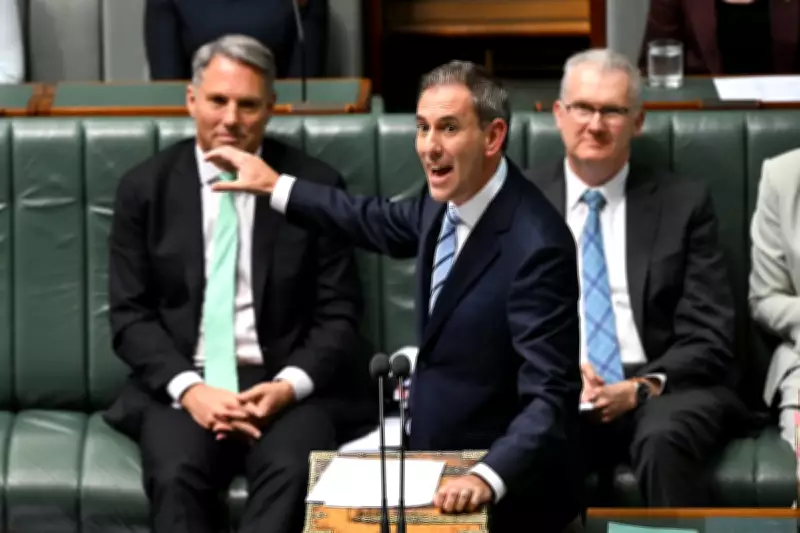
Like many other commentators, I applaud the treasurer for taking the first tentative steps to reform a taxation system that has been mired in stasis and perpetuated inequality. The backlash has been predictable, and no doubt refining details will be negotiated – hopefully it will steel him for even bigger challenges in future, rather than force a retreat into the timidity that has allowed the problems to grow.