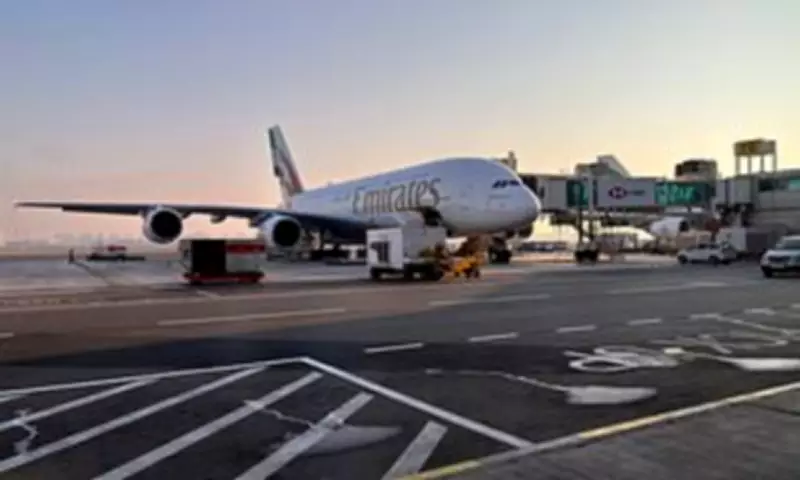
Emirates, like many other airlines globally, was forced to cancel countless flights when the Iran war erupted in late February. The United Arab Emirates-based carrier operated a reduced schedule for some time after a partial reopening of regional airspace. Its flights were even temporarily grounded at Dubai International Airport—the airline's main hub—in March after the airport was hit by drone attacks.
Air travel continues to face turmoil months later, with experts warning that up to 85,000 flights could be cancelled in June if the conflict and jet fuel crisis persist. Concerns over a jet fuel supply crunch due to the disruption of Middle East supplies since late February are growing in Europe as the peak travel season approaches.
Fuel prices have surged since US-Israeli strikes on Iran upended traffic through the key Strait of Hormuz, leading to the airlines' worst crisis since the pandemic. Despite these challenges, Emirates has been named the world's most profitable airline for the 2025-26 financial year.

Record-Breaking Financial Results
The carrier reported a $6.2 billion (£4.5 billion) profit before tax—a 7% increase from the previous year—along with record-breaking revenue of $35.7 billion (£26.2 billion). It also holds the highest-ever cash assets for an airline at $15 billion (£11 billion), up 10% from March 31, 2025.
The UAE's corporate tax rate increased from 9% to 15% this year, resulting in a profit after tax of $5.7 billion (£4.2 billion), which is still 3% up from 2024-2025.
Impact of the Iran Conflict
This positive news comes despite Emirates being one of the airlines worst hit by the war, which caused airspace closures, airport disruption, and rising fuel costs. Airlines have already cut two million seats from May's schedules within the past two weeks. The total number of seats across all carriers this month fell from 132,619,704 in mid-April to 130,674,864 in late April, according to aviation analytics firm Cirium. The number of flights fell by more than 13,000 over the same period—from 859,167 to 846,162—with Gulf airlines such as Qatar, Etihad, and Emirates worst affected.
The situation could worsen, with one expert suggesting that 10% of flights could be at risk in June if fuel supplies continue to be squeezed, equating to about 85,000 flights. Paul Charles of travel consultancy The PC Agency said: "Airlines are now being forced to cut flights and make difficult decisions ahead of the peak season. It is better for them to cancel flights well in advance so that passengers are less inconvenienced than a last-minute change of plan. As the Iran conflict continues, there will need to be many more cancellations as the jet fuel supply is squeezed."
How Emirates Overcame Setbacks
His Highness Sheikh Ahmed bin Saeed Al Maktoum, chairman and chief executive of Emirates, described how the first 11 months were "very positive," with strong demand driving revenue. "Month after month, we were surpassing our targets," he added. On February 28, military activity massively disrupted global commercial air traffic in the Gulf region, including in the UAE. Emirates and dnata quickly mobilised to support staff and affected customers, protect assets, and ensure business continuity.
Sheikh Ahmed attributed the continued success to Dubai's "years of infrastructure investments and a cohesive aviation ecosystem," which enabled the government to quickly secure safe corridors for commercial flights. Operations have been gradually restored from Dubai Airport, though the airline notes it is still operating at a lower passenger capacity than pre-disruption. Cargo operations have ramped up to support the movement of essential goods into and through the UAE.
The group invested $4.9 billion (£3.6 billion) in new aircraft, facilities, equipment, and technology during the 2025-2026 financial year. It also increased its workforce by 8%, totalling 130,919 employees. Looking ahead, Emirates is hopeful "for a clear resolution to the hostilities soon, and a return to market stability." It also revealed it is "well-hedged" for jet fuel until 2028-2029.

Return to Operations
Earlier this week, Emirates announced it had made a near-full return to operations, reaching 96% capacity. It has resumed services across the Americas, Europe, Africa, West Asia, the Middle East/GCC, the Far East, and Australasia, now covering 137 destinations across 72 countries—75% of pre-disruption capacity. Despite the reduced schedule, it carried 4.7 million passengers during the disruption, which it describes as "a testament to the enduring demand for travel and the trust that travellers continued to place in the airline."
Sheikh Ahmed concluded: "These outstanding results, despite significant challenges in the last month of our financial year, reaffirm the strength and resilience of the Emirates Group's business model, which is rooted in safety, excellence, innovation, people, and partnerships."