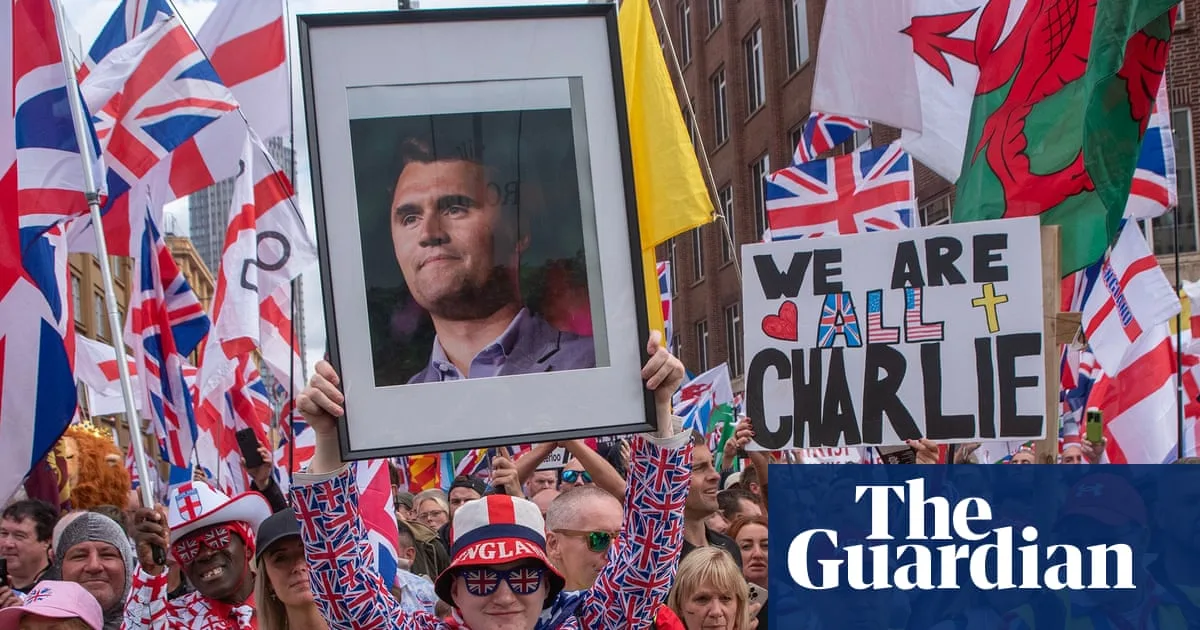
Tommy Robinson's 'free speech' protest in London last Saturday drew between 110,000 and 150,000 people, making it the largest rally of its kind in British history. The crowd, predominantly white and male, chanted the name of Charlie Kirk, a murdered US political activist, highlighting the transatlantic nature of the far-right movement.
Charlie Kirk, who was killed by a gunman at Utah Valley University, was not widely known in the UK before his death. However, his murder was used to validate the narrative that a certain worldview is under threat. Clips of the British crowd chanting his name were shared widely on US-based social media accounts.
Prof Paul Jackson, author of 'Pride in Prejudice: Understanding Britain’s Extreme Right', noted a feedback loop between the US and UK far-right. While some US ideas, like the Ku Klux Klan, have not taken root in Britain, others have thrived historically, such as those from Madison Grant's 'The Passing of the Great Race' and Henry Ford's 'The International Jew'. Conversely, the UK's Blood & Honour movement spawned US offshoots.

In the digital era, mutual reinforcement occurs in real time, with stories from one country used to boost political claims in another. For example, Kirk had previously commented on the case of Lucy Connolly, a British woman jailed for inciting violence against asylum seekers, using it to argue that free speech is under threat in the UK.
The rally was promoted by US conspiracy theorist Alex Jones's Infowars website, and the event's themes echoed claims by US Vice President JD Vance that the UK's Online Safety Act threatens free speech. The protest underscores how far-right extremism is increasingly a transatlantic phenomenon.