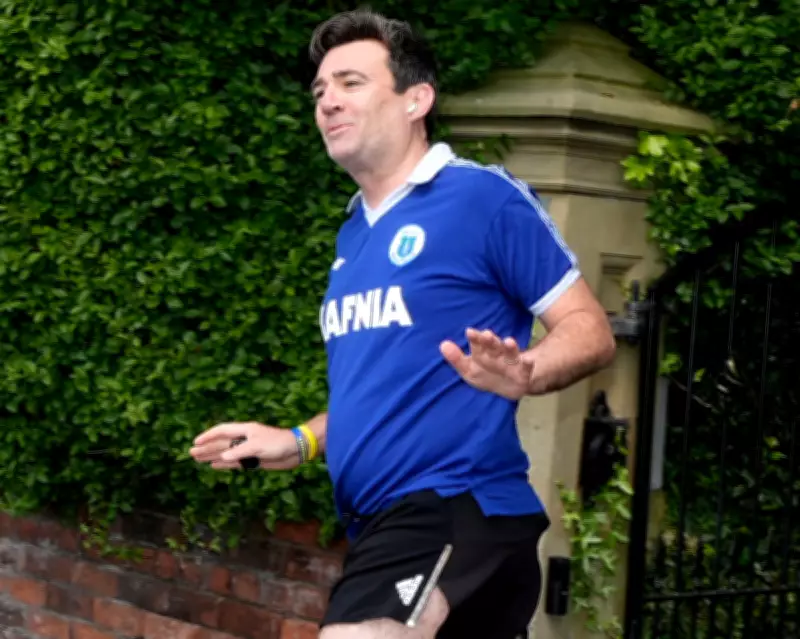
Andy Burnham, the mayor of Greater Manchester, stepped out of his home in Warrington, Cheshire, on Friday morning dressed in jogging gear, ready for a run. This seemingly ordinary activity became a media spectacle, as photographers captured the 56-year-old politician in a 1979-80 Everton strip, exposing his paunch and Lancashire tan to the world. The images dominated major news sites, including the Guardian, fueling speculation about his potential to challenge Keir Starmer for the Labour leadership and eventually become prime minister. The Times ran the headline: "Burnham off to a running start."
A Long Tradition of Political Jogging
Burnham is far from the first politician to use jogging as a political metaphor. From Tony Blair to Boris Johnson, British leaders have donned leisurewear to convey energy, determination, and a connection with the public. In 2006, Blair ran a mile for Sport Relief, stating, "I couldn't do this job unless I kept a certain level of physical fitness." He also promoted a healthy diet while dressed in a shell suit. Gordon Brown, though less known for athletic photo ops, was photographed jogging in a London park in 2009. A Downing Street spokesperson insisted, "We didn't set it up."
Cameron, Gove, and Johnson
David Cameron led his security detail on twice-weekly runs around London parks, describing himself as a "middle-aged, slightly overweight" jogger. He favoured black shorts, and any deviation—such as black tracksuit bottoms—drew concerned commentary from the Daily Telegraph. Michael Gove, as his prime ministerial ambitions grew, was frequently pictured jogging, but his hoodies and polo shirts never quite looked the part. Boris Johnson, true to form, dressed eccentrically: brightly patterned Bermuda shorts, beanie hats, and even dress shoes with a business shirt. Liz Truss, during her tenure, invited key advisers on early morning runs around Lambeth Palace grounds, which were "coveted and feared in equal measure," according to a source.

The Refuseniks
Not all politicians embrace the jogging metaphor. Theresa May preferred walking holidays, though she once ran through a field. Kemi Badenoch favours the gym, with her ministerial driver waiting outside. Keir Starmer, the current prime minister, is not a jogger but continues to play weekly five-a-side football with a team he has been part of for decades. "Unless I'm irreparably injured, I intend to do it for as long as I possibly can," he said—a metaphor for resilience and teamwork.
Burnham, to his credit, is a regular runner who completed the Boston marathon for victims of the Manchester Arena bombing. His Friday jog, while staged for photographers, reflects a genuine commitment to fitness. Yet the political symbolism is unmistakable: jogging remains a potent metaphor for being on the right track, hitting the ground running, and staying ahead of the pack.