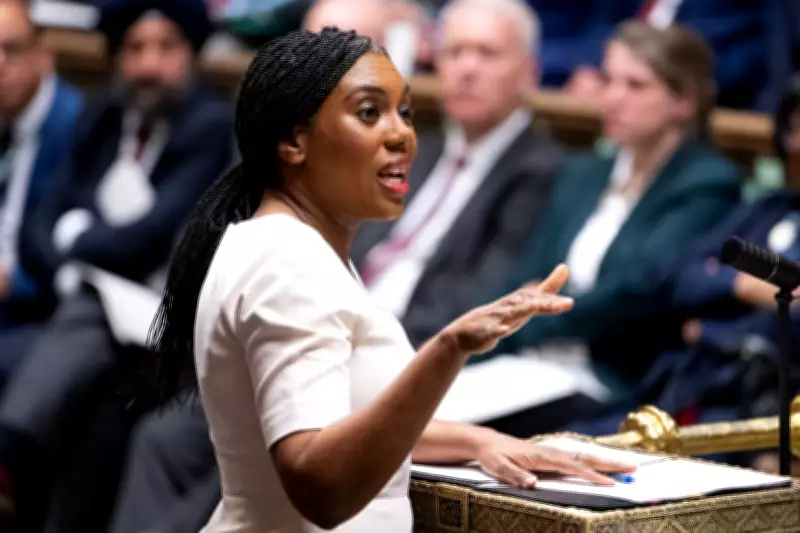
It may seem paradoxical given the general unpopularity of leading national politicians, but Kemi Badenoch has emerged as the least disliked among her peers. She now ranks ahead of Ed Davey, Nigel Farage, Zack Polanski, and Keir Starmer in public approval. Polanski has notably declined following his controversial comments on the Golders Green stabbings. Observers note that Badenoch has improved as a parliamentary and media performer this year, becoming more familiar to the public.
How Popular Is Badenoch?
While still more disapproved of than approved, her net score of minus 6 is relatively favourable. By comparison, Davey stands at minus 12, Farage at minus 16 (with strong opinions on both sides), Polanski at minus 27 (down 16 points in a month), and Prime Minister Starmer trails at minus 45.
Why Has She Improved?
Several factors contribute to her rise. Last week, she demonstrated strong leadership on the Golders Green terror attack, silencing a heckler at a public meeting and framing her combative style as fearless truth-telling. Her team has also orchestrated parliamentary manoeuvres during the Mandelson affair, and she has effectively challenged Starmer at Prime Minister's Questions. He no longer patronises her easily, and she commits fewer gaffes. Internal party popularity and a lack of obvious rivals have boosted her confidence since becoming leader in November 2024.

Who Likes Her Best?
Unsurprisingly, Conservatives are her strongest supporters. Polls of voters and grassroots members show her ahead of Nick Timothy, Mel Stride, and Claire Coutinho in the Conservative Home survey. Activists appreciated her expulsion of Robert Jenrick before he could defect to Reform UK, which she termed “spring cleaning.” She has avoided major scandals involving party funding or racism that have recently plagued Farage. However, this suggests she has not yet broadened her appeal beyond the right, and “Kemimania” remains distant.
Why Isn't Her Party Doing Better?
Badenoch acknowledges she is burdened by a difficult legacy, having served as a minister under Boris Johnson, Liz Truss, and Rishi Sunak. Fourteen years of austerity, Brexit, Partygate, and constant turmoil have taken their toll. It will take time for the public to reconsider the Conservatives, and for Badenoch to complete a policy review before the next election. She insists she will not rush divisive issues. Additionally, Reform UK, well-funded and controversial, pushes her toward extreme positions on immigration, environment, and welfare, alienating centrist voters. Polling at around 18 per cent, the party has not recovered from its 23.7 per cent in the July 2024 general election, let alone the 30 per cent it achieved in the 2022 local elections. The Tories face another poor result on Thursday, overshadowed by Reform.
Could She Be Prime Minister?
In a direct head-to-head with Starmer, she polls evenly, though this may reflect more on him than her. She understands the scale of the challenge, which is less about her and more about the tarnished party image. If Reform implodes in the next couple of years due to internal splits or the demands of governing, and if Labour remains weak while Liberal Democrats stagnate, Badenoch might have a chance. Her future is not entirely in her own hands.