The new director-general of the BBC, Matt Brittin, has warned staff that "tough choices are unavoidable as we make savings" and urged the corporation to "experiment more bravely." The former Google boss, who started his first day in the role on Monday, emphasised that the BBC must move with "velocity and clarity" and call on a "sense of urgency" to serve its audiences.
Cost-cutting measures
The BBC is seeking to cut 2,000 jobs as part of a plan to reduce costs by 10% over the next three years. In a note to staff, Brittin said: "We must be where audiences are, and experiment more bravely: test ideas, learn quickly and back what works. Audiences will value the fact we are listening, innovating and working hard to serve them better." He acknowledged that change would not be easy, adding: "I know change will not be easy. Tough choices are unavoidable as we make savings. We should ask ourselves, honestly: if we were inventing the BBC today, what would we do? Then respond with clarity, pace and purpose."
Challenges ahead
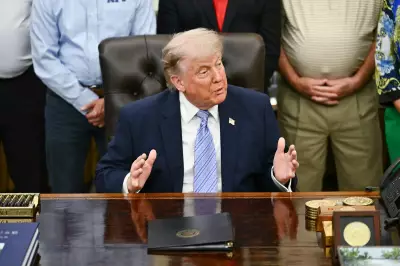
Brittin takes the helm during a turbulent period for the broadcaster, which is grappling with a billion-dollar lawsuit from US President Donald Trump and questions over the future of the licence fee. In his note, he highlighted the BBC's history of reinvention, from restructuring during World War Two to repurposing during Covid and spinning up services in conflict zones. "We need, collectively, to call on that sense of urgency now," he wrote. "That means moving with velocity and clarity."

He outlined three areas of focus: making the case for the BBC as it faces charter renewal; editorial excellence; and "increased velocity – making the savings we must and the choices we should, simplifying the BBC for staff and audiences alike."
First day at Broadcasting House
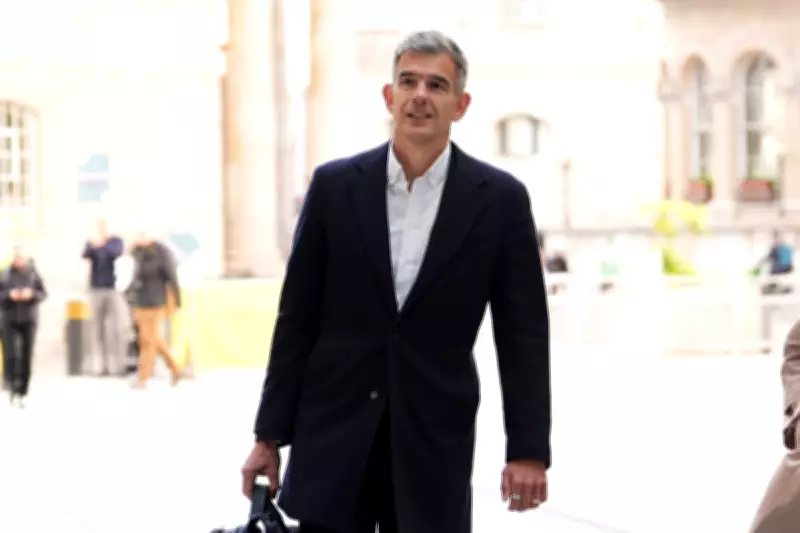
Brittin arrived at BBC Broadcasting House in Portland Place, central London, just before 8.15am, wearing a dark suit, and greeted reporters. He said he was "honoured" and "humbled" to be taking the job, and had had a "really strong coffee" and taken a "deep breath" before his first day. He added: "I'm also very aware how complicated, uncertain and fast-changing the world is, and I think when I look at the 100-year history of the BBC, how it serves its audiences, how it's adapted at pace and has risen in times of crisis, I also believe that today the world needs the BBC more than ever, here in the UK and around the world, for today and for tomorrow."
A handful of protesters holding placards bearing the logo of the National Union of Journalists (NUJ) stood outside the office. One sign read "Newshour bosses: share the cuts pain" and another read "BBC Radio World Service don't sink the flagship."
Background and salary
A former McKinsey consultant, Brittin worked for Google from 2007, leaving in 2025 after serving as head of their Europe, Middle East and Africa region for a decade. His salary will be £565,000, the same as his predecessor Tim Davie. Brittin was a member of the British Olympic rowing team in Seoul 1988 and won a bronze medal at the World Rowing Championships in 1989. The Cambridge alumnus also rowed in the 1987, 1988 and 1989 Boat Races. He was made a CBE in the King's New Year honours earlier this year for his services to technology and the enhancement of digital skills.
Reactions and controversies
Dame Caroline Dinenage, chairwoman of Parliament's Culture, Media and Sport (CMS) committee, said Brittin "will have a significant job on his hands" in a "period of turbulence." During the tenure of Tim Davie, who had been in the top job since 2020 and announced his resignation in November 2025, the BBC faced numerous controversies. Editorial coverage led to a $10 billion (£7.5 billion) lawsuit from Donald Trump over the editing of a Panorama documentary, which prompted Davie's resignation. The lawsuit claimed the documentary, broadcast in 2024, gave the impression Trump encouraged his supporters to storm the Capitol building in 2021 after he lost the 2020 presidential election to Joe Biden.

More recently, the corporation faced criticism for allowing a racial slur to be broadcast during the Bafta Film Awards, following a previous editing incident when the BBC continued to livestream the Bob Vylan Glastonbury set as they led chants of "death, death to the IDF (Israel Defence Forces)." During Davie's time, one of the BBC's highest-paid newsreaders, Huw Edwards, pleaded guilty to making indecent images of children, admitting to having 41 photographs on WhatsApp, including seven of the most serious type. Davie signed off days after Radio 2 breakfast host Scott Mills had his contract terminated after allegations about his "personal conduct." Mills confirmed a police investigation into allegations of a historical sexual offence in 2017 was about him.
Brittin's vision
At the time of his appointment, Brittin, 57, said: "Now, more than ever, we need a thriving BBC that works for everyone in a complex, uncertain and fast-changing world. At its best, it shows us, and the world, who we are. It's an extraordinary, uniquely British asset, with over 100 years of innovation in storytelling, technology and powering creativity. I'm honoured and excited to be asked to serve as director-general." He added: "This is a moment of real risk, yet also real opportunity. The BBC needs the pace and energy to be both where stories are, and where audiences are. To build on the reach, trust and creative strengths today, confront challenges with courage, and thrive as a public service fit for the future. I can't wait to start this work."
Meanwhile, the BBC has published the advert for the new deputy director-general role, which is advertised internally and will close on May 25. The deputy DG will work on behalf of the DG and will be responsible for shaping and delivering the BBC's editorial strategy and standards, deputising for the DG as needed.