The Venice Biennale, Eurovision, and Cannes are framed as cultural contests where artists represent their nations. But in a fractured world, national identity seems increasingly futile, and politics often overshadows the art itself.
Venice Biennale: Political Tensions Run High
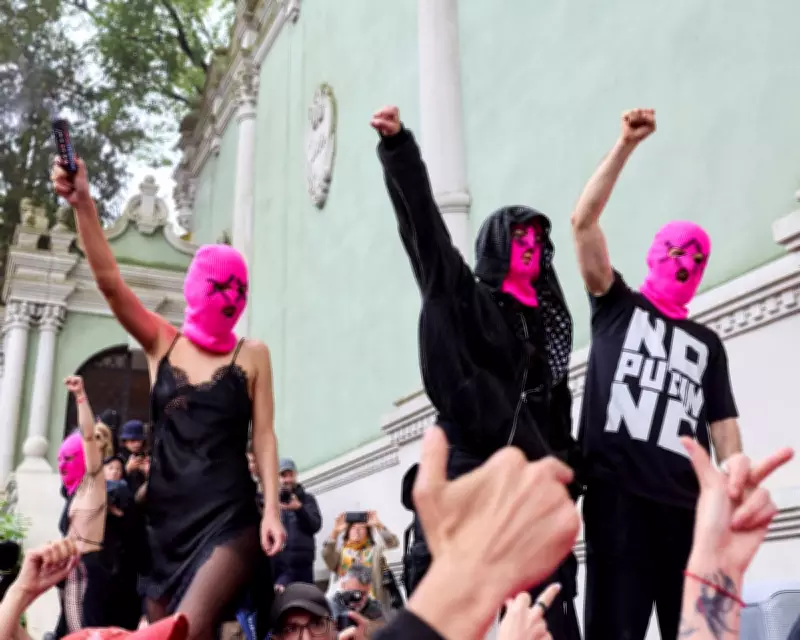
As the Venice Biennale opens its doors to the public on Saturday, the focus has shifted from the artworks inside the national pavilions to which pavilions are open—or should be. The Russian pavilion, closed for the past two editions due to the full-scale invasion of Ukraine, opened for press previews on Tuesday, pumping out techno music. This decision by biennale president Pietrangelo Buttafuoco appears to have been made against the wishes of the Italian government that appointed him and could cost the festival €2 million in EU funds for breaching ethical standards. The pavilion will be closed to the public when the biennale fully opens on 9 May, a move a Ukrainian official called a “meaningful step” after the biennale’s jury resigned en masse in April over entries from countries whose leaders face international arrest warrants.
The Israeli pavilion will remain open despite protests from 200 participating artists, curators, and art workers who argue it platforms a state engaged in genocide and cultural erasure. The South African pavilion will show nothing; the artist originally selected will display her work in a church near the Giardini after the national government blocked it, citing spurious objections to a tribute to a Palestinian poet killed in an Israeli airstrike. The Iranian pavilion will be shut—a decision announced a day before the press preview without explanation, but assumed to be linked to its conflict with the US and Israel.

Eurovision: Boycotts Over Israel's Participation
Similarly, the Eurovision song contest, heading into its semi-finals and grand finale in Vienna on 16 May, has been dominated by political controversy. Ireland, Spain, the Netherlands, Iceland, and Slovenia are staying home in protest against Israel being allowed to compete. The hot favourites are barely discussed as all talk centres on who won’t be in town for the 70th anniversary of the world’s largest live music event.
Cannes: A Notable Absence of Political Furore
In contrast, this year’s Cannes festival, opening next Wednesday on the Côte d’Azur, has so far been notably free of political furore and boycott letters. There is a shortage of Hollywood films in the main competition slots, but this appears more a sign of US studios retreating from critical scrutiny than a political statement. A glut of French films set in the Vichy period may yet spark controversy, given the recent backlash against the collaboration film Les Rayons et les Ombres, which left-leaning outlets criticised for treating those who served the Nazi regime with too much relativity.
National Identity vs. Globalised Art
The major difference between these events is that Venice and Eurovision are structured around artists representing competing nations, while Cannes is a global marketplace set in southern France. Representing Israel in Venice is Bucharest-born Belu-Simion Fainaru, who previously represented Romania at the biennale. His installation Rose of Nothingness features a water dripper used to irrigate fields, criticised for celebrating the idea that Israel “made the desert bloom” while denying the use of water as a weapon against Palestine. Fainaru insists he is a free artist, not a government representative, but given the funding structures behind national pavilions, that distinction is blurred.
Perhaps the issue is not that the arts are becoming more politicised, but that they are ever more globalised, rendering national identity increasingly futile. This realisation seems to underpin recent changes to the Oscars nomination rules, where the award for best international feature will now be credited to the director, not the country of origin.

At this year’s Cannes, the most anticipated new works are by Iranian film-maker Asghar Farhadi (filmed in Paris with a French cast), exiled Russian director Andrey Zvyagintsev (a co-production between France, Latvia, and Germany), Paweł Pawlikowski (filmed in Poland with a German cast), and Romanian auteur Cristian Mungiu (set and filmed in Norway). No one likes melting-point art, and there is still comfort in artists who live up to national stereotypes. That is testified by the viral success of Italo disco revivalists Mind Enterprises, who knock back Campari cocktails on stage and sport retro Sergio Tacchini shorts—but they reside in Barcelona. Because these days, nationhood rarely captures the reality of how creatives live and work.